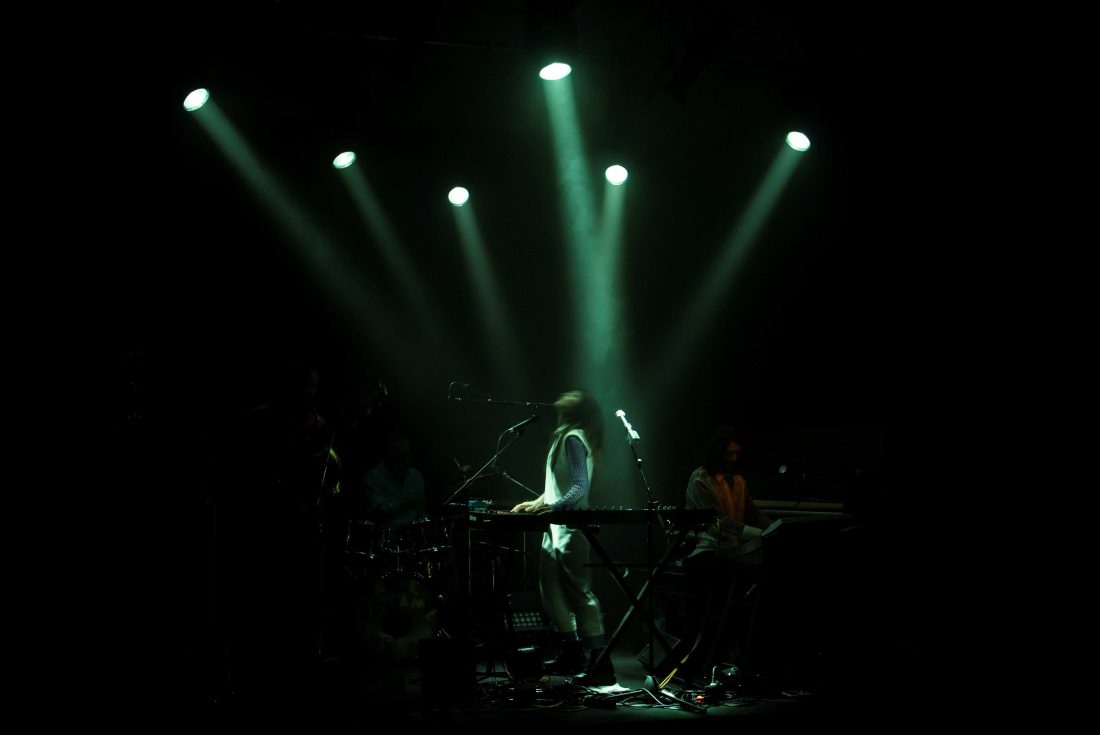
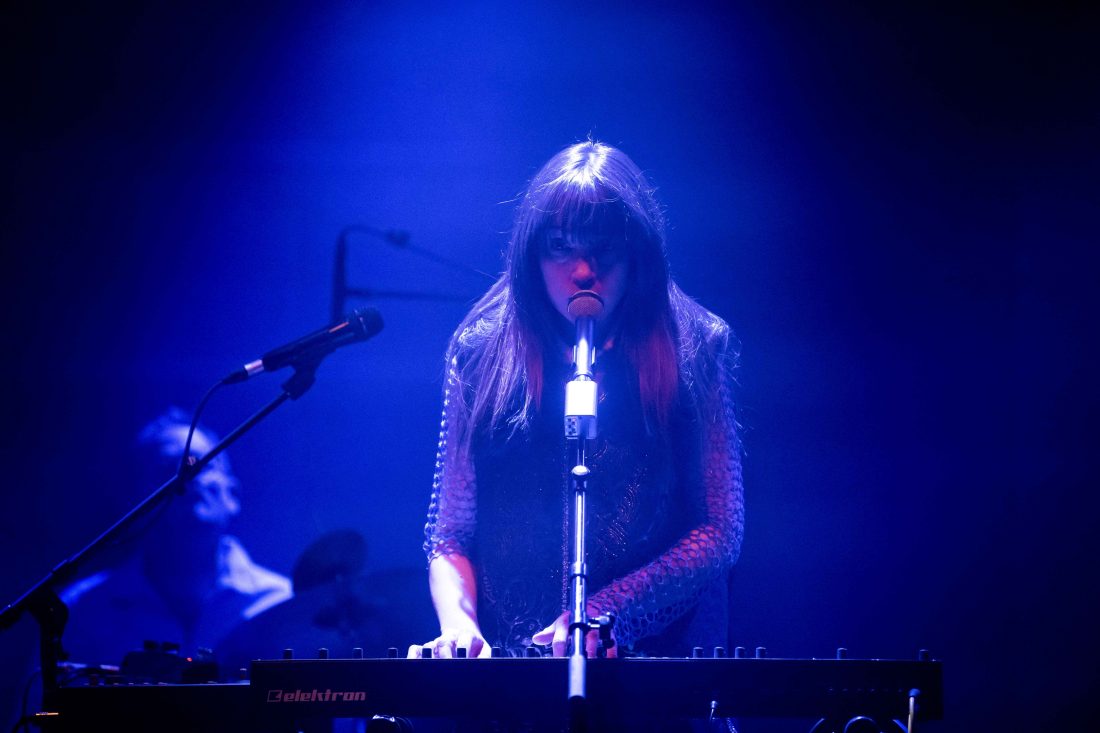
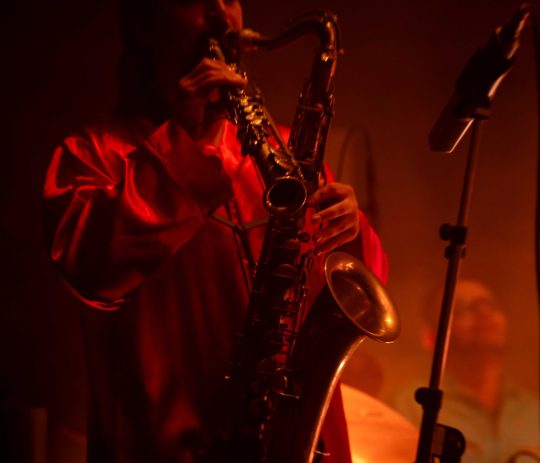
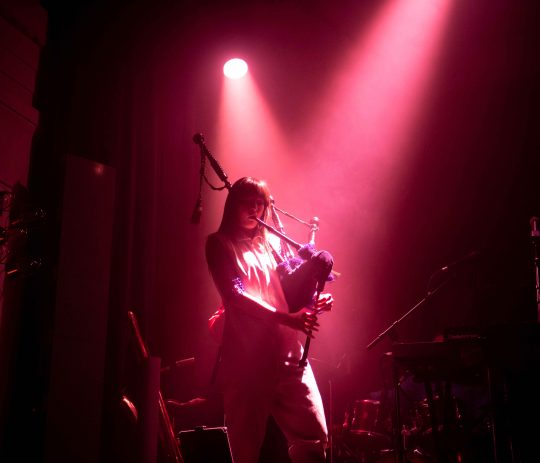
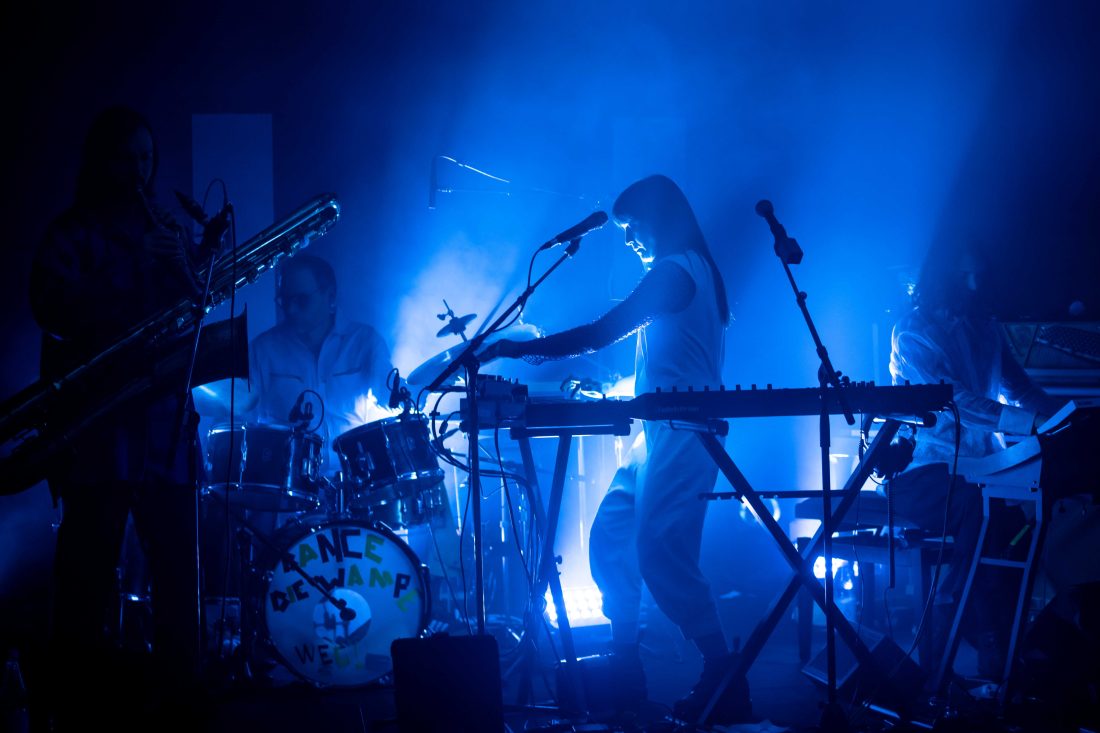
A band on stage: vocals, drums, faces and bodies moving with every beat, outfits shining under wild lights – this is a concert, right? Or is it a theatre show in disguise? Scottish composer-performer Genevieve Murphy loves blurring those lines. With her band GENEVIEVE and a set of self-written songs, she zooms in on the quirky rituals of gigs: exaggerating them, twisting them, and showing just how theatrical every concert already is. On three evenings, Murphy is taking the NO stage. She will be playing with her band and playfully taking it apart to explore and reveal what really happens between musicians onstage. Concert or performance?
NO Interview
5 Questions to Genevieve Murphy
NO
You are researching band dynamics. Why is this interesting to you?
Genevieve Murphy
My family comes from a visual arts background, so the more visual side of things is always very triggering for me in these concert settings. The first thing for me is just to raise that awareness – that musicians are visible. So, then the question is: okay, but what do we do with that? It also allows the music to be what it is, for the musicians to be who they are, but there’s an understanding that there is an image that the audience is being asked to look at. That’s the initial inspiration: Why do we go to see a concert?
NO
And can you tell me something about the dynamic in your band?
GM
Because I’m a composer, it’s very much about preparing everything in advance for me. I’ve become more and more interested in working with improvisers, allowing what they do to inspire me to then structure it. But it is still quite controlled, and in this atmosphere, I’m writing the songs. I have certain sound worlds and I have a plan for a structure – but how the musicians respond to that framework is really coming from them and that’s the part where I want to give them the space.
So, behind the scenes, the dynamic is that they probably feel quite restricted by me. But the idea is: the more of a framework I can give and clarity, the more freedom they have to actually explore that one area. That’s always the kind of balancing act that we are doing in this process. And I think it also comes across for the audience – that part where the elements of control that are happening and the plan that’s on stage, but also how to work with that spontaneity that you need through music. That it’s not contrived, but coming from a sincere place.
NO
You specifically asked improvising musicians for that. Is that the kind of musicians you like to work with?
GM
Yeah, and they often have a connection with jazz music, so they know how to structure a song and how to work with composed music. But it’s really about understanding sound worlds and experience and the effect of whatever the subject has to do with the song, through the music.
NO
And can you tell me something about the music and the songs. Are there any themes in them that connect them or how you made them?
GM
In the songs there’s definitely the subject of fear and control. Like in all of my work, every psychological subject, even if I like it or not, in the end, the essence boils down to control. And so, each song is somehow about different forms of trying to take control or keep the control, the feeling of losing control and what happens as a result.
Like one song is about fear: about understanding that the thing that you’re being afraid of is something smaller than yourself – and then trying to understand why you would be afraid of something that’s more vulnerable than you. Which is because you don’t understand how it works, so you don’t feel in control of its movements.
I had a collaboration with somebody who was living in Kiev, in Ukraine, and I had a video call with her as she walked out into the street. There’s a song that has to do with the knowledge of her being in this war zone creating fear in me whereas I was sitting in this safe environment. It was about that concept of safety and what it means to step into an open street. So, there’s that subject of fear, but again that feeling of being in control: when you do feel safe and what is safety.

Another song has to do with being in a destructive relationship and being the toxic one. About being the destructive one, but projecting their feelings. Imagining what they feel and having empathy for them – even though it’s yourself that’s done the damage in a way. So that’s the kind of awareness of not being in control of how you relate to another person.
It’s so personal, actually. All of these texts are very personal. It has a lot to do with showing yourself or hiding and how much do you protect yourself. Some of the music can help you to feel protected. Even the more techno parts! It’s also exploring that: where do I feel safe on stage and where do I feel vulnerable? I get so nervous on stage that I’m also working with that dynamic as well. When do I allow that vulnerability to be there and when is it that I just want to feel safe and let go? And what do I need to do musically to aid those things?
AW
And what do you need to do musically to aid those? What did you find out?
GM
Musically, if I want to be vulnerable without panicking on stage, it’s about focusing on connection, creating a small space. Even if the space is big, I’m creating a very intimate space where I don’t feel the walls so far away from me, but rather: I’m with one person in the audience. So, I try to think much more directly to each person and it being like we are just having a one-to-one and not thinking about the crowd. Like, if we work with techno music – there’s a driving force that adds a kind of a seriousness and a sort of edginess that can also be a mask for me. To just enjoy myself in the sense that it is not really about emotion other than driving, pushing, moving, let’s go, let’s go. Which is almost kind of heading to escapism, I guess.
Setlist
Sax Drone
Composition: John Dikeman
Duration: 3:00
Fully improvised
Henning Sync
Composition: John Dikeman, Henning Luther
Duration: 3:00
Fully improvised
I Beg You
Composition: GENEVIEVE (band)
Arrangement: Lyrics partly by „Lucky Fonz |||“
Duration: 4:10
Little Human
Composition: GENEVIEVE (band)
Arrangement: melody from Franz Schubert’s Winterreise, “Die Krähe”; lyrics by Lucky Fonz III
Drums Improv
Composition: Henning Luther
Duration: 3:00
Fully improvised
Bagpipe Off Stage
Composition: GENEVIEVE (band)
Duration: 1:30
Behind the Glass
Composition: GENEVIEVE (band)
Duration: 4:30
Marta Improv
Composition: Marta Warelis
Duration: 2:30
Fully improvised
Fear
Composition: GENEVIEVE (band)
Duration: 4:30
Eve
Composition: GENEVIEVE (band)
Duration: 3:30
Out in the World
Composition: GENEVIEVE (band)
Duration: 3:40
Free Jazz
Composition: GENEVIEVE (band)
Duration: 3:00
Fully improvised; duration varies slightly
Bagpipes into Fork
Composition: GENEVIEVE (band)
Duration: 3:25
Eight
Composition: GENEVIEVE (band)
Duration: 3:30
Between almost all songs, there are transitions. These are entirely improvised by the band.
BIos
Genevieve Claire Murphy | Vovals & Keyboard
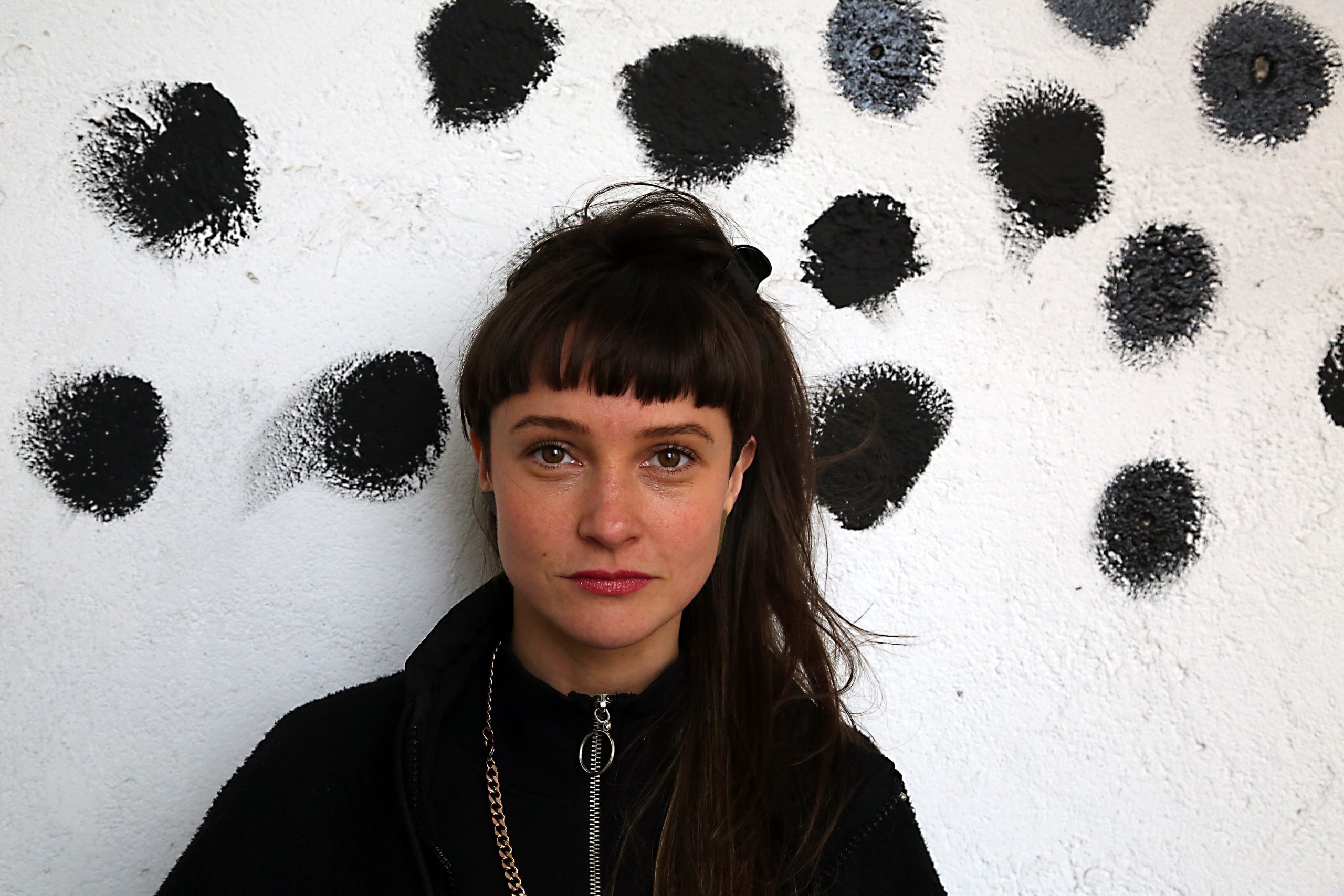
Genevieve Murphy is the lead singer of the band GENEVIEVE and a Scottish-Dutch composer and performance artist whose work treats sound as a physical, psychological, and dramaturgical force. Her practice moves between immersive concerts, performance, and contemporary composition, deliberately dissolving boundaries between concert and performance. She works with themes of vulnerability, power, intimacy, and exposure, placing performer and listener in heightened states of awareness. Her collaborations include the Netherlands Violin Competition, ONCEIM Paris, the BBC Scottish Symphony Orchestra, Brìghde Chaimbeul, John Parish, and visual artist Martin Creed.
John Dikeman | Sax
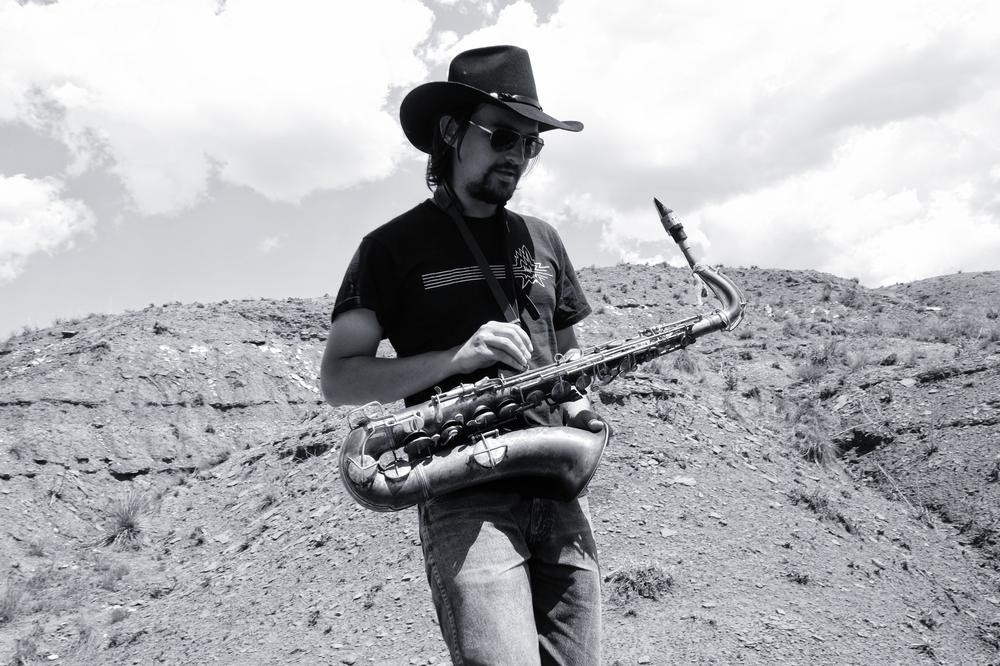
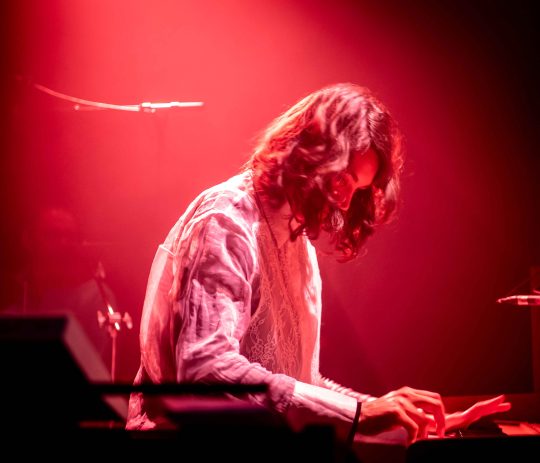
John Dikeman is an American tenor saxophonist based in Amsterdam, known for his raw, high-energy approach to free jazz and improvisation. Active on the European and international scenes, he has collaborated with artists such as William Parker, Hamid Drake, Joe McPhee, and Mette Rasmussen. Dikeman leads and co-leads several projects and is a key member of groups including Cactus Truck and Universal Indians. His playing combines physical intensity, deep blues roots, and exploratory form, marked by a strong sense of momentum and risk-taking. He is recognized as a powerful voice in contemporary improvised music.
Marta Warelis | Piano
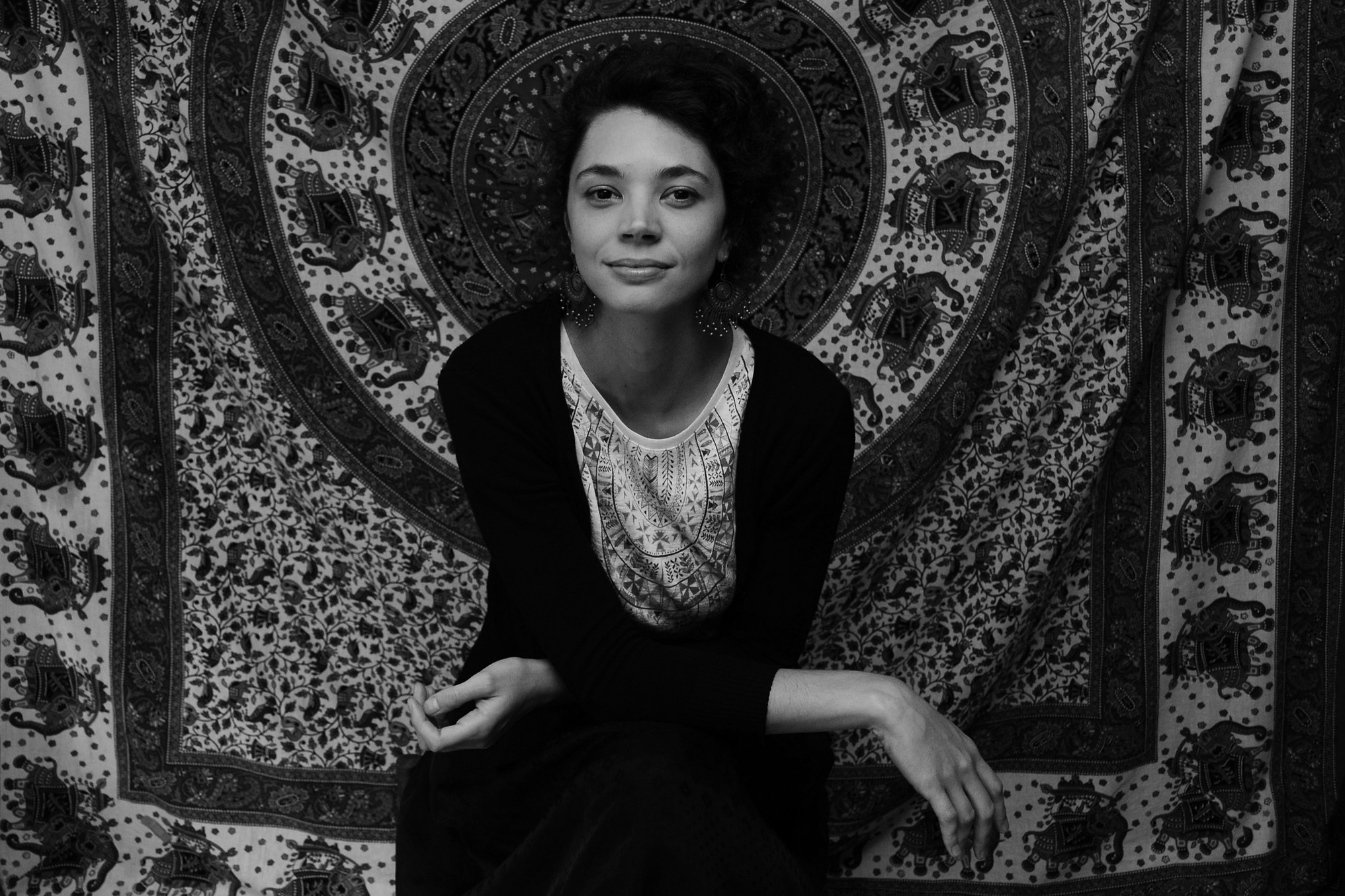
Pianist Marta Warelis is a vibrant performer with a strong preference for improvisation and experimentation in all genres. She continually aims for instant composing on the basis of new sounds and influences. Her work draws inspiration from music across the globe including angolan dance music, jazz, western classical music and the various schools of free improvisation. Born and raised in Poland, Marta moved to Groningen in 2010 to attend the Prince Claus Conservatory. In 2014 she found her place in Amsterdam, very quickly becoming an active member of the local
improvisers’ scene. Marta has appeared frequently in Bimhuis, where in 2017 she was given a Carte Blanche in recognition of her remarkable talents. In 2019 she became a member of Doek Collective creating opportunities for experimentation, research and performance. She shares the stage with a variety of creative musicians including
Wilbert de Joode, Dave Douglas and Ab Baars as well with groups Omawi, Hupata!, Dust Bunny, Kaja Draksler’s matter 100 and more.
Henning Luther | Drums

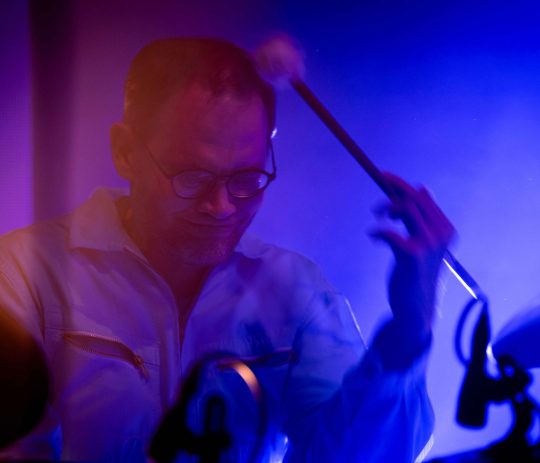
Henning Luther is an Amsterdam-based drummer working across jazz, improvisation, pop, and contemporary music theatre. Educated in Weimar and Amsterdam, he has been active as a professional musician since 2004. His artistic practice approaches rhythm as both musical and dramaturgical material within interdisciplinary performance. In this context, he performs with Genevieve Murphy. Further collaborations include Sahand Sahebdivani, Itai Weissman, Ntando Cele.
Anne van de wetering | dramaturgY
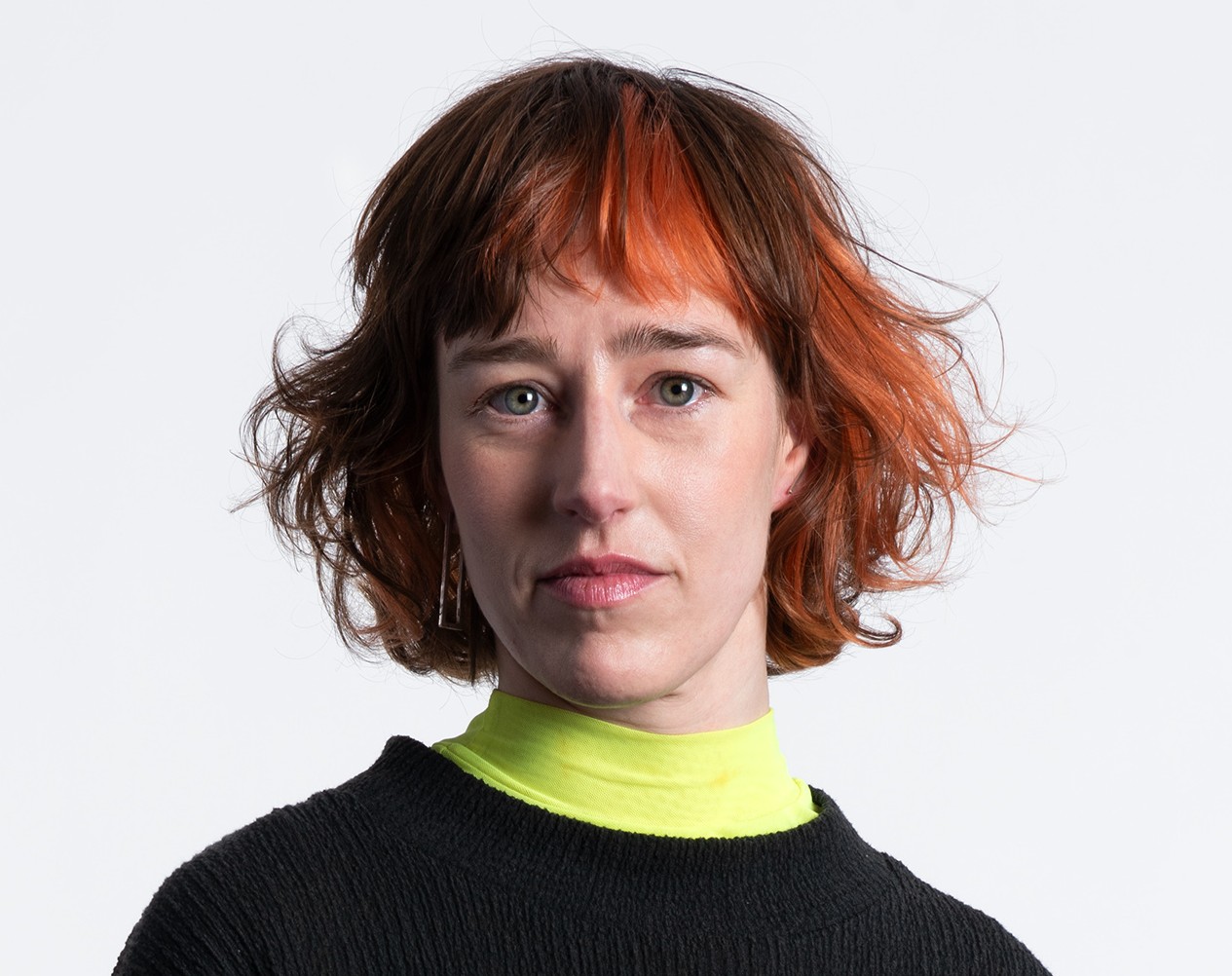
Anne van de Wetering (born 1987) is a dramaturg, writer, and program curator. After studying literary and performance studies at the University of Amsterdam and the Free University of Berlin, she worked for festivals such as Oerol, O Festival Rotterdam, and Tilt Literary Festival. As resident dramaturg and librettist for the Rotterdam-based music and performance collective Club Gewalt and the Neuköllner Oper in Berlin, she embodies a deep love of storytelling, a strong aversion to injustice, and a keen interest in collective and collaborative working methods. She lives in Rotterdam with her cat and an extensive collection of science fiction and fantasy books.