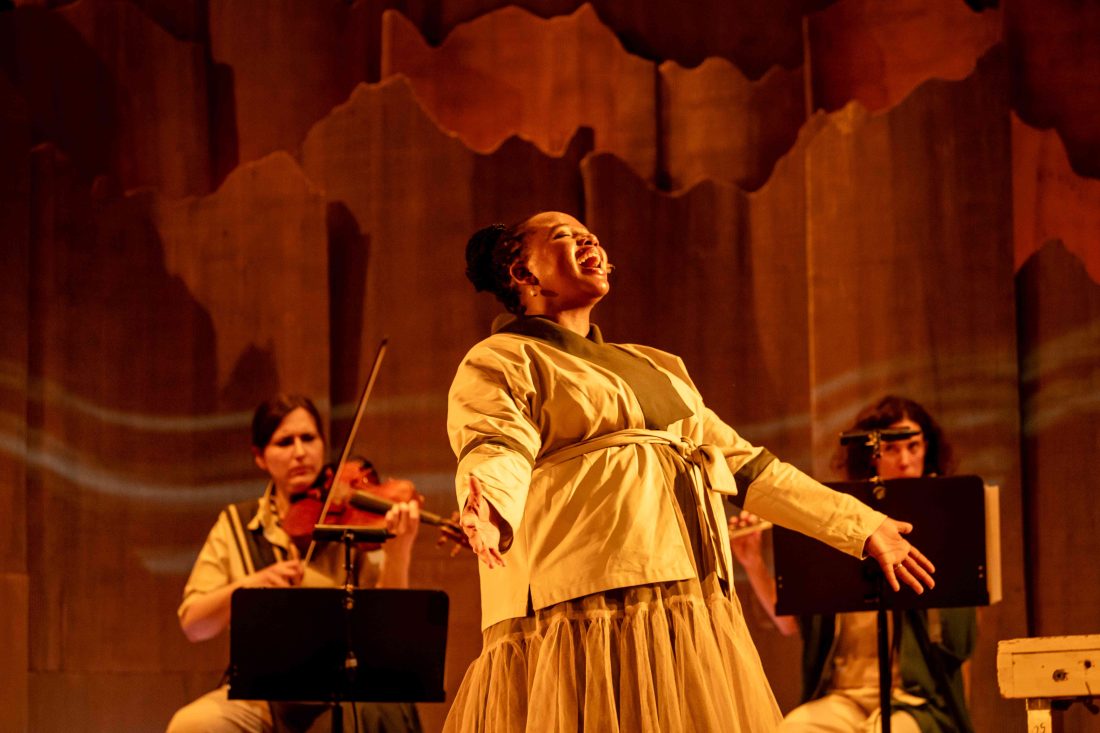
Back into the light, into beauty, and into life! Spring represents the power of transformation, rebirth, and an ancient promise of prosperity. What can this fantasy of abundance mean for us – culturally, spiritually, and sonically – across geographical boundaries? The South African composers and performers S’busiso Shozi and Nhlanhla Mahlangu from Johannesburg’s Centre for the Less Good Idea approach the concept of “spring” anew with the chamber opera SELEMO – through body, sound, and voice.
Introduction
By Sophie Jira, dramaturg at the Komischen Oper Berlin and the festival SCHALL&RAUSCH
CENTRE FOR THE LESS GOOD IDEA
In 2016, Bronwyn Lace and William Kentridge founded The Centre for the Less Good Idea, creating a space for experimental, collaborative, and interdisciplinary art based in Johannesburg. Inspired by the South African saying, “When the good doctor can’t cure you, find the less good doctor!”, the artists at The Centre for the Less Good Idea are convinced that it is worthwhile to pursue secondary, supposedly less promising ideas – mending the cracks and fractures that often appear in an initial concept once it leaves the drawing board.
The Centre has since become an established and influential space for artistic projects in South Africa and beyond. To date, more than 500 individual performances, films, and installations have been presented. In 2023, performers from The Centre for the Less Good Idea appeared in Berlin-Neukölln with African Exodus as part of the Schall&Rausch festival. The springtime opera SELEMO was developed in 2025/2026 through workshops and rehearsals in Johannesburg and Berlin: through body, sound, language, and voice, musicians from the Komische Oper Berlin and performers from the Centre re-examined the theme of “spring,” associating, experimenting, discarding – and, together with Nhlanhla Mahlangu (director) and S’busiso Shozi (musical director), discovering a shared musical language.
SELEMO – A RITUAL PERFORMANCE
What does “spring” mean to us? What resonates in the word “spring,” and what do we think of when we hear “primavera”? In the South African language Sesotho, the word selemo carries multiple meanings: spring, year, and beginning – but also crack or fissure. More broadly, selemo signifies a cycle that begins again and again. It is the season of ploughing, when the earth is broken open so that something new may grow. Renewal and rebirth, unstoppable change and revolution, rupture and movement – all of this can be spring.
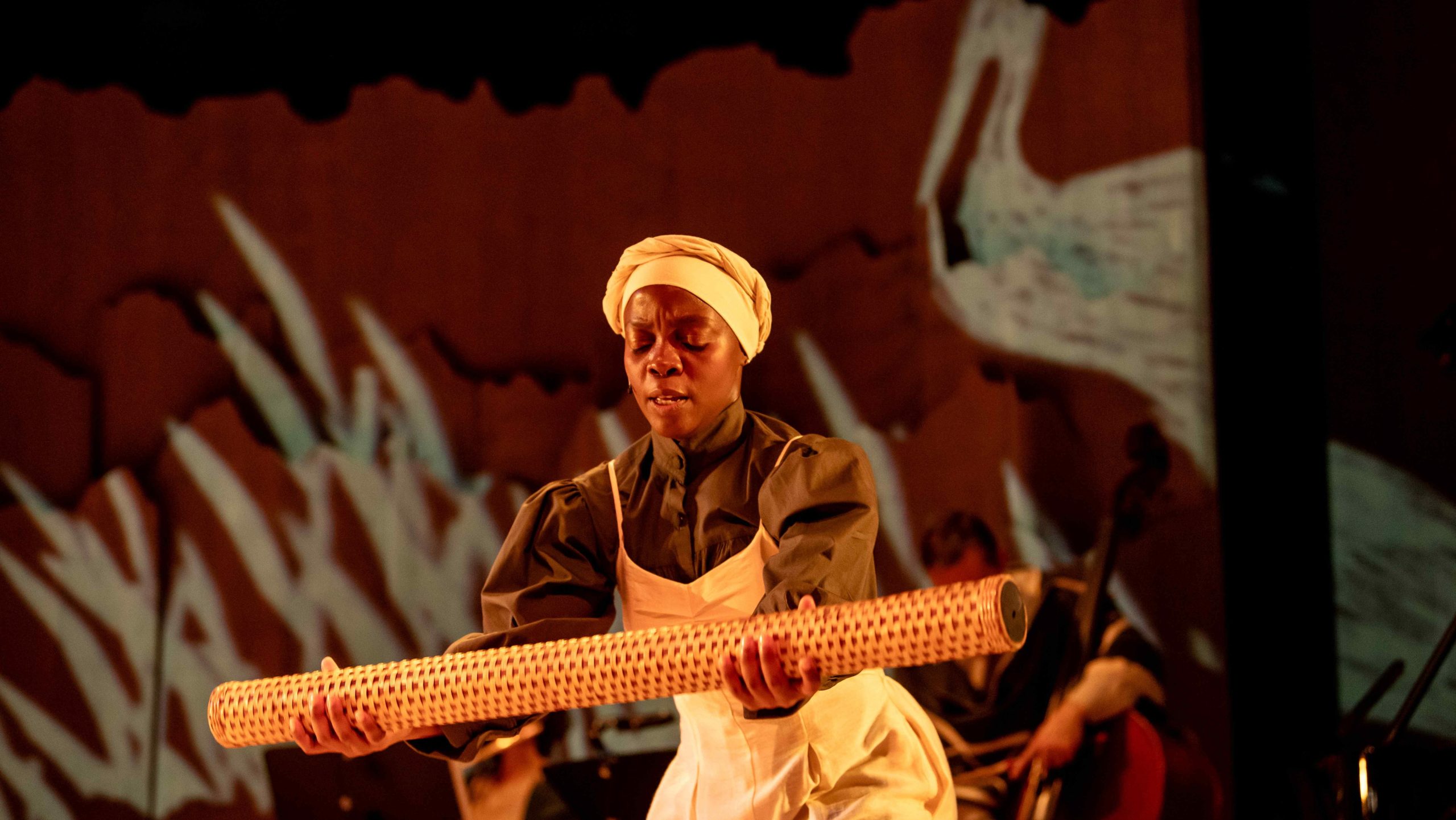
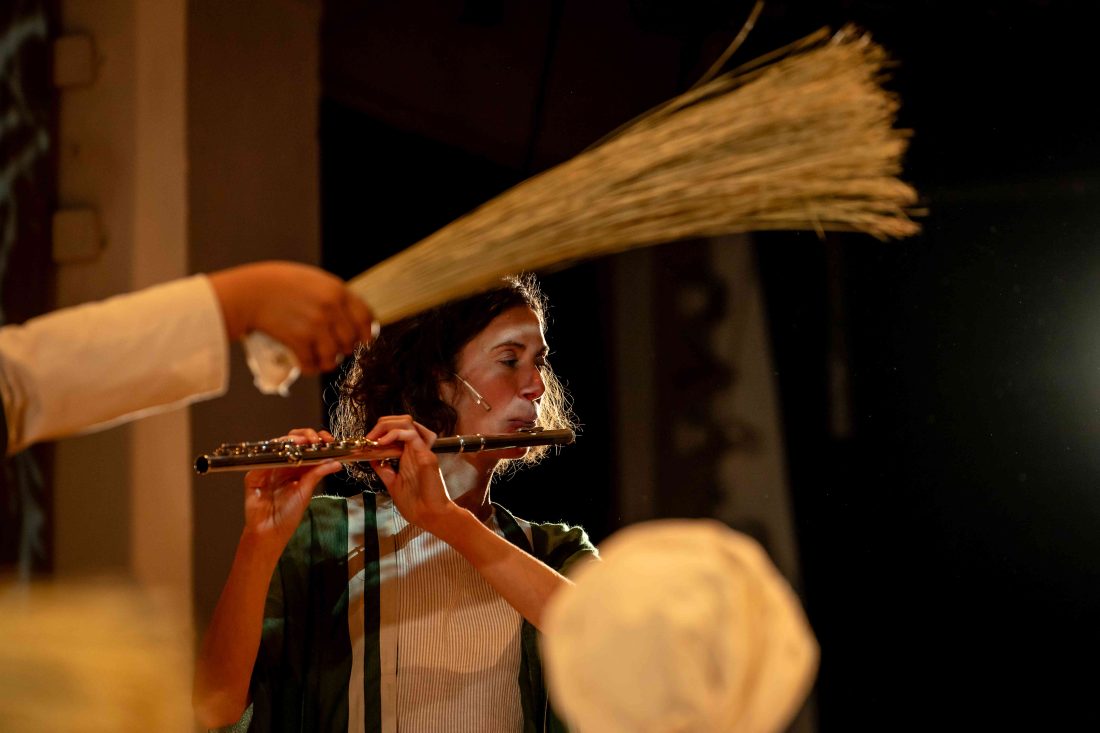
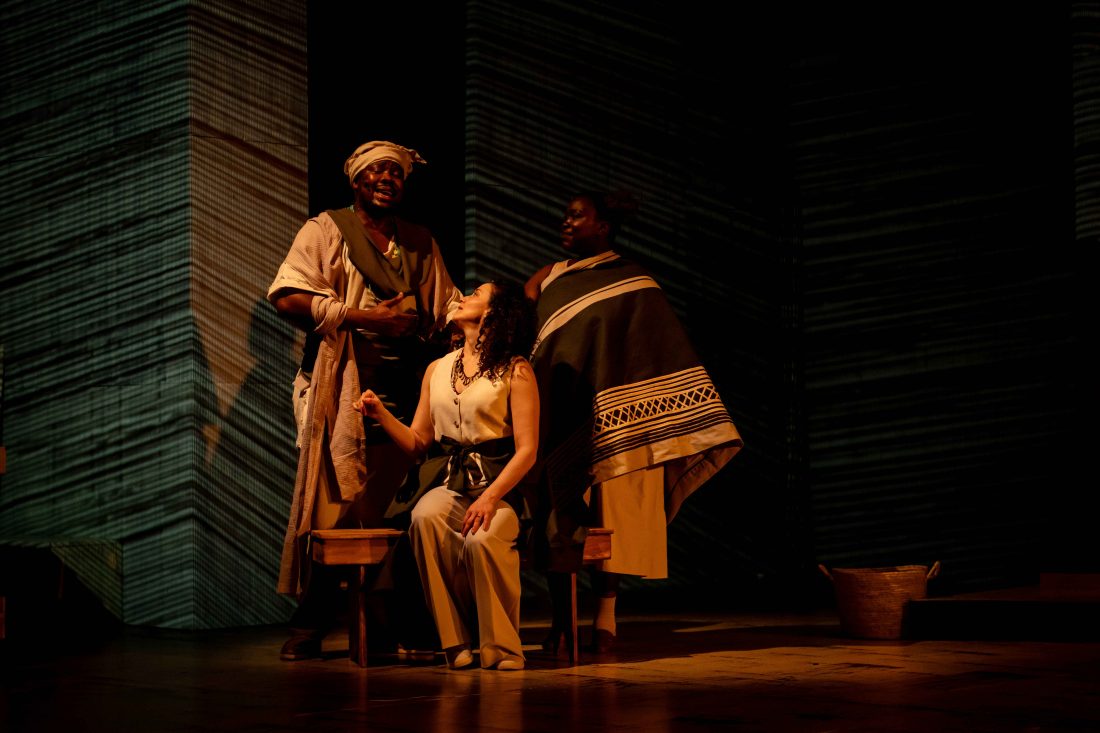
The music in SELEMO also plays with the allure of perpetual beginnings – with the idea of being able to try again, and better, and with the question: What is my personal spring? The artists explore different kinds of beginnings, weaving together personal associations of spring with ancient and newly imagined rites of passage in a performance that – like spring itself – refuses permanence. Across the world, people celebrate birth and marriage, purification and initiation; everywhere, there is mourning and farewell. Through song, body, and ritual objects such as baskets, fabrics, feathers, brooms, and mats, SELEMO carries us through life’s transitions and the diverse cultural perspectives that shape them.
THREE MOVEMENTS OF THE UNSEASONAL BODY
SELEMO combines perhaps the most famous musical portrait of spring—La primavera from Le quattro stagioni (The Four Seasons), Op. 8, by Antonio Vivaldi – with African vocal traditions such as Amahubo, the ritual music of the Zulu, as well as various ritual chants and protest songs. In bringing together musical traditions from the Global South and North, fractures and differences also come to light: while music in the European Baroque often adorned festive occasions, traditional South African music – sounding on the other side of the globe during Vivaldi’s lifetime – never functioned as mere decoration. It was never background music, but always served a purpose within communal life.
Reapproaching orally transmitted African musical traditions through movement and voice also means using the body as an archive and a source of composition – recovering knowledge that was lost through colonialism.
Songs
I. THE BLOOM
#1 QalaQala
#2 Spring loaded – 100 contradictions (allegretto)
#3 Vivaldi Spring – Movement 1 (allegro)
#4 Izandla Ziyagezana (adagietto)
#5 Nomkhubulwane (adagio)
II. THE SURGE
#6 Mr. Quignard – Printemps (aria rossignol)
#7 Erotic Chaos
#8 Chant: Nkosi, bheka intwasa hlobo
#9 Happy birthday to you
#10a Vivaldi Spring – Movement II
#10b Keke’s answer
III. THE PARTY
#11 Vivaldi Spring – Movement III (allegro)
#12 Biko
#13 Intando (andante)
#14 TOYI TOYI (attacca)
#15 We bafana (War Lullabye)
#16 Litany of names
#17 Nguni cosmology (attacca)
IV: RESTART
#18 Jiki Jiki (Apology to the planet-Song)
COntents
Notes about the springs in SELEMO
By Nhlanhla Mahlangu
An EMpty Canvas
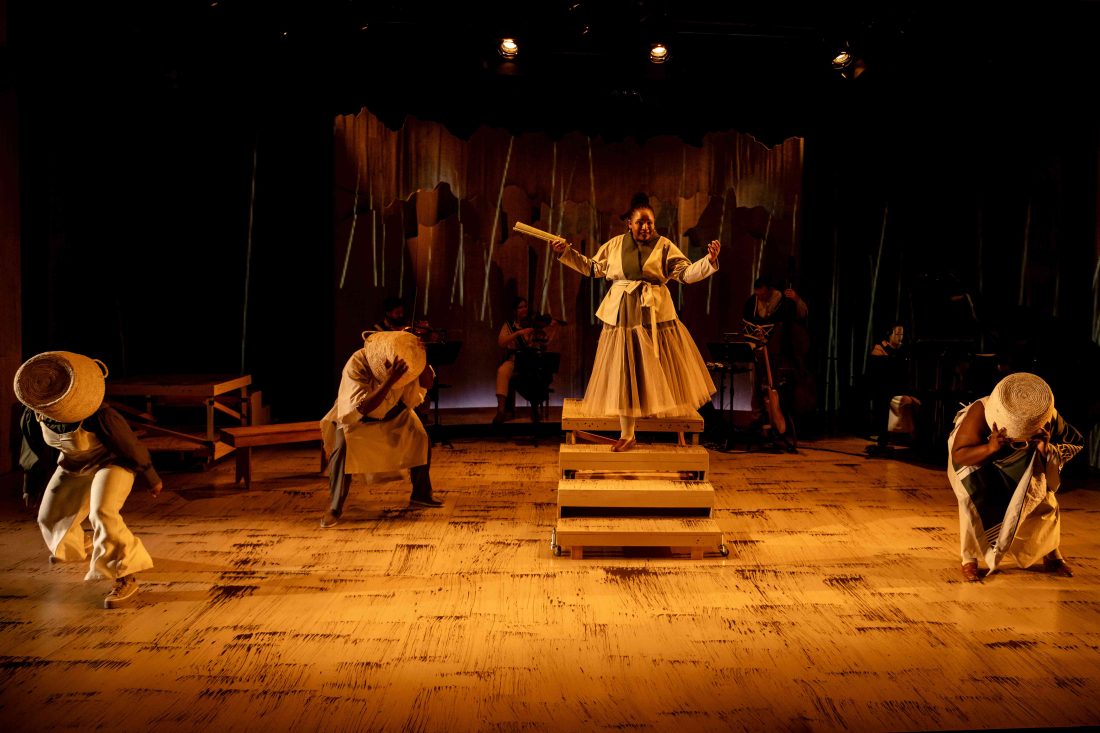
By Dennis Depta, dramaturg at Neuköllner Oper
I was quite astonished by SELEMO’s costume and set designer Nthabiseng Malak, who, during the concept rehearsal on January 11, 2026, shared her thoughts and detailed working process with the assembled team at the Schillertheater–only to end the final slide of her presentation with a blank screen. She had returned to the very beginning. And this exactly one month before the premiere. Wow. Restart. Qala Qala. I consider this an important and honest step in artistic practice, and I deeply admire that courage.
This spirit continued to define everyone involved in the production: equipped with a profound and genuine interest in collectively exploring what has never existed before – “dreaming in real time,” as director Nhlanhla Mahlangu describes the work of The Centre for the Less Good Idea.
When I first heard that the Centre would be engaging with “spring” through Vivaldi, my political heart briefly fell asleep.
How arrogant of me! I had completely failed to grasp the political dimension inherent in the whole undertaking. Since the imposition of the Gregorian calendar, South Africans have effectively had to begin their year at the wrong time. Autumn becomes spring, because the actual spring falls in autumn. Time is out of joint. “We need a better spring than the one we are living in. So we will not wait for the calendar,” performer Hlengiwe Lushaba Madlala proclaims at the very beginning of the show. That urgency is contagious. Things are rearranged again and again – during rehearsals, but also within the piece itself. SELEMO thus contains both the magic of an empowering new beginning and the ugly face of external control, of colonial legacy.
Many of the South African artists involved are working together here for the first time, exploring – alongside the musicians and the singer Alma Sadé of the Komische Oper—the many dimensions of spring. Rehearsals often unfold in a circle, with little to no notation; instead, there is collective singing and music-making—listening to one another, paying attention. Together with musical director S’busiso Shozi, material is continually modified. Everything happens in the room, on the rehearsal stage and the stage itself. How healing this feels in Berlin’s grim January slush.
Within the framework of an opera production, this shared spring-sound body emerges – a beat and music machine, the sound of this 2026 ensemble. What happens here is the opposite of opera in the rigid institutional musical sense. You can see it in the bodies on stage; it vibrates. Vivaldi is not baroque decoration for festive occasions. The musical image in 2D acquires purpose. Here, they are collectively striving toward knowledge and truthfulness. To me, this search feels fundamentally honest – in stark contrast to what I usually encounter on German-language stages.
The Centre for the Less Good Idea is a space of possibility. And I am deeply grateful that the Centre, the Komische Oper, and the Neuköllner Oper have extended this experimental space to Berlin, allowing this “marriage of cultures” to take place on Karl-Marx-Straße.
Team
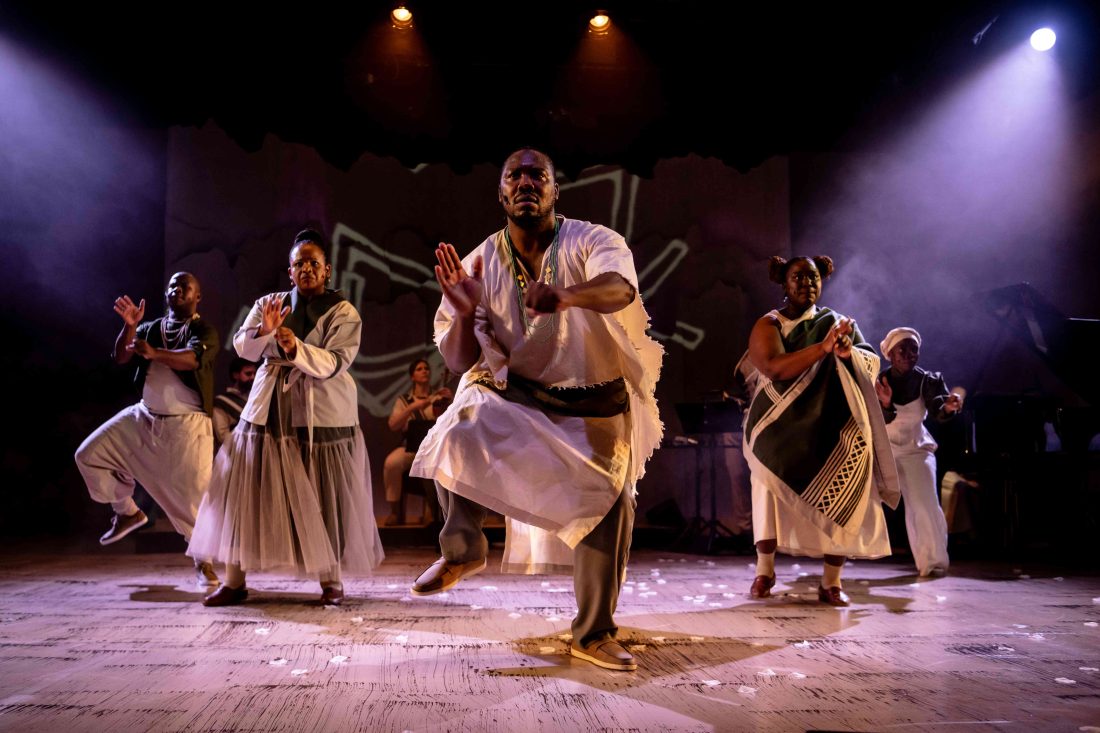
CO-COMPOSER, MUSICAL DIRECTOR S’busiso Shozi CO-COMPOSER, STAGE DIRECTOR Nhlanhla Mahlangu MUSICAL MENTOR Neo Muyanga PRODUCER Bronwyn Lace ASSOCIATE PRODUCER Dimakatso Motholo COSTUMES / STAGE DESIGN Nthabiseng Malaka STAGE DESIGN ASSISTANT Elena Gorlatova LIGHT DESIGN Michael Inglis VISUAL ARTIST Marcus Neustetter SCRIPT Stacey Hardy DRAMATURGY Sophie Jira, Dennis Depta DRAMATURG ASSISTANCE Paula Luise Fröhlich ASSISTANT DIRECTOR / STAGE MANAGER Sandra M. Heinzelmann PRODUCTION ASSISTANCE Facundo Nahuel Aguilar PRODUCTION MANAGER Lucia Leyser MAKE-UP Anne-Claire Meyer STAGE MANAGEMENT Regina Triebel, Sophie Reavley SOUND ENGINEER Zain Vally TECHNISCHE PRODUCTION MANAGEMENT Helmut Topp SOUND Ronald Davila
WITH the performers Hlengiwe Lushaba Madlala, Tshegofatso Khunwane, Gregory „Kekelingo” Mabusela, Vhahangwele Moopo, Pertunia Msani and Alma Sadé / Polly Ott as well as the musicians Deniz Tahberer, Julia Lindner de Azevedo Conte, Magdalena Bogner, Arnulf Ballhorn and Tuyêt Pham
Partners
Centre for the Less Good Idea, Johannesburg
Komische Oper Berlin
Schall&Rausch. Festival for Brand New Music Theatre
Bios
S’busiso Shozi | CO-COMPOSER, MUSICAL DIRECTOR
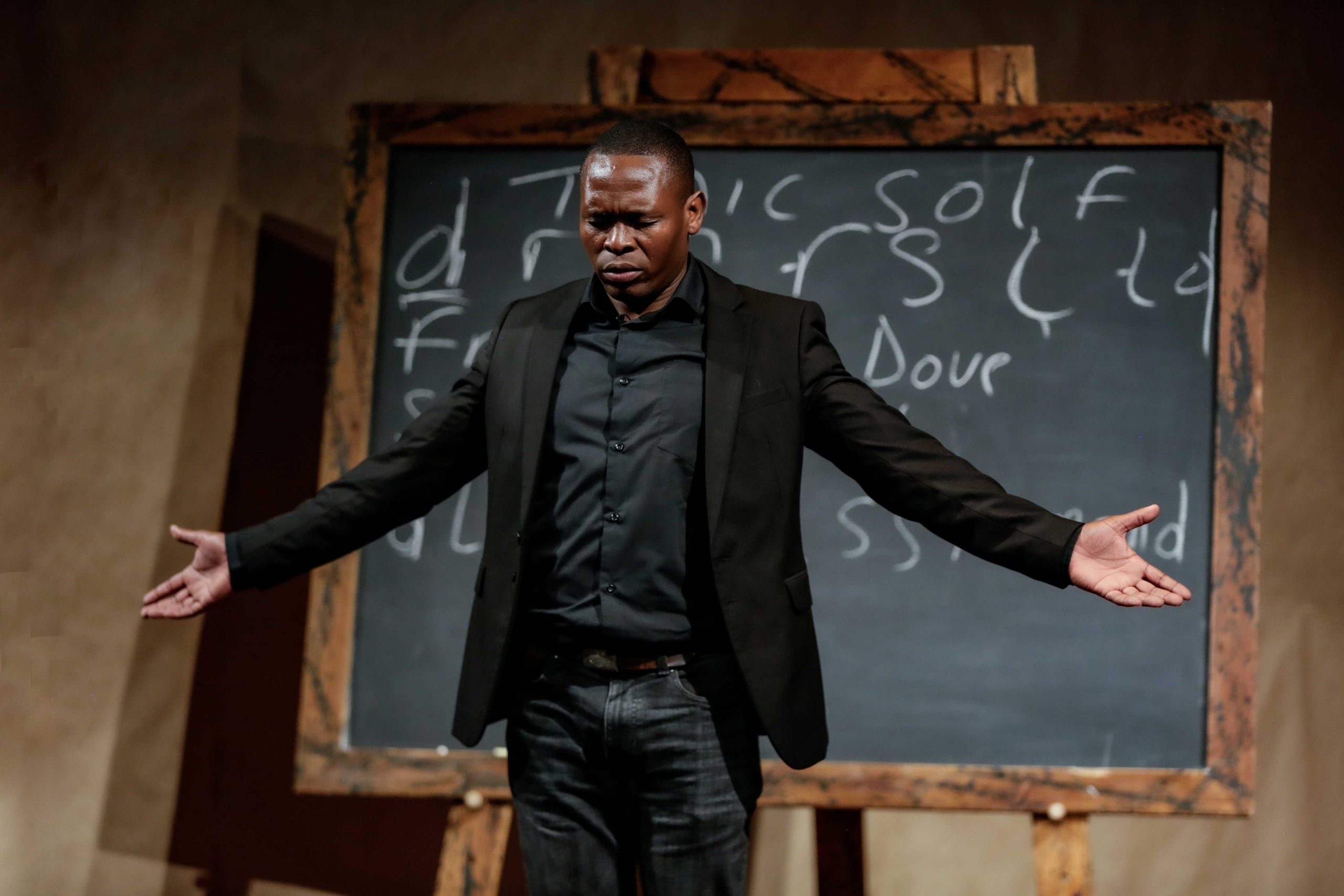
S’busiso Shozi is a Durban-born composer, theatre maker, vocal coach and performer. As a creative, Shozi is primarily interested in exploring sounds, text and the body in motion, embracing collaborations as means of developing sets of ideas. Through his practice, he explores the origins and intersections of African sounds, language and culture across the continent. In 2024, Shozi further explored and presented his methodologies in a residency that was held by the Cartier Foundation in Paris.
Shozi has written, composed, musically directed and produced for Theatre works such as African Exodus which was recently staged at Perelman Performing Arts Centre NYC. Shozi has also composed the music to Shaka iLembe Season 2 and Queendom Season 1 (BET Telenovela). He is currently commissioned by Neuköllner Oper and Komische Oper Berlin as a composer and musical director for the new chamber opera called SELEMO.
Nhlanhla Mahlangu | CO-COMPOSER, STAGE DIRECTOR
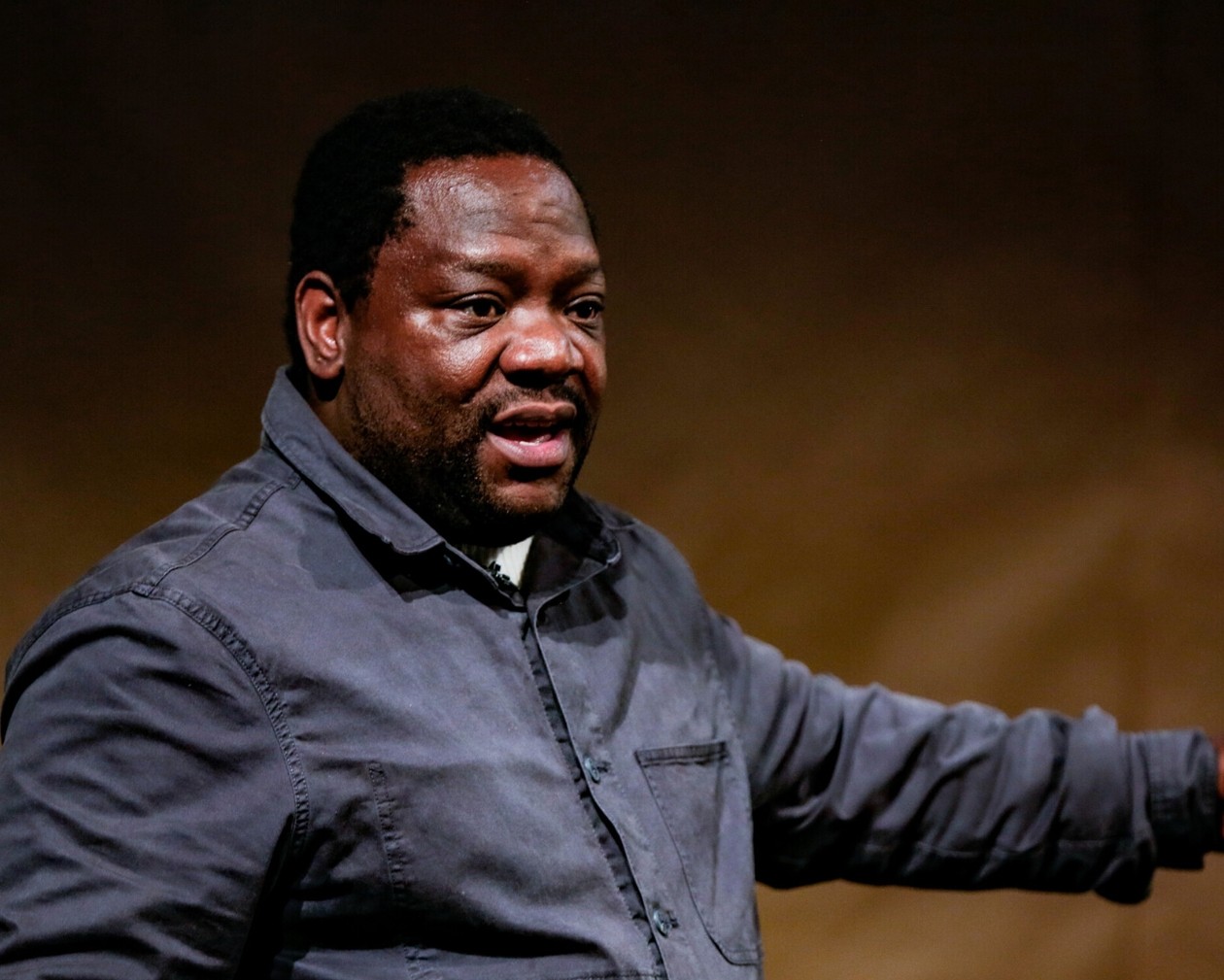
Nhlanhla Mahlangu is a singer, composer, theatre-maker, dancer, and educator. He was born in the late 1970s in the Phola Park squatter camp in apartheid-era South Africa and experienced first-hand the conflicts of the 1990s between the African National Congress, the Inkatha Freedom Party, and the so-called “Third Force.” His groundbreaking work Chant is shaped and inspired by these experiences. Through his practice, Mahlangu uncovers personal and collective histories while using art and performance as instruments of healing.
Neo Muyanga | MUSICAL MENTOR
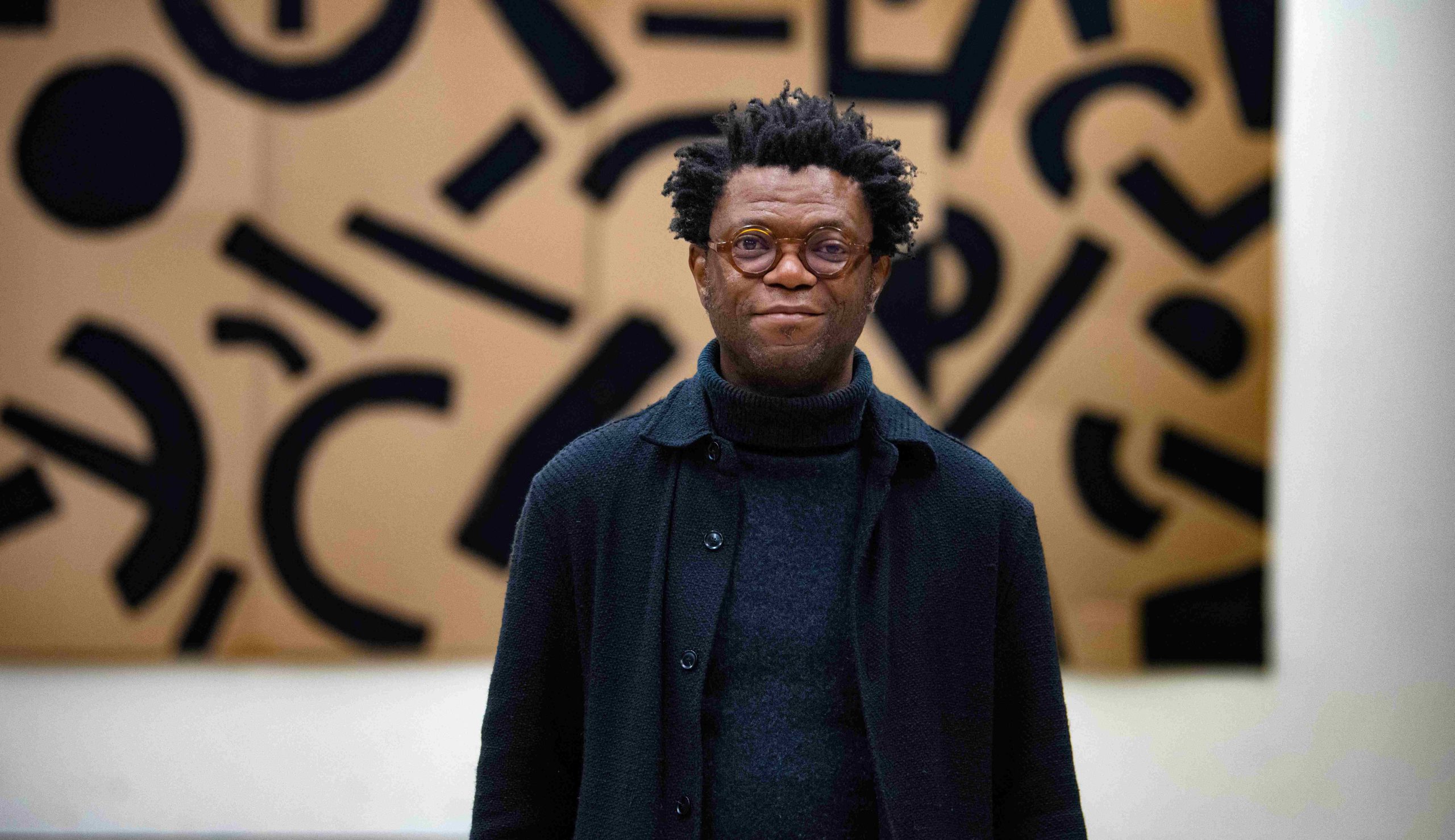
Neo Muyanga is a composer, musician and installation artist.
His practice straddles the spheres of live performance, audio-visual exhibition and scholarship. Muyanga is based in South Africa and tours globally regularly, with recent projects including operas, choral and instrumental works for chamber and large ensemble. Muyanga creates sound and visual works that are informed by archival research and often feature a strong focus on voice as a vector that shapes and transforms society.
Born in Soweto, Muyanga’s compositional style reflects largely his grounding in South African choral music while exhibiting a blend with other influences – including the Italian Madrigal, Ethiopian Mezmur and the Shaabi tradition of Egypt – encountered over the 3 decades of his artistic career.
This season, Muyanga presents SELEMO as the impresario of the Centre for the Less Good Idea atthe Neuköllner Oper, a co-production with Komische Oper Berlin.
Bronwyn Lace | PRODUCer
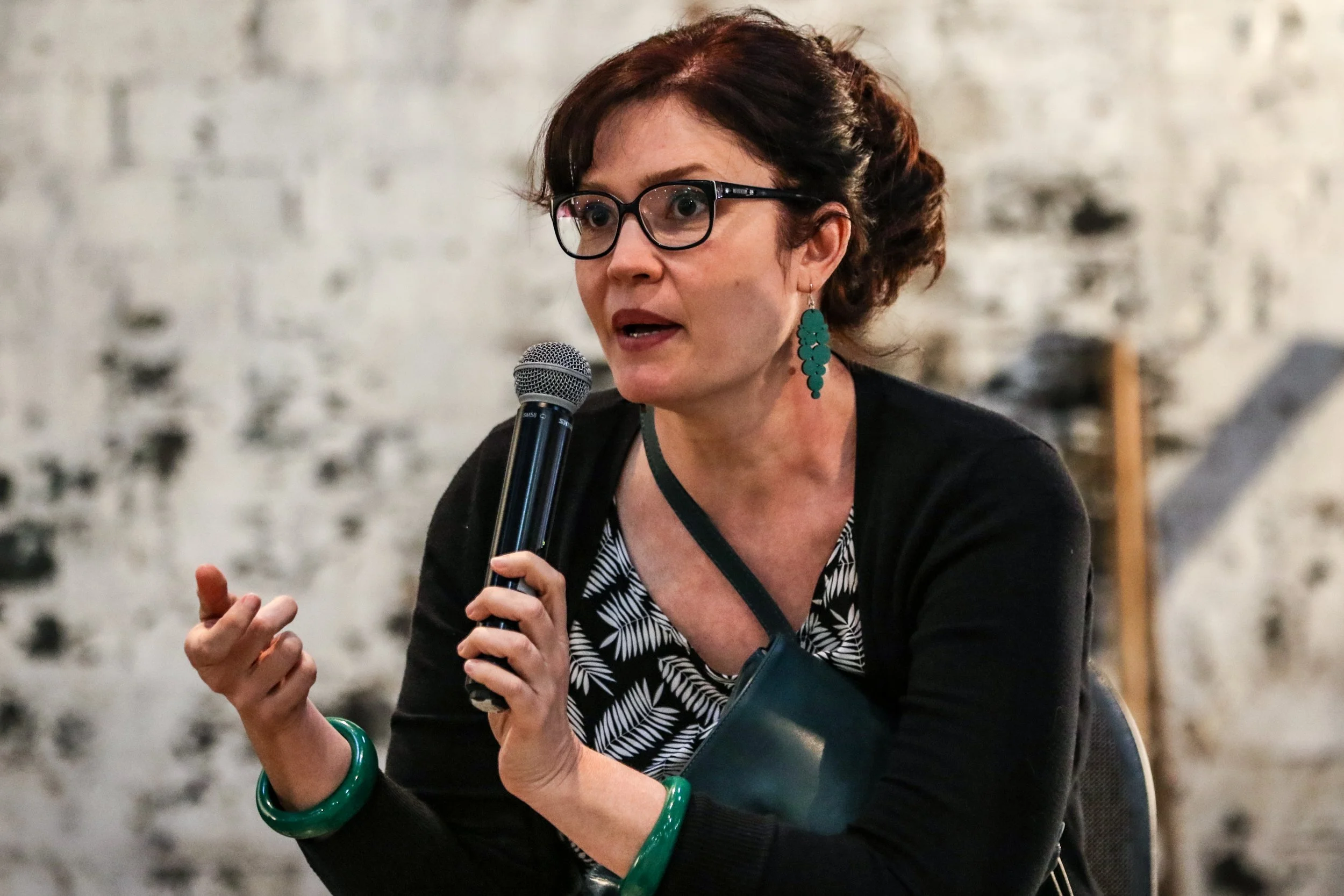
Bronwyn Lace is a visual artist from Botswana who lives and works between Johannesburg and Vienna. Site specificity, responsiveness and performativity are central to her work. Lace focuses on the collaborative relationships between art and other fields, including physics, history, museology, philosophy and literature.
Bronwyn Lace completed her studies in fine arts in 2004 and, in 2016, co-founded the Centre for the Less Good Idea in Johannesburg, South Africa, with William Kentridge, which she now directs and serves as its international liaison. In 2020, Lace co-founded The Zone, a collective based in Vienna that is committed to developing a completely new transdisciplinary and deliberative approach to research and curatorial work in art and science. As part of the Centre for the Less Good Idea, she is presenting the chamber opera SELEMO this season in collaboration with the Komische Oper Berlin and the Neuköllner Oper.
Dimakatso Motholo | Associate PRODUCER
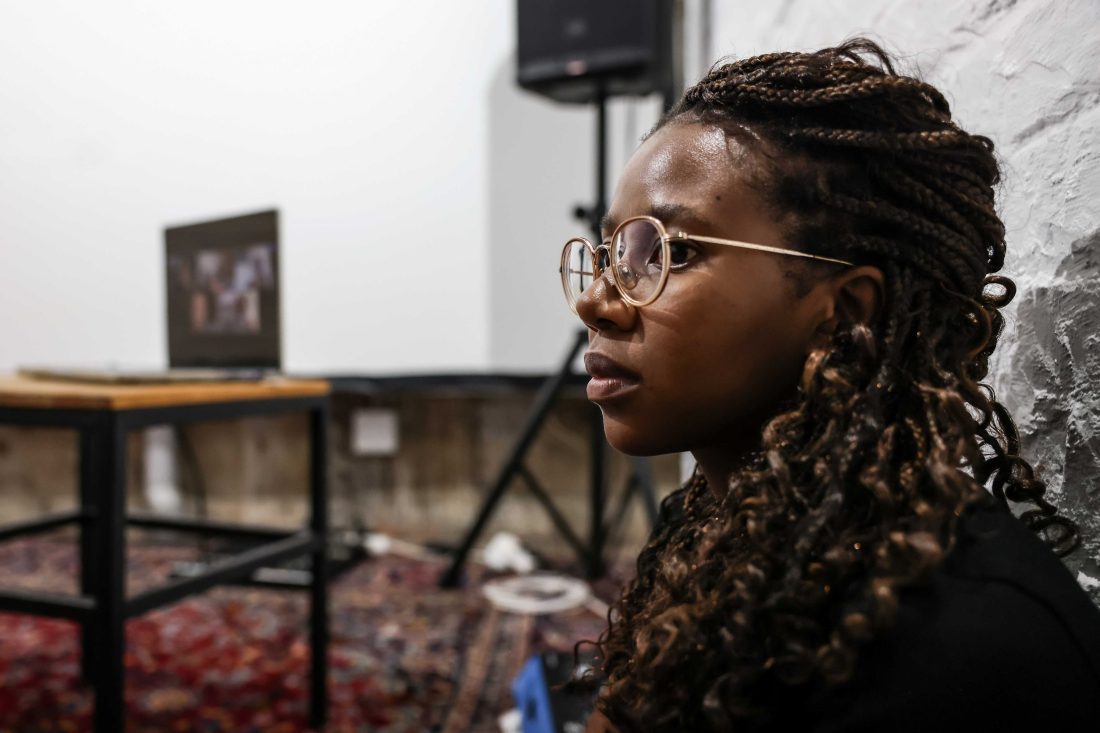
Dimakatso Motholo-Miya is an arts management practitioner, administrator, stage manager, and producer with a Master’s in Cultural Policy and Arts Management from the University of Witwatersrand.
As the Holder of The Centre, she manages strategic vision, operational execution, people leadership, program orchestration, and stakeholder relations. This cross-functional role requires adaptability, strong communication, and integration for The Centre’s success.
Working in the non-hierarchical, experimental incubator space allows her to both contribute and learn, while her performance background provides insight into creative production. The Centre’s inherent experimental and process-oriented nature resonates with Motholo’s methodology: learning and producing through doing.
Nthabiseng Malaka | Costume / Stage Design
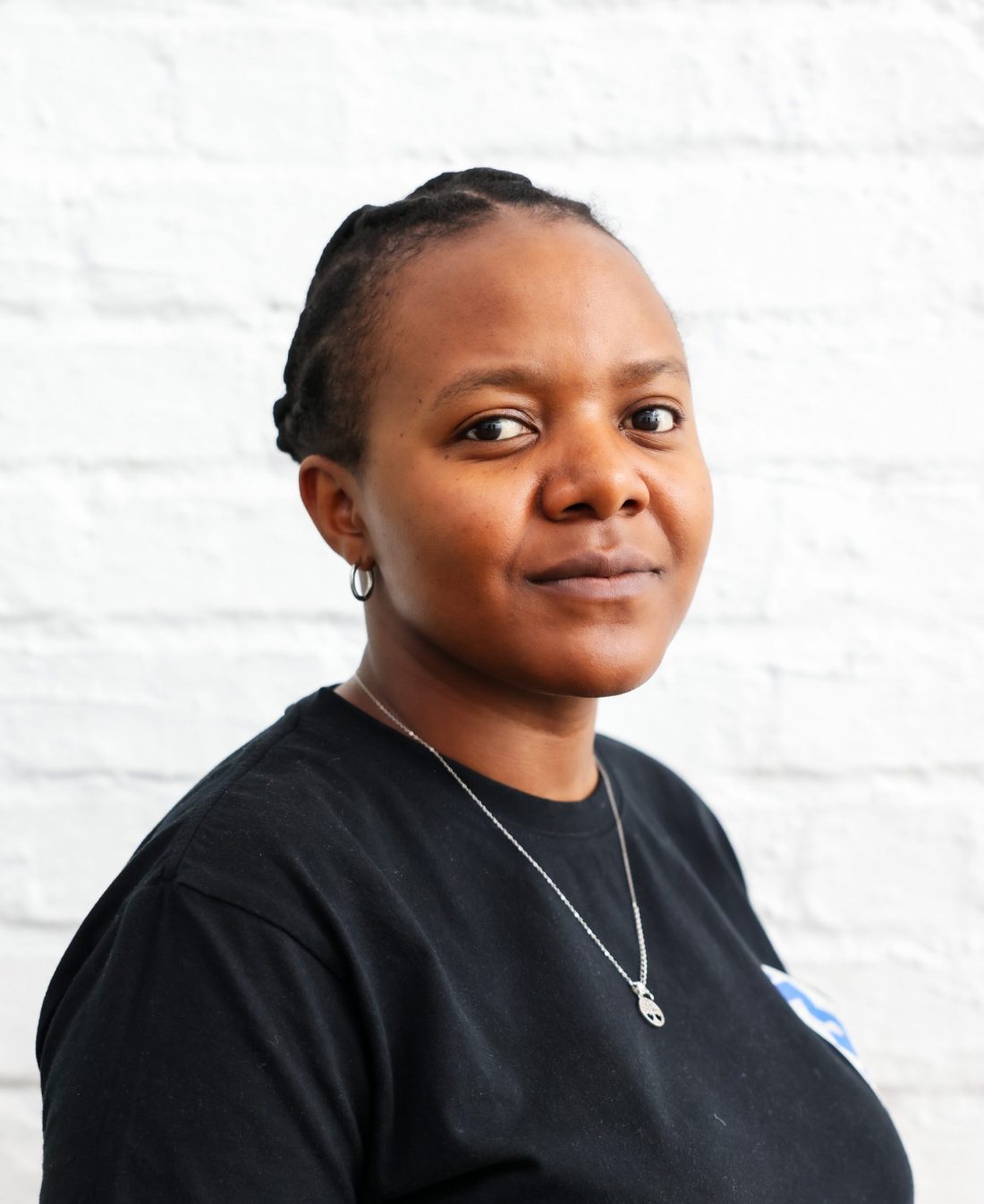
Nthabiseng Malaka is a South African theatre-maker who’s focus is scenography and costume design.Malaka graduated from University of the Witswaterand with a BA in Dramatic Arts. She is currently the resident designer at The Centre for The Less Good Idea and has worked in numerous theatre productions across the different theatre spaces in Gauteng including Market theatre, Joburg theatre, and Soweto theatre.
In 2023 Malaka was chosen as one of the three set designers to be part of the international program in collaboration with Scenography Today, Opera for Peace and UNITA for the future, here she is being mentored by Christian Schmidt.
In early 2020, Malaka was mentored by the internationally-renowned costume designer Greta Goiris. She then went on to design sets and costumes for Seasons 8, 9 and 10 of The Centre as well as create Goraa Goreng?, a project that incorporated scenography as installation.
Through her work with theatre, she has received Naledi Theatre Award nominations for her costume design and set design work. Malaka was also costume designer for Disneys The Magic Box since its first premiere in Bueno Aires, Argentina 2023. For Selemo, Malaka is the scenograpger and costume designer.
Michael Inglis | Light design
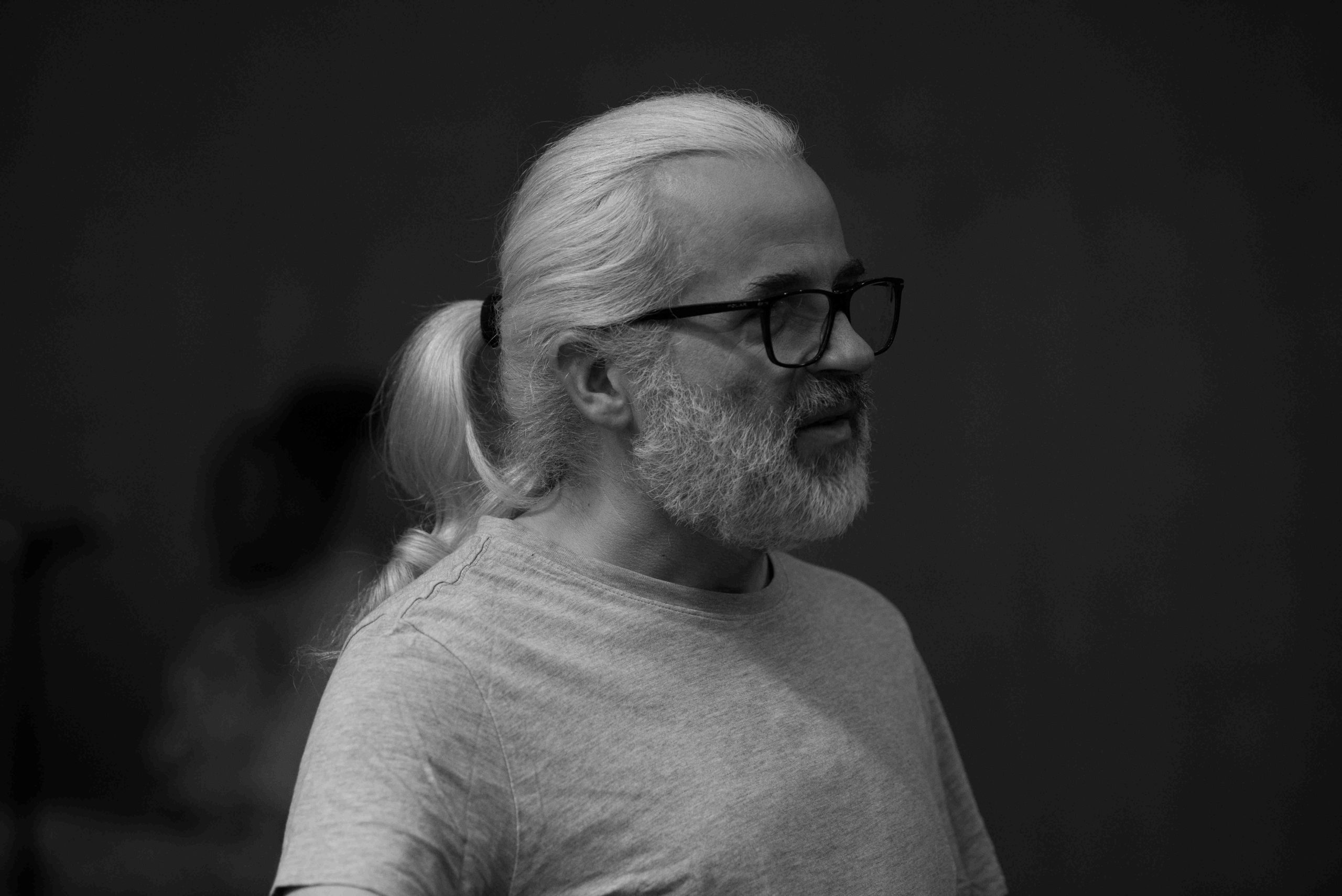
Michael Inglis’ diverse career as a theatre-maker has taken him to theatres around the globe in a wide range of creative and technical roles. He has traversed numerous genres, from musicals and contemporary circus to drama, physical theatre, puppetry, and visual theatre.
His company, Emmet Theatre, is dedicated to creating innovative South African theatre works that combine creative and technical expertise to produce remarkable theatrical experiences.
Over the past three years, he has been a regular collaborator at The Centre for the Less Good Idea, contributing to various productions in South Africa and internationally. Previously, he worked as lighting designer with Nhlanhla Mahlangu and S’busiso Shozi on their production African Exodus during the Centre’s tenth season in Johannesburg (South Africa) as well as at the Perelman Performing Arts Center in New York (USA). He is currently presenting SELEMO in collaboration with the Komische Oper Berlin and the Neuköllner Oper as Technical Director and Lighting Designer.
Marcus Neustetter | VISUAL ARTIST
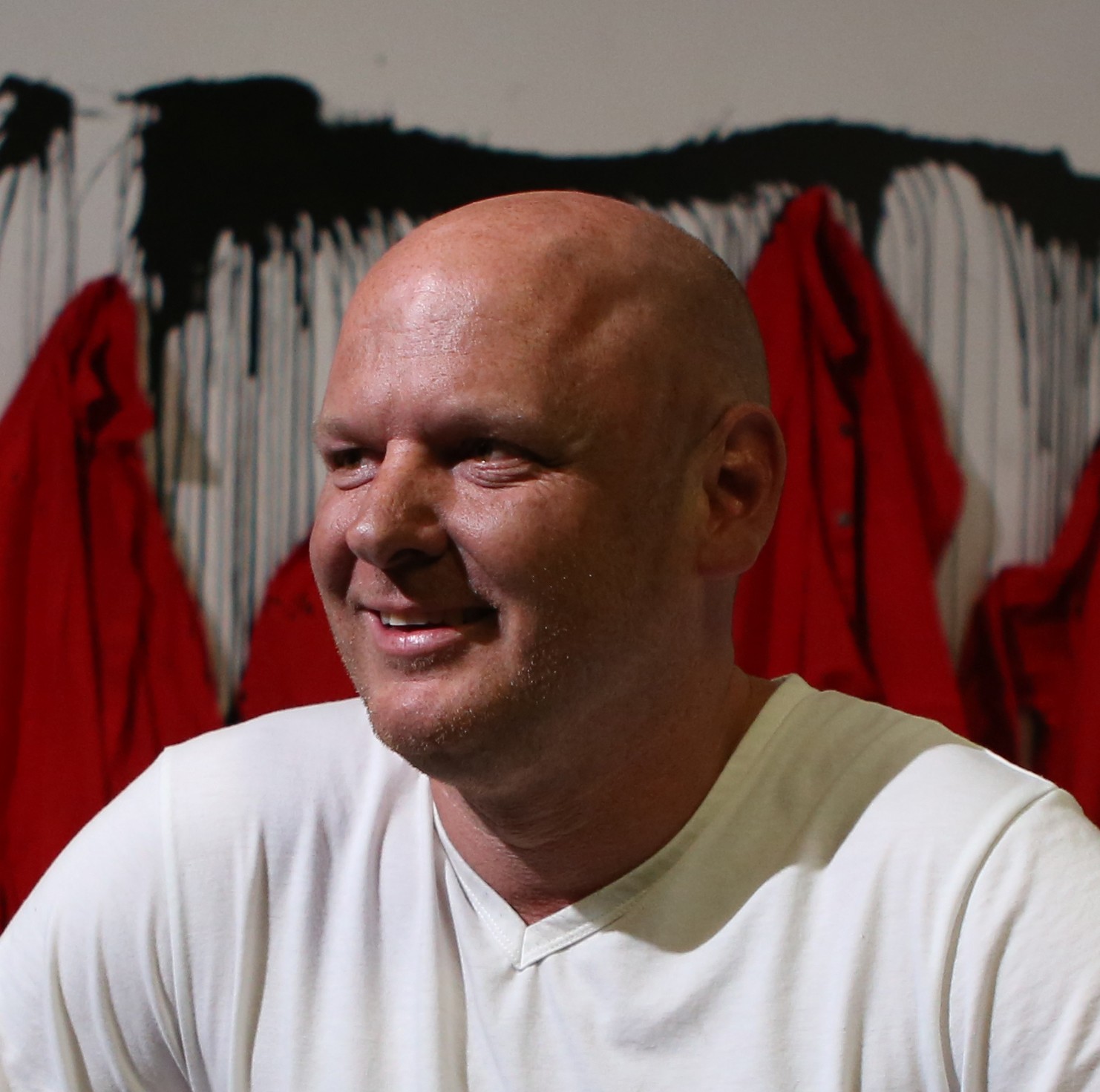
Marcus Neustetter (born 1976 in Johannesburg) earned an MA in Fine Arts in 2001 from the University of the Witwatersrand. His artistic practice is shaped by transdisciplinary collaboration, site-specificity, socially engaged interventions, and work at the intersection of art and cultural activism. Through projects in Africa, Europe, the Americas, and Asia, his work seeks a balance between poetic form and critical inquiry, with drawing serving as a central element of his creative process.
In 2000, Neustetter founded The Trinity Session, focusing on social participation and art in public space within complex contexts. In 2020, he co-founded The ZoNE, a transdisciplinary platform for research and exchange between art and science. He currently works between his studios in Johannesburg and Vienna.
Stacey Hardy | Script
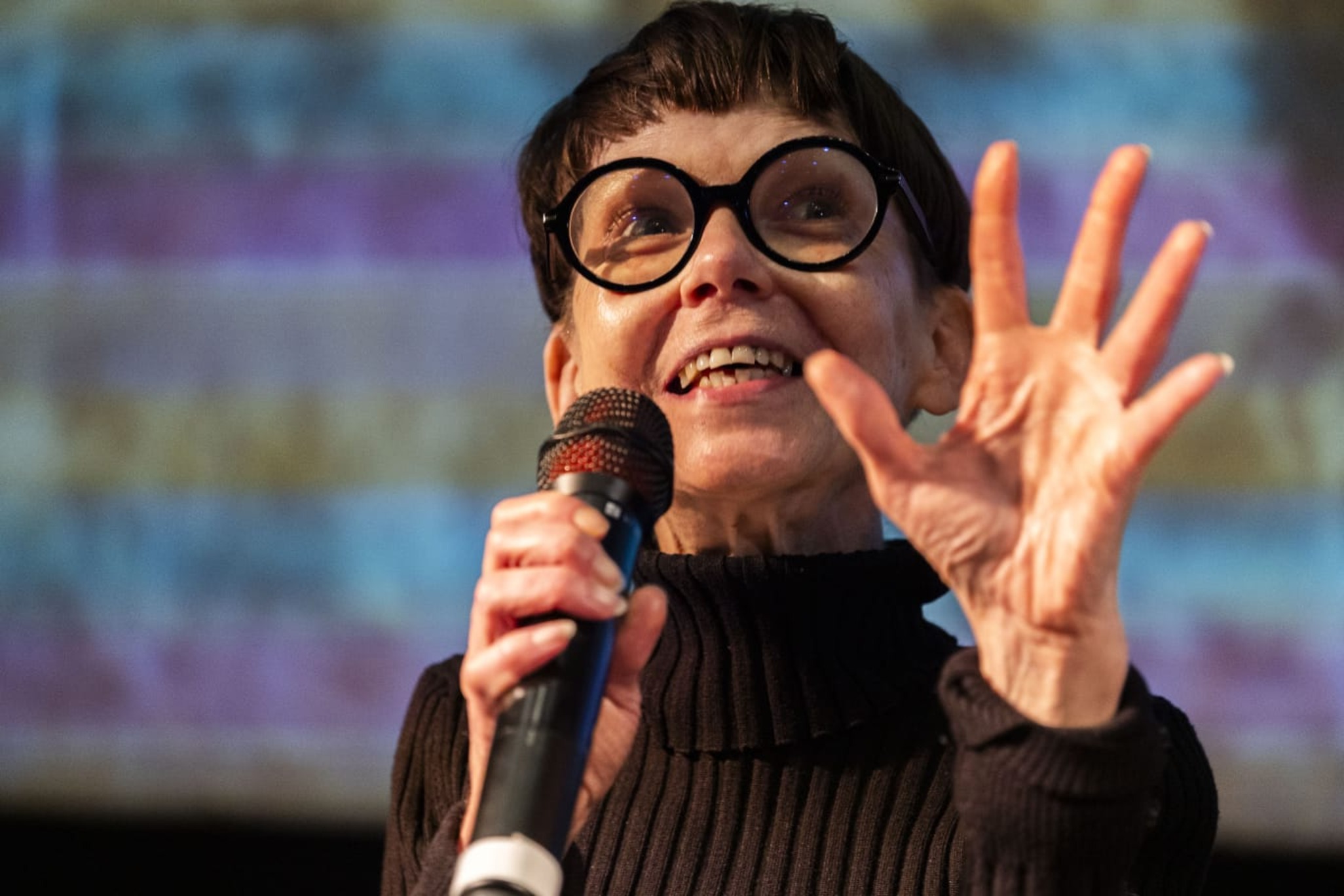
Stacy Hardy is a writer, researcher, and editor whose work explores the intersections of embodiment, the individual, and society. She is the author of the short fiction collections Because the Night (Pocko, 2015) and An Archaeology of Holes (Rot-Bo-Krik, Paris 2022; Bridge Books, Chicago 2023), and co-author of The Breathers with Daniel Borzutzky. Her critically acclaimed plays and award-winning librettos have been performed globally at venues and festivals such as the Aix-en-Provence Festival in France and the Royal Opera House in London. Hardy is a lecturer in Creative Writing at Wits University, an editor at the Pan-African platform Chimurenga, a partner in the African creative writing teaching initiative Saseni, and a founder of Ukuthula, a project that develops new writing from and against gender-based violence.
Sophie Jira | DramaturgY
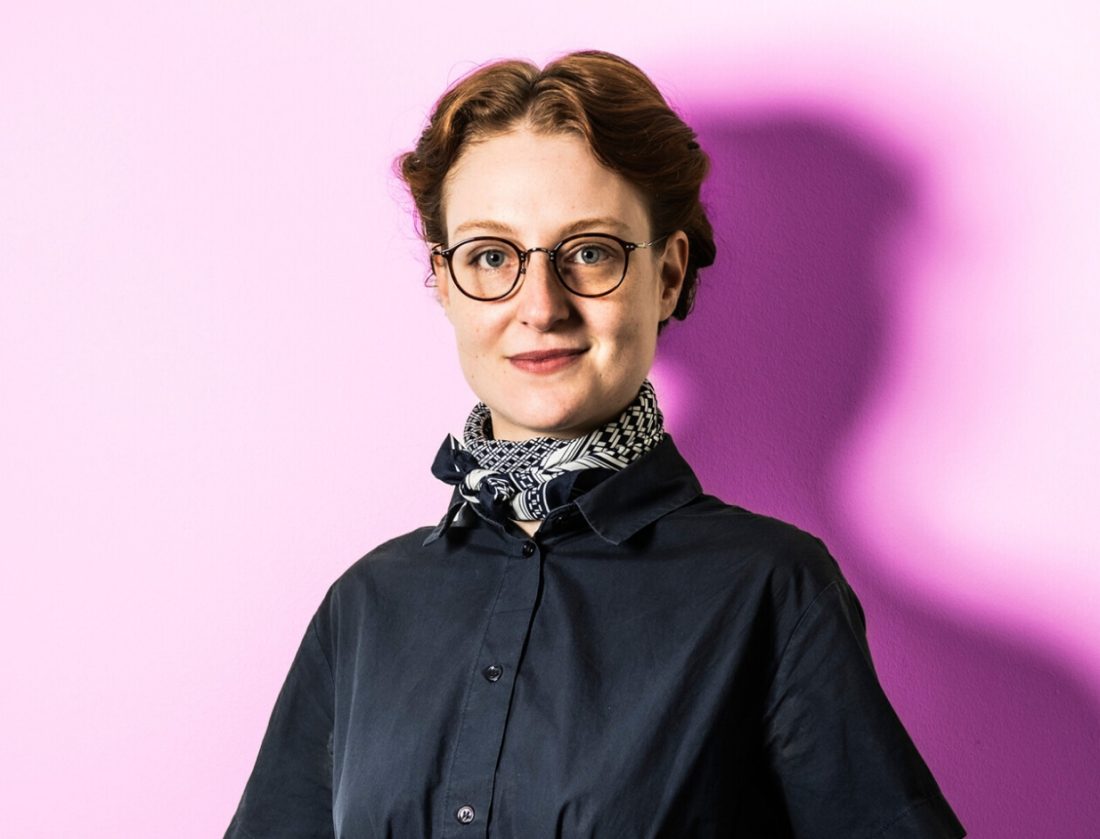
Sophie Jira, born in Vienna, spent her youth in the standing-room section of the opera house. She studied musicology at the University of Vienna and has since focused primarily on operetta, Viennese music, and the music of the Strauss family. For the Johann Strauss Year 2025, she serves as dramaturge for Eine Nacht in Venedig (directed by Nina Spijkers) at the Volksoper Wien.
She gained her first professional experience in the press office of the Wiener Staatsoper, in the organization of the Wiener Opernball, at the Narrenturm in Vienna, and in programme production for the cultural radio station Ö1.
From 2020 to 2024, Sophie Jira was engaged as a music theatre dramaturge at the Theater Altenburg Gera, where she collaborated with directors such as Achim Freyer, Bernd Mottl, Kay Kuntze, and Laurence Dale. For Gera, she wrote several commissioned works and stage programmes, including revues (Wien bei Nacht, 2024). Her first full-length operetta, Redoute in Reuß (music by Olav Kröger), set in the miniature principality of Reuß-Greiz-Schleiz, premiered in 2024 at Theater Gera.
Sophie Jira is a fellow of the Akademie Musiktheater heute of the Deutsche Bank Stiftung in the Libretto/Text division.
Since the 2024/25 season, she has been working as a dramaturg at the Komische Oper Berlin.
DenNis Depta | DramaturgY

Dennis Depta, born in 1988 in Cottbus, is a dramaturge, performer, and musician. Since 2014, he has been fearlessly confronting the rest of society with the Berlin (music) theatre collective glanz&krawall—from the high culture of opera to the poetic forlornness of a lone entertainer in a village disco. Together with director Marielle Sterra, he brings formats of popular culture such as wrestling, circus, punk concerts, or harness racing into the theatre, while increasingly taking theatre into urban spaces—for example into clubs, lidos, or psychiatric institutions.
Since 2019, Depta and Sterra have initiated the inclusive theatre and music festival series BERLIN is not…, for which music acts and performing arts groups alike reinterpret operas by Richard Wagner & Co. for a broad audience.
Since the 2025/2026 season, Depta has been working as a dramaturge at the Neuköllner Oper in Berlin. He is the guitarist of the bands SCHROTTI STAR ORCHESTER and KANAL. Depta believes that art comes from desire, not from skill.
Sandra M. Heinzelmann | ASSISTANT DIRECTOR / STAGE MANAGER
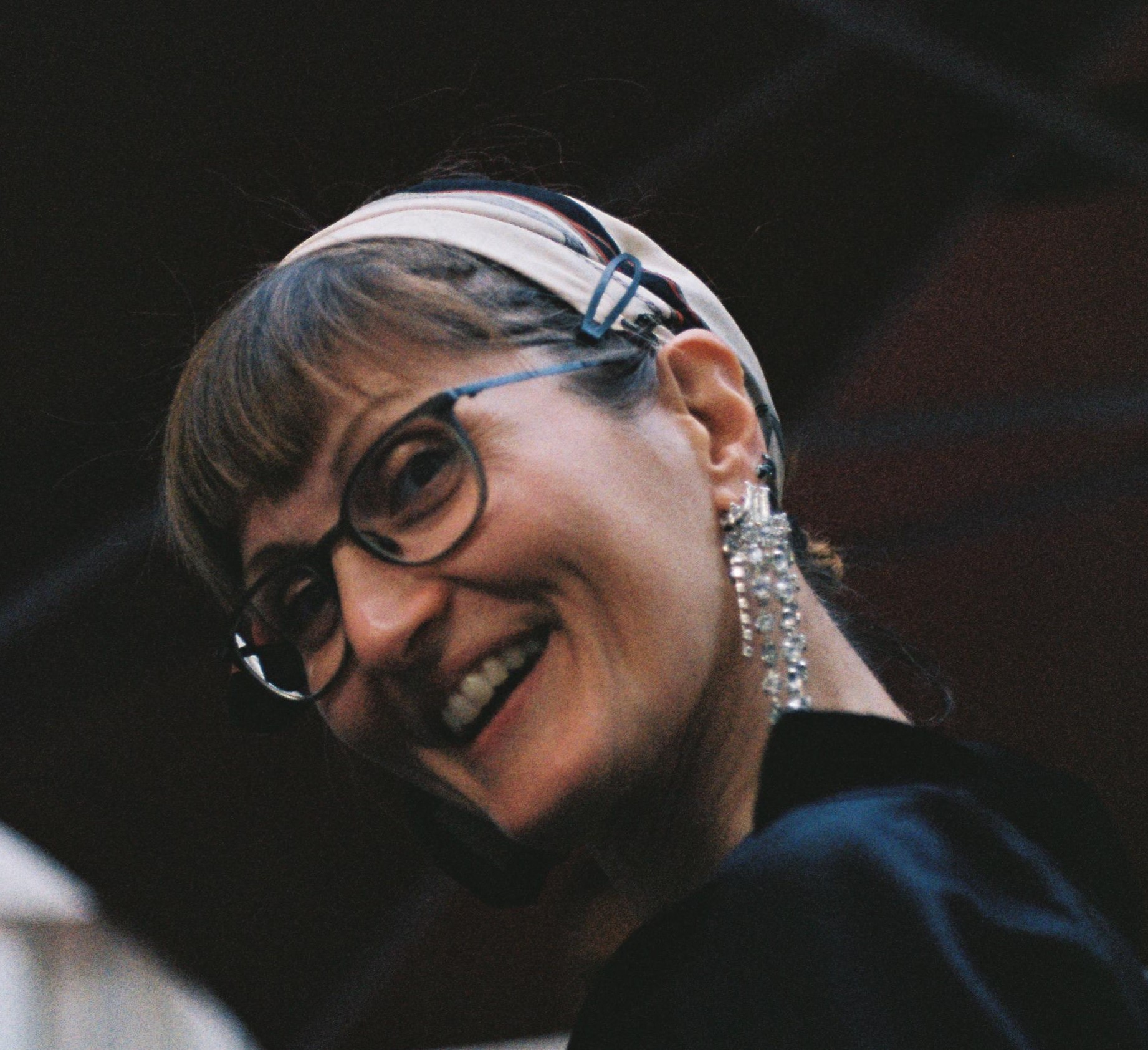
After studying at the University of Music and Theatre in Hamburg, where she earned her diploma in music theatre directing, she moved to Berlin. There, she quickly became part of the city’s vibrant cultural scene as a freelance artist. In addition to her theatre work, she explored the world of street art, created atmospheric soundscapes for gallery openings, and delighted audiences as a cassette DJ. With the band Aeternitas, she wrote and staged the world’s first goth-rock musical—an experiment that reflects her passion for unconventional forms of music theatre. This enthusiasm continues in the live tutorials IT’S JUST OPERA, HONEY and IT’S JUST A LEITMOTIF, HONEY, which she developed for the Neuköllner Oper. Thanks to her freelance work, she has collaborated with renowned institutions such as the Komische Oper Berlin, Atze Musiktheater, Staatsoper Unter den Linden, and the University of the Arts Berlin.
Hlengiwe Lushaba Madlala | Performer
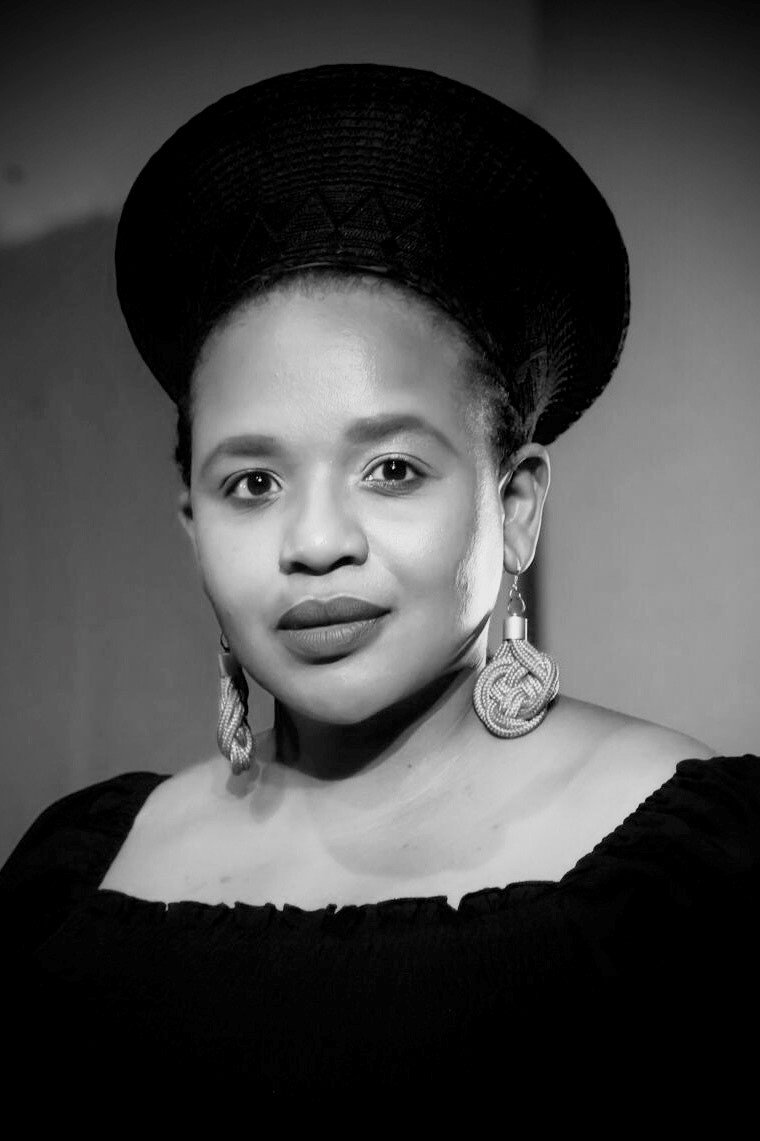
Hlengiwe Lushaba Madlala was born in KwaMashu in South Africa and received her acting, singing and dance training at the Tecknikon Natal (now Durban Institute of Technology). Since then, she has developed various choreographies and productions for the EDGE Programme (It’s not over until the Fit Fat Phat Lady Sings) and the Dance Umbrella Festival (Is this Africa put a cross on the appropriate woman). Madlala has been awarded the Standard Bank Award for Dance and the Gauteng MEC Choreographic Award for her work and was also nominated for the SAFTA Golden Horn 2024 for her acting performance in My Brother’s Keeper. She has also appeared on stage in musical productions, including Hairspray The Musical, Touch my Blood and Lost in the Stars. In 2013, Madlala also staged Cabaret for the Via Katlehong Dance Company. At the Neuköllner Oper Berlin, she now performs together with the collective Centre for the Less Good Idea in SELEMO.
Tshegofatso Khunwane | Performer
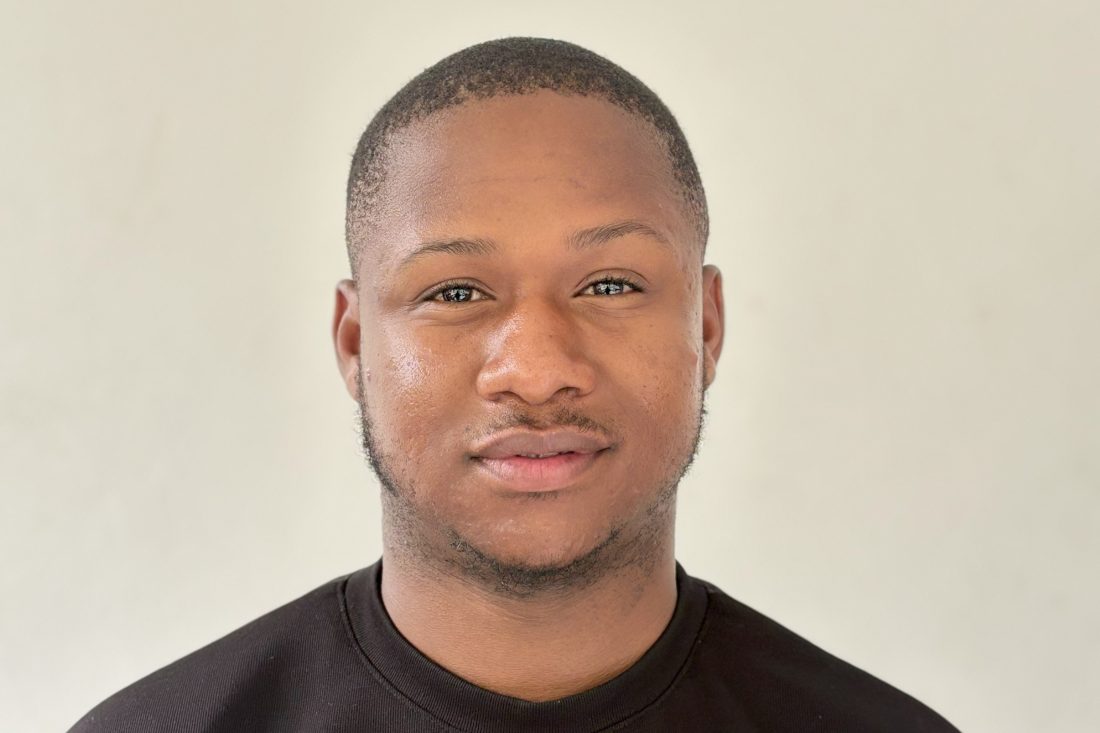
Tshegofatso Khunwane is a dynamic vocal artist and African percussionist whose work bridges music, dance, and theatre across local and international stages. He holds a National Diploma in Vocal Arts and an Advanced Diploma in Performing Arts (Music) from the Tshwane University of Technology (TUT), where his training laid a strong foundation for a multidisciplinary performance career.
Tshegofatso has contributed as a vocalist and percussionist to acclaimed dance productions, including Lekgoba, directed by L.J. Makhele, presented at the Dance Umbrella (2019), the Incubator Programme (2020), and later at the State Theatre during the Kucheza Afrika Festival (2021). His performance credits also include the TUT Dance Season (2019) and Internal by Sibonelo Mqunu, performed at the Kucheza Afrika Festival (2022) and at Durban University of Technology (2024). He further featured in Imxinwa and Maai, created by Ziyabukwa Mankabane, as both vocalist and percussionist.
A significant highlight of Tshegofatso’s career is his ongoing collaboration on Broken Chord, created by Gregory Maqoma and Thuthuka Sibisi. As part of the quartet, he toured extensively across Europe as well as the USA, Canada, and the UK between 2021 and 2024. From 2022 to 2024, he was also part of Mohile Music and Events, contributing as a percussionist, vocalist, dancer, and casting director in cultural exchange showcases in India (Mumbai, Greater Noida and New Delhi).
In his final year at TUT, Tshegofatso was cast as Monostatos in Mozart’s opera Die Zauberflöte (The Magic Flute). Since 2022, he has continued to perform with a wide range of jazz, African jazz, afro-pop, percussion, and theatre ensembles, including Routed Stems, Waffle House, Ibutho (Phila Dlozi), Milanzi Melodies, and Indlovukazi, while also collaborating with DJs for events such as Gbedu Nights.
Tshegofatso Khunwane’s artistry is defined by versatility, cultural exchange, and a deep commitment to African musical expression on global stages.
Gregory „Kekelingo” Mabusela | Performer

Kekelingo (Born Gregory Kekeletso Mabusela) is a musician from Soweto in Johannesburg.
His music journey started in 2001 when his arts and culture teacher assigned him to create musical instruments. Kekelingo started off by building plastic drums, from recycled buckets and tins. In the process he built a plastic horn made of plastic bottles and roll on container. It produced a saxophone and trumpet sounds.
In 2007, Kekelingo would walk along Vilakazi Street in Orlando and busk for tourists. He later started frequenting in New Town, Johannesburg outside the Market Theatre, Where he met Hugh Masekela. Masekela was fascinated by the sounds produced by Kekelingo’s horn and encouraged him keep playing the instrument.
In 2009, Kekelingo participated at SA’s Got Talent and reached the semi finals. The event was marked the beginning of his journey as a full time musician.
In 2010, Kekelingo joined a band called The international award winning band Muffinz as drummer and singer.
2013 7 time SAMA awards nominee ( The Muffinz Band)
2014 Metro FM best group winners (The Muffinz band)
2017 The Centre for the less Good idea Season 2 Enyangeni
2019 Holland Festival Amsterdam (Enyangeni)
2023 Kekelingo due EP release
2025 Moya Chekhov International Theatre Festival
2025 Acces The music in Africa Conference for Collaborations ,Exchange and Showcases
Vhahangwele Moopo | Performer

Vhangwele Moopo is a South African Vocalist whose work spans choral, classical and operatic music. Her talent became evident early on, earning her multiple accolades at Thirisanho School Competitions. She later expanded her performance experience through participation in various diocesan choirs and appearances at the Old Mutual Choirs Competitions between 2010 and 2012. During this period, she also performed internationally in Germany with the Harmonious Ensemble, gaining valuable global exposure. In 2016, she joined the vocal quartet LA Africa, directed by Buchanan Marais. Her classical repertoire includes solo performances from Händel’s Messiah with Soweto Angelic Voices. In 2018, she performed African Art Music with the IONIAN Orchestra, led by Bab Bhekumuzi Mngoma. This collaboration continued into 2022 with performances of Judas Maccabaeus.
From 2023 to 2024, Moopo worked with CSMI (Creator Senzo Music Initiative) in partnership with the IONIAN Orchestra under the leadership of Bab Mngoma. She also expanded her operatic repertoire, collaborating the Malagasy dancer Gaby Saranouffi as an opera singer in Ranavalona III: The Chrysalis Queen of Madagascar. This season, she is working on SELEMO as a performer in collaboration with the Neuköllner Oper and Komische Oper Berlin.
Pertunia Msani | Performer
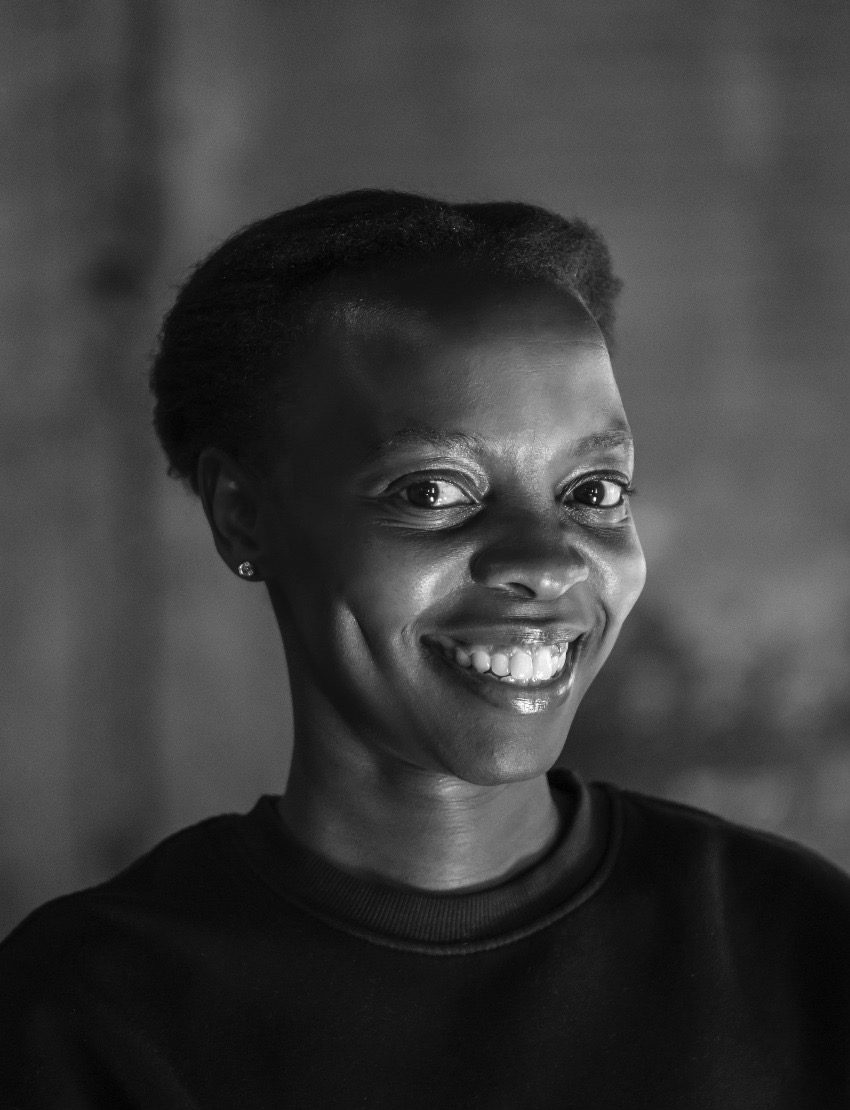
Pertunia Mpumelelo Msani is a performance graduate from the University of KwaZulu-Natal. Msani’s professional practice is rooted in social engagement and impact – using music and theatre to bridge worlds and tell stories that begin to change our communities. Msani is a vocal artist whose interest is in the voices ability – its power and helping people discover their own voices. Msani has a workshop process called IZWI which invites participants to co-create song through their own voices, creating remedies for themselves. This process invites participants to be in the practice of community. The workshop process was found as a result of Msani’s EP called Izwi. which was the beginnings of her interest in the voice as an instrument or tool for change. Msani has spent several years as a creative researcher and theatre company member at the University of the Witwatersand, Johannesburg working closely with underserved communities and youth through innovative theatre interventions. Msani is also a collaborator with The Centre for the Less Good Idea creating and touring professional theatre works.
Alma Sadé | Performer
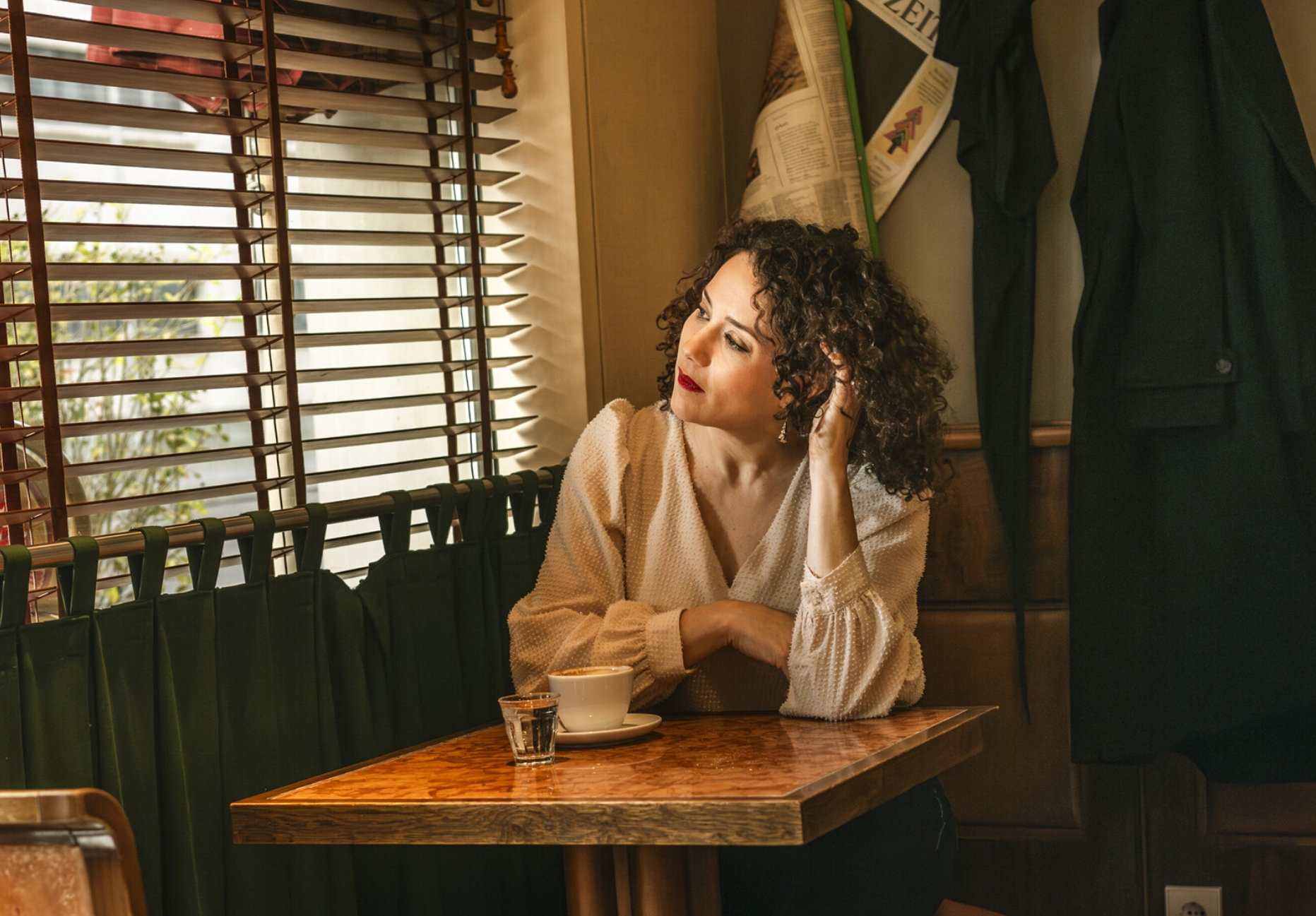
Although Alma Sadé had little to do with music in her youth, she was nevertheless drawn to the arts. In her hometown of Tel Aviv, she first completed a school internship in the props department of the local opera house and subsequently worked there as a stage manager.
Even at that time, the political situation in Israel was tense, marked by fear of war and terror. On one occasion, Alma Sadé accompanied her aunt, a designer, to a fashion show in New York City. Sadé stayed in the city that never sleeps and made her way on her own. In this new environment, she eventually discovered her own voice—first in jazz, and later in classical singing. She studied for four years at the renowned Mannes College of Music and was subsequently engaged by the Deutsche Oper am Rhein in Düsseldorf/Duisburg.
Together with her colleague and best friend in Düsseldorf, Theresa Kronthaler, she visited Berlin shortly after Kronthaler had joined the ensemble of the Komische Oper Berlin. Soon afterward, an opportunity arose when a Zerlina was being sought for Peter Konwitschny’s production of Don Giovanni. Barrie Kosky heard her audition and invited her for a working session. Since the 2014/15 season, she has been a permanent ensemble member at the Komische Oper Berlin.
Polly Ott | Performer
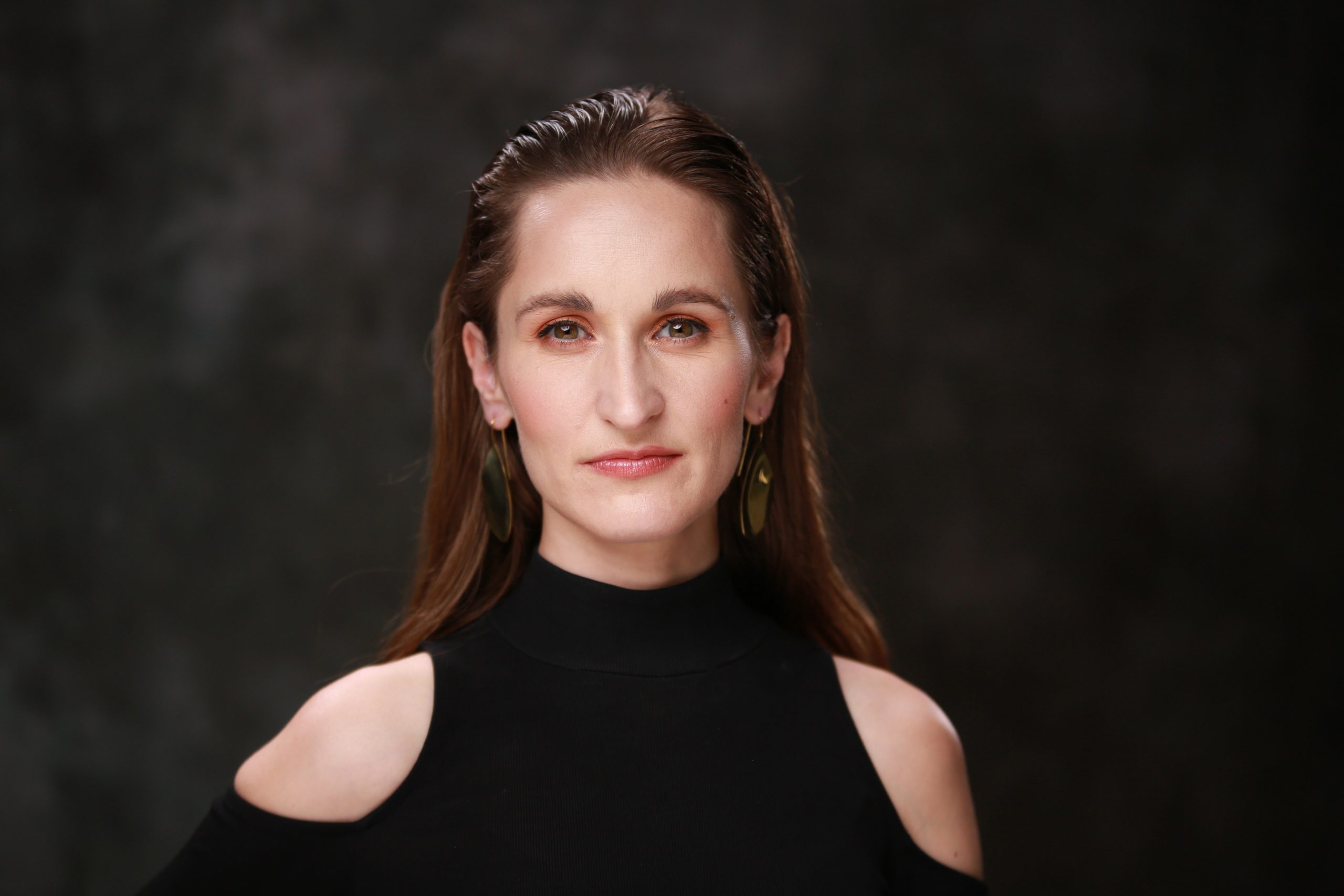
Polly Ott is a New Zealand soprano who has been based in Berlin since 2012. She studied at the University of Canterbury in Christchurch and at the Universität der Künste Berlin, where she completed her Master’s degree in Opera with distinction. Her first engagement in Germany brought her to the Neuköllner Oper in 2013 with AIRRossini.
Since then, she has appeared at opera houses and concert venues throughout Europe and New Zealand, including New Zealand Opera, the Berliner Philharmonie, the Komische Oper Berlin, Theater Magdeburg, the Laeiszhalle Hamburg, and the Cuvilliés-Theater. Among her defining roles are Despina (Così fan tutte) and Anne Frank (The Diary of Anne Frank). In the concert repertoire, she has performed works such as Mozart’s Exsultate, jubilate, Bach’s St John Passion, and Mahler’s Symphony No. 2.
Polly Ott combines vocal versatility with a striking stage presence—OperaWire has praised her as a “contemporary singing actor.” As an independent artist, she created the internationally award-winning music video Ophelia’s Aria and released her debut album Mother Earth with Atoll Records in 2024.
Deniz Tahberer | Violin
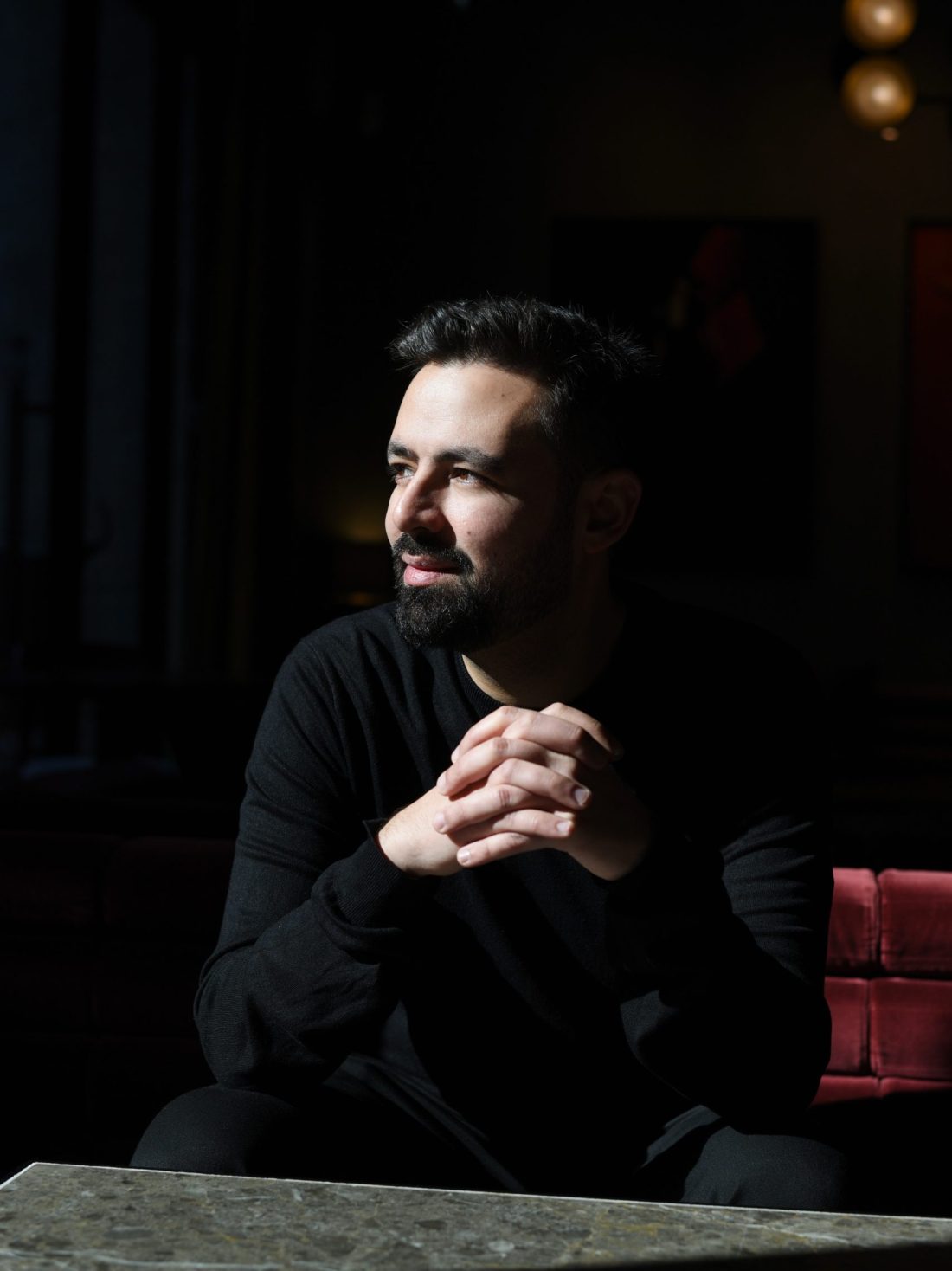
Deniz Tahberer is a Turkish-Canadian violinist and composer who is equally renowned for his expressive solo and chamber music performances as he is for his stylistic openness and artistic curiosity. As a soloist and chamber musician, Deniz Tahberer is a fixture in the musical life of Saxony and Berlin.
He gained international attention by winning first prize at the XXIX Michelangelo Abbado Violin Competition in Milan (2010). Two years later, together with pianist Ammiel Bushakevitz, he won first prize at the International Duo Competition of the Lausanne Music Academy (2012). These awards marked the beginning of an international career that has taken him to renowned stages throughout Europe.
In addition to his work as a performer, Tahberer is also a passionate composer. His early works were created at the intersection of traditional Turkish music and European classical forms. In recent years, his compositional language has evolved significantly.
Electronic soundscapes, global influences, and rhythmic impulses from South African and other world music traditions increasingly characterize his current work. His music reflects an open, contemporary attitude and deliberately transcends cultural and stylistic boundaries.
For several years, he has been deputy concertmaster at the Komische Oper Berlin, where he ideally combines his experience as a soloist, chamber musician, and ensemble artist.
Julia Lindner de Azevedo Conte | Viola
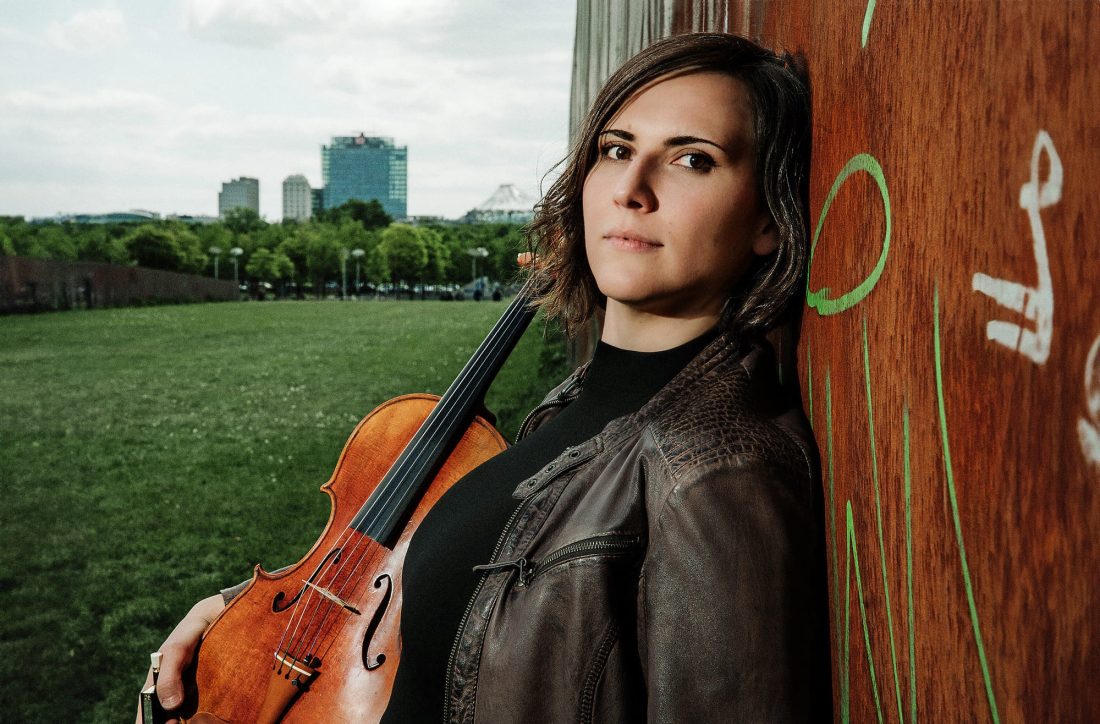
Julia Lindner de Azevedo Conte has been a violist with the Komische Oper Berlin since 2019 and is a familiar presence at SCHALL&RAUSCH: for her, the festival series has been both laboratory and playground from its very first edition—a space where orchestral experience meets experimental formats and fosters intercultural connections.
Chamber music, contemporary premieres, and unconventional collaborations are as much a part of Julia’s artistic identity as the classical repertoire. She studied at the Hochschule für Musik Hanns Eisler Berlin with Prof. Pauline Sachse and completed her Master’s degree in 2023 at the Universität der Künste Berlin under Prof. Wilfried Strehle (former principal violist of the Berliner Philharmoniker).
Masterclasses with Prof. Andreas Willwohl and Prof. Hartmut Rohde, as well as intensive artistic exchange with Elizaveta Zolotova (RSB), were important musical influences—alongside studio experimentation with bands such as Corvus Corax and The Tunics, or with the jazz piano quintet Maria Baptist & Strings, of which she was a member from 2014 to 2016.
As an academy member of the Rundfunk-Sinfonieorchester Berlin and for several years as a temporary member of the Gewandhausorchester Leipzig, she worked with some of the most sought-after soloists and conductors of our time and built a vast orchestral repertoire spanning all eras and genres. This wide-ranging experience has made her a sought-after guest musician with orchestras both nationally and internationally, including the Deutsches Symphonie-Orchester Berlin, the Konzerthausorchester Berlin, the Deutsche Oper Berlin, and the Orquestra Sinfônica do Estado de São Paulo (OSESP).
With the Kammerorchester Metamorphosen Berlin, she recorded several CDs for Sony Classical.
Arnulf Ballhorn | Double bass
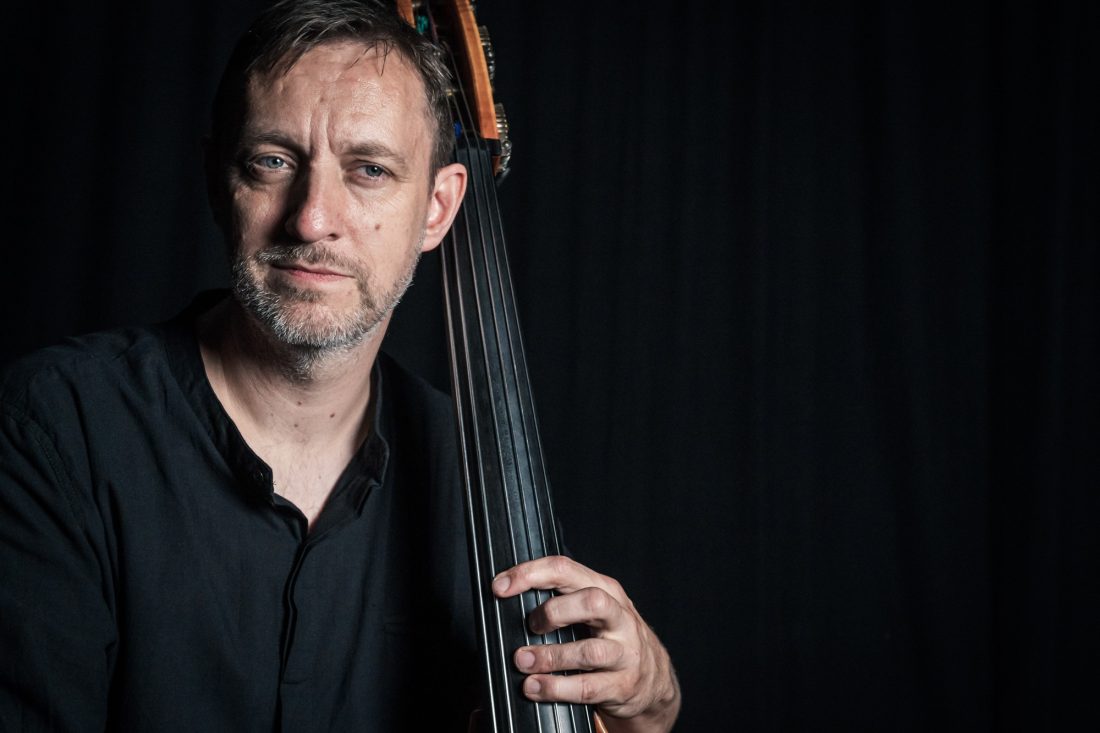
Arnulf Ballhorn has been a bass player in the orchestra of the Komische Oper Berlin for over 25 years, where he is also involved in chamber music productions and intercultural projects. He had completed his double bass studies with Prof. Rainer Zepperitz, the long-time solo bass player of the Berlin Philharmonic.
Musical preferences are difficult for him to narrow:
In addition to his work in the orchestra, contemporary music and classical chamber music as well as jazz and tango and intensive work with the electric bass are among his basic musical needs. He regularly plays at international festivals of various musical genres and also runs his own label and studio.
His commitment to the orchestra goes far beyond »normal« service. In the team of Selam Opera and especially in the concepts of the »Opera Dolmuş«, Arnulf Ballhorn was able to contribute ideas and experience.
At some of the Komische Oper Berlin’s sensational festivals in recent years (including the two tango festivals and the festival Schall&Rausch), various programme components have been significantly designed by him.
Magdalena Bogner | FLute
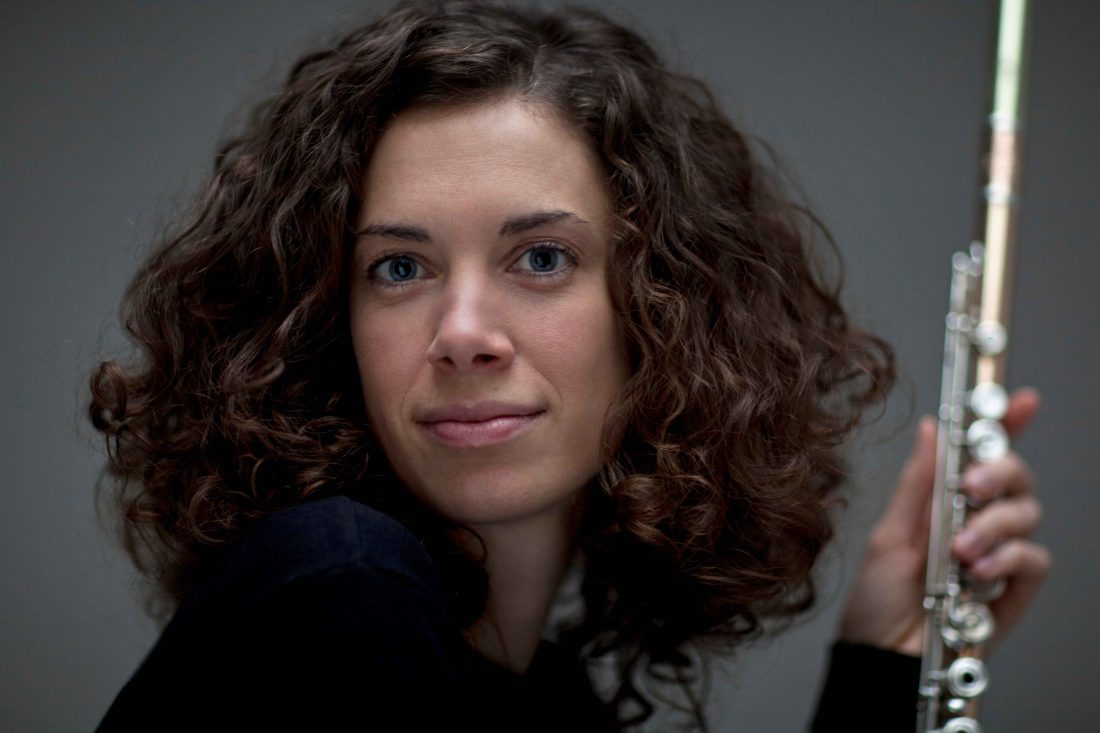
The Austrian flutist Magdalena Bogner has been principal flutist at the Komische Oper Berlin since September 2015. She has made guest appearances in orchestras such as the Vienna Symphony Orchestra, the Gewandhausorchester Leipzig and the Staatsoper Unter den Linden, as well as with leading German radio orchestras, and has worked with renowned conductors including Kirill Petrenko, Zubin Mehta, andSimon Rattle.
In addition to versatile chamber music activities, she has been a permanent member of the ensemble of 14 Berlin flutists since 2017. Furthermore, since July 2023 she has accompanied the Verbier Festival Junior Orchestra as a lecturer in the flute group.
Since the summer semester of 2025, Bogner sets up her own flute class at the Hochschule für Musik »Franz Liszt« Weimar.
Tuyêt Pham | Piano
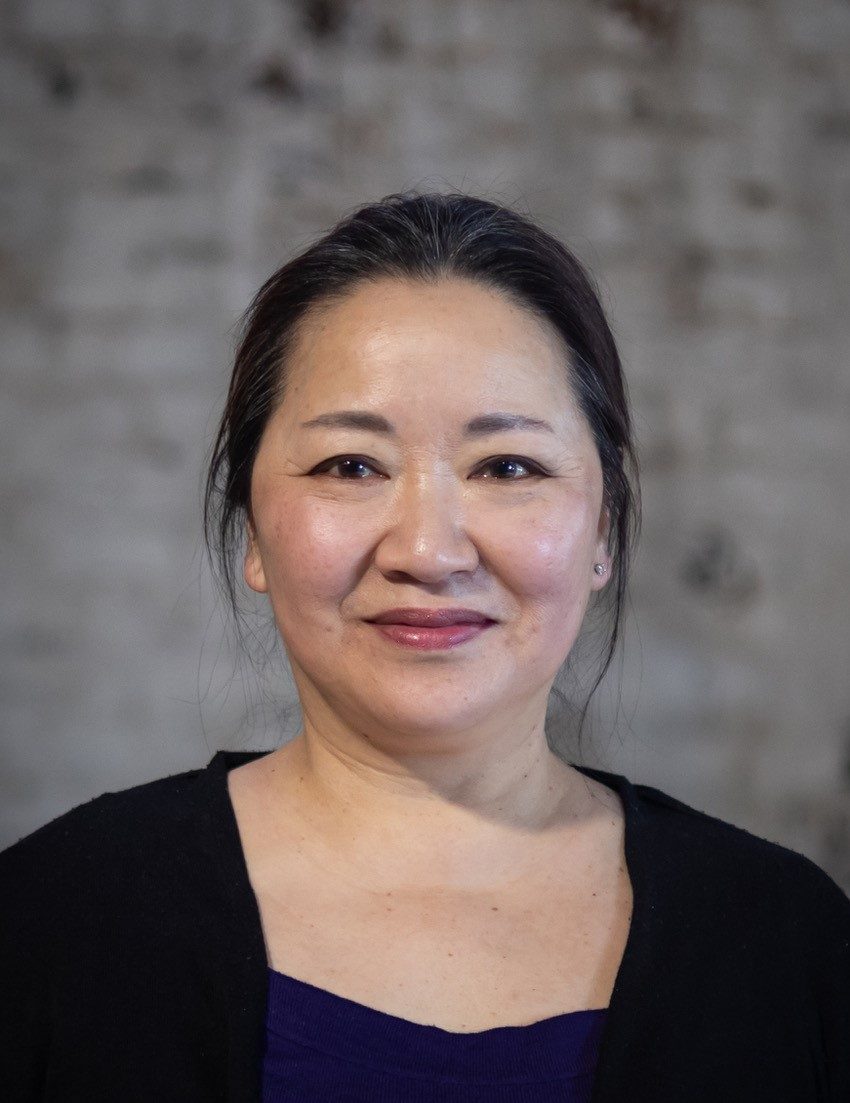
Tuyêt Pham was born in Paris to Vietnamese parents and now lives in Berlin. As a pianist, she primarily dedicates herself to chamber music. In addition to the classical repertoire, she engages with Latin American music, Jewish song recitals, contemporary music, and improvised music.
She was a co-founder of the group Vibratanghissimo (Tango/Jazz), with which she performed in concerts for many years. Together with the bandoneon player and composer Helmut Abel, she founded the Mafalda Ensemble, which performs both works by Helmut Abel and tango-inspired music.
Tuyêt Pham studied in Paris and Berlin. Particularly formative for her artistic development were her encounters with and studies under Klaus Hellwig, György Sebők, Aribert Reimann, and Dietrich Fischer-Dieskau.
In co-production with the Komische Oper Berlin and the Centre for the Less Good Idea, Johannesburg
Funded by