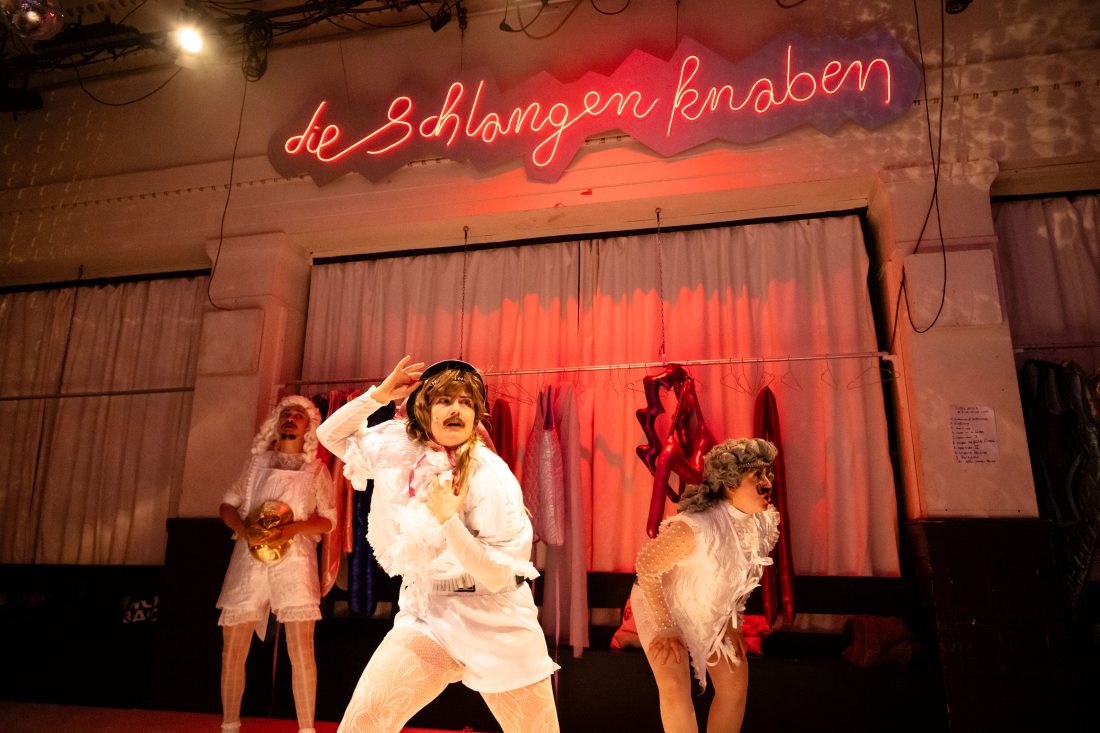
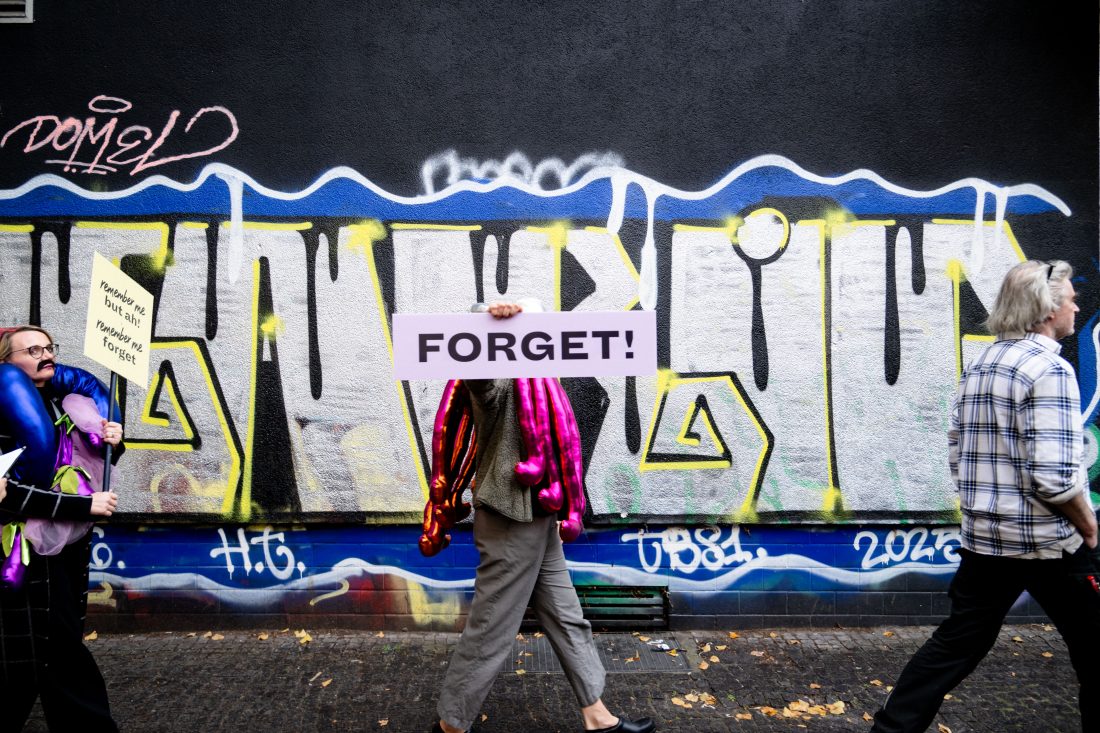
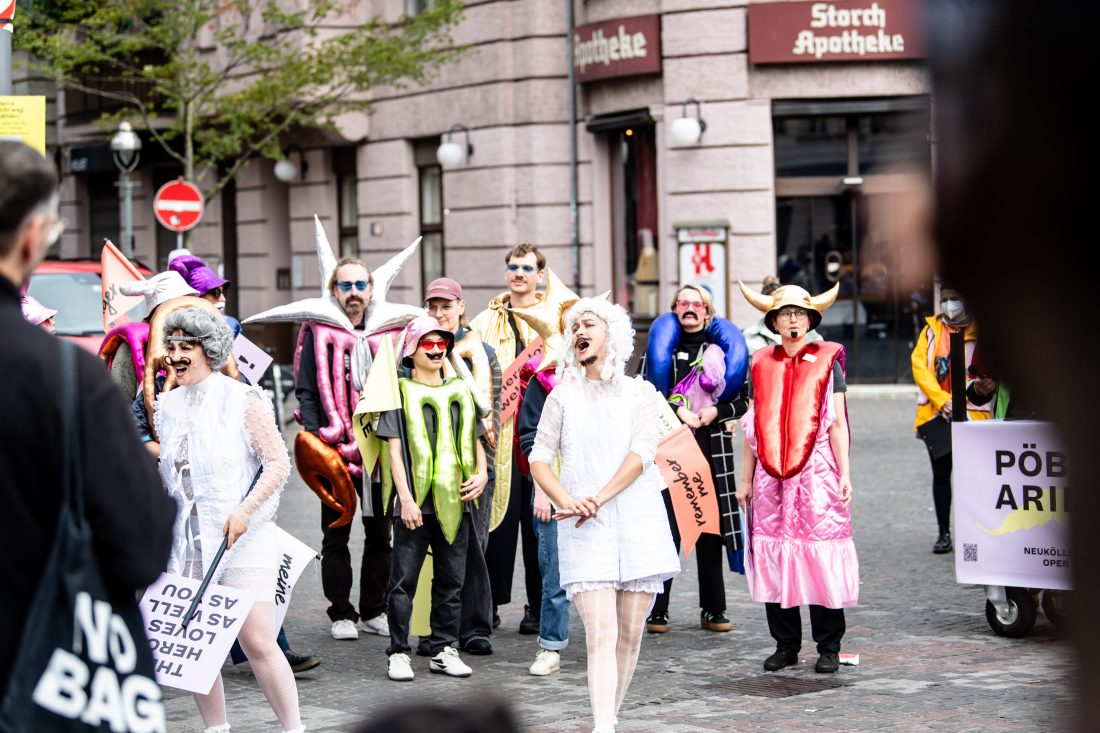
In PÖBELARIEN, opera is under attack – and you are the infection! A collective of parasites crawls into costumes, gnaws away at arias and takes whatever feels good from the operatic canon. The rest is thrown out. The Snake Boys bring fat beats, clear voices and a mountain of shimmering costumes. Whoever wants to can slip into a new role. Whoever doesn’t can simply watch. Because only those who are up for stage fright get to step onto the stage. After all, three bearded performers are already there, serving up danceable opera pop, critical and empowering thoughts on the history of opera, and the beautiful singing of their parasitic golden voices. And then everyone heads out of the opera house in a parade, infecting the streets with their new sound!
PÖBELARIEN is a four-part series that parasitically infiltrates and reinvents famous operas throughout the season.
Introduction
By Pauline Jacob, dramaturg at Neuköllner Oper and of PÖBELARIEN
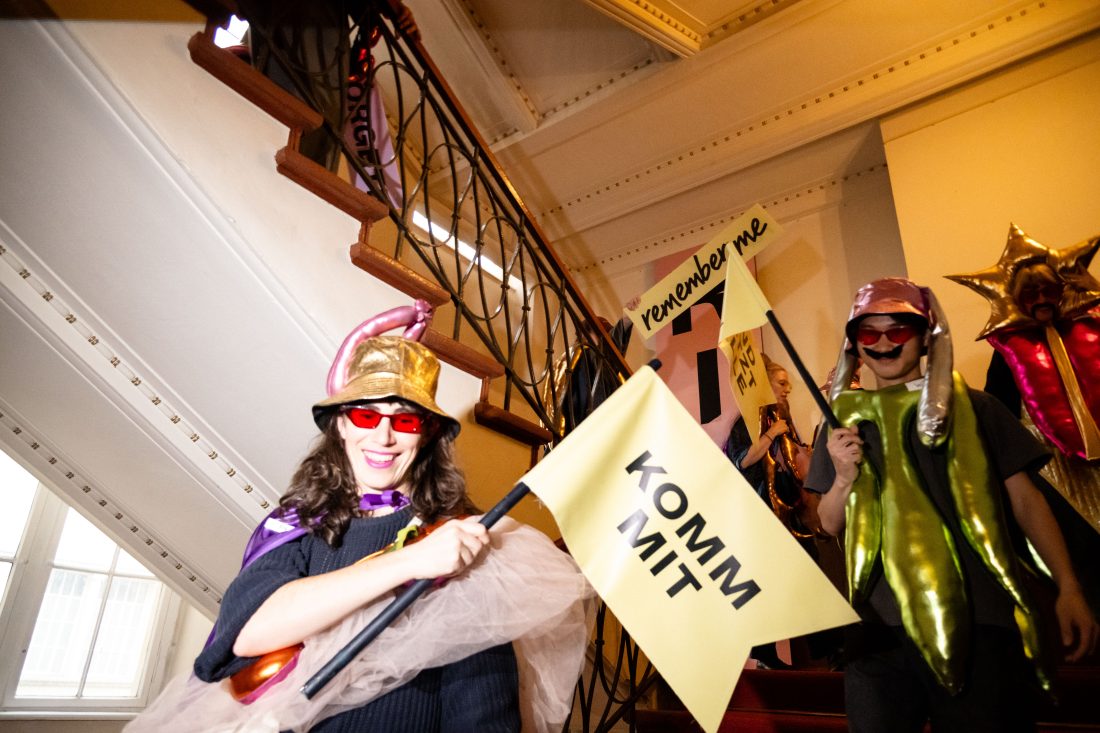
I’m standing somewhere in a square in downtown Neukölln, wearing a knee-length, shiny blue sausage necklace. With pink sunglasses perched on my nose, I’m trying to loudly belt out an aria I’ve just learned, and as I perform wild dance moves with the rest of the group, a hat topped with a huge, bright-red rooster comb is wobbling on my head – how on earth did I end up here?
Oh, right: I ventured into a piece by the collective die schlangenknaben. So far primarily known as a musical act performing in clubs and at festivals, they are well known at the Neuköllner Oper as a three-headed hydra in the production LAST EXIT EUROPA. Three performers who create a queer-feminist Gesamtkunstwerk of singing, beats, beards, and costumes – and who are not afraid to go all out.
“Your path will lead you to your goal,
but, young man, you must triumph like a man.
So heed the lesson we impart:
Be steadfast, patient, and discreet!
In short, be a man!”
This is what the performers, aka Henry, Amadeus, and Maurice, sing at the beginning of each of their shows, harking back to the origins of their collective: They met in 2018 as the “Three Boys” in a privately funded Magic Flute of dubious artistic merit – and, to their great fortune, were also given the chance to play the giant serpent from Act I. Boy? Serpent? Both! – And from this, the collective’s artistic core was born. A multifaceted, genderless creature, a process of transformation that, alongside beards, wild make-up, and fabulously spectacular costumes, brought with it a great deal of musical and artistic freedom. And throughout the 2026/27 season, they are applying this freedom to no fewer than four different famous operas from the good old operatic canon.
So, once again – which opera are we talking about now? Dido and Aeneas by Henry Purcell: for opera lovers, a familiar auditory delight; for everyone else, an unfamiliar tale from Greek mythology (No, not Dieter and Andreas!). What was the plot again? Here’s the short version: Dido is the Queen of Carthage. Sailing in from across the sea comes Aeneas, the Trojan hero. Love! But then Aeneas receives a visit from messengers of fate, reminding him of his true mission. Of course – he was supposed to found Rome! So he announces to Dido that he intends to leave, which leads her to what seems to be the only possible conclusion in opera and Greek mythology alike: she decides to kill herself. Then there’s an appearance by a few witches, some heart-wrenching scenes in which he tries to reverse his decision to leave, but in the end he sails away
So much for the canon. By now, surely no one is surprised that it – and the structures in which it is performed – need to be renewed. Historically contextualised, it all makes perfect sense, of course: all the various -isms that can be found not only in this particular piece. Who gets to sing, and who doesn’t? Who dies, and who doesn’t? Who is laughed at because they are poor, who is marked as an outsider because they look different? All products of their time, certainly. But does that mean we have to keep reproducing them faithfully, over and over again? No, say schlangenknaben! Because here in Neukölln, there is no history. Here, there is an opera above a shopping street; here, there is a life that also works beyond the Western canon; here, we have the freedom to renew opera, to be someone else, someone of the present day.
Usually, the Neuköllner Oper simply develops new pieces for this purpose. In this project, however, schlangenknaben take on the original opera itself and, together with the audience, create a contemporary version. So, back to the knee-length, shiny blue sausage around my neck: Am I – are we, fifty people in costume – actually the audience, or are we the opera pop stars of the evening ourselves? With die schlangenknaben: Of course, both!
Structure
PART 1 – WORKSHOP / PREPARATION
- Arrival and Welcome
- Opening
- Breath – Body – Voice
- The Opera, in Short
- Opera Choir I
- Big Feelings / Scenic Work
- Opera Choir II
- Updated / Pöbelarien Interpretation
PART 2 – INVASION
- Together on the Streets
- Big Opera Star Moment
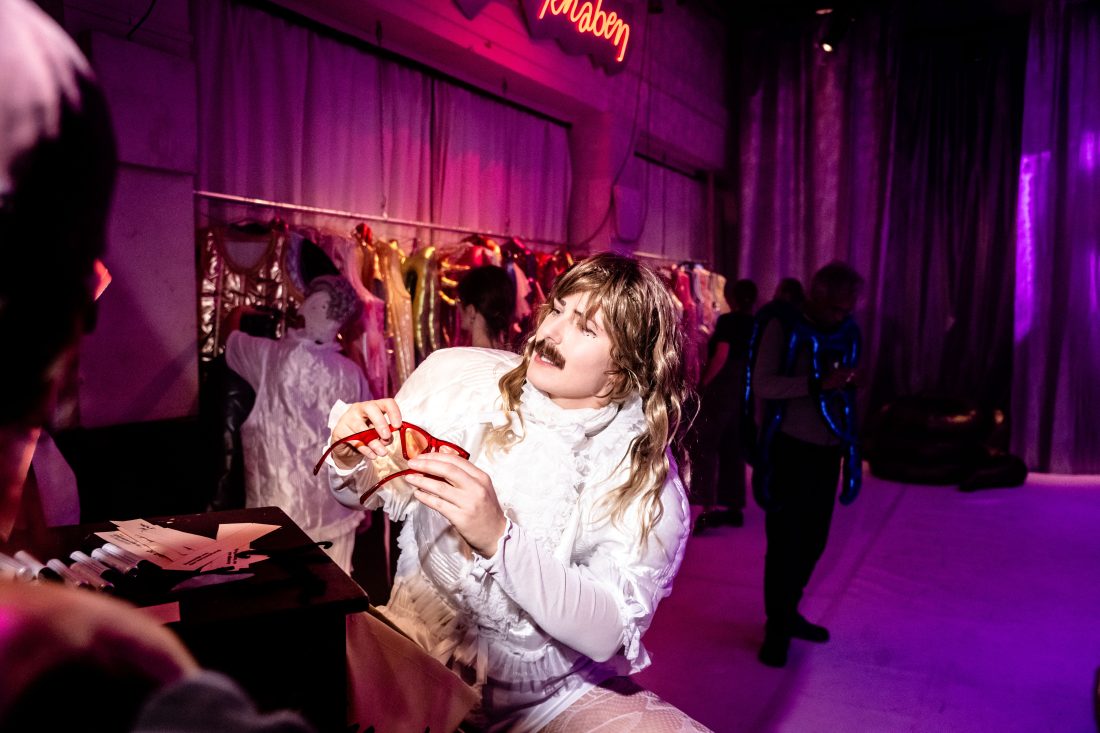
PART 3 – AFTER-SHAVE-PARTY IN THE OPERA
SONG LYRICS
By die schlangenknaben, based on Henry Purcell
REMEMBER ME
Wenn ich von hier scheide,
Scheiden meine Fehler mit
Wenn ich Hilfe schreie,
Schrei ich nur, weil ich so litt
Als ich dir dann endlich zeigte, dass mein Herz geöffnet ist,
konnt‘ ich leider noch nicht ahnen dass du deine Segel hisst.
Du kannst nur gehorchen, Götter geben dir den Kick.
Du holst dir den Segelturn und unsre Liebe bricht
wenn wilde Horden sinnlos morden,
dann läufst du benommen mit –
Im Rausche des Blutes liegt die göttliche Klit
Remember me- but oh
Remember me- forget
Remember me – my faith
Vergesse meine Fehler, aber sicher niemals mich
Lieg ich in der Erde, kümmern meine Macken nicht
Bin ich denn nur tot endlich gut genug für dich
Du lässt mir keine andere Wahl, der Zweifel bricht mir das Genick.
Hätte ich ein Schicksal, das meinen Wünschen mehr entspricht
Auf die Rolle voller Drama, Junge, bin ich nicht erpicht
Weil man die Norm nicht bricht, ist eine Frau Protagonist
Muss ich mich ermorden, weil sonst niemand drüber spricht?
Remember me- but oh
Remember me- forget
Remember me – my faith
Alles kehrt sich gegen mich, wie lenk ich meine Mood?
In mir türmen Wellen bis sie brechen zu ‘ner großen Flut
Meine unheilvolle Schickung – macht aus Liebe Glut
Heiße Lava Fälle werden zu ‘nem riesen Meer aus Wut
Will meinen Zorn ersticken – bevor‘s ein andrer tut
Schreite bis zum Grund hinunter, brenn im Flammen Sud
Erdolche mich auf einem Scheiterhaufen und vergies mein letztes Blut
Bis in weite Ferne tragen Flammen mein Tribut
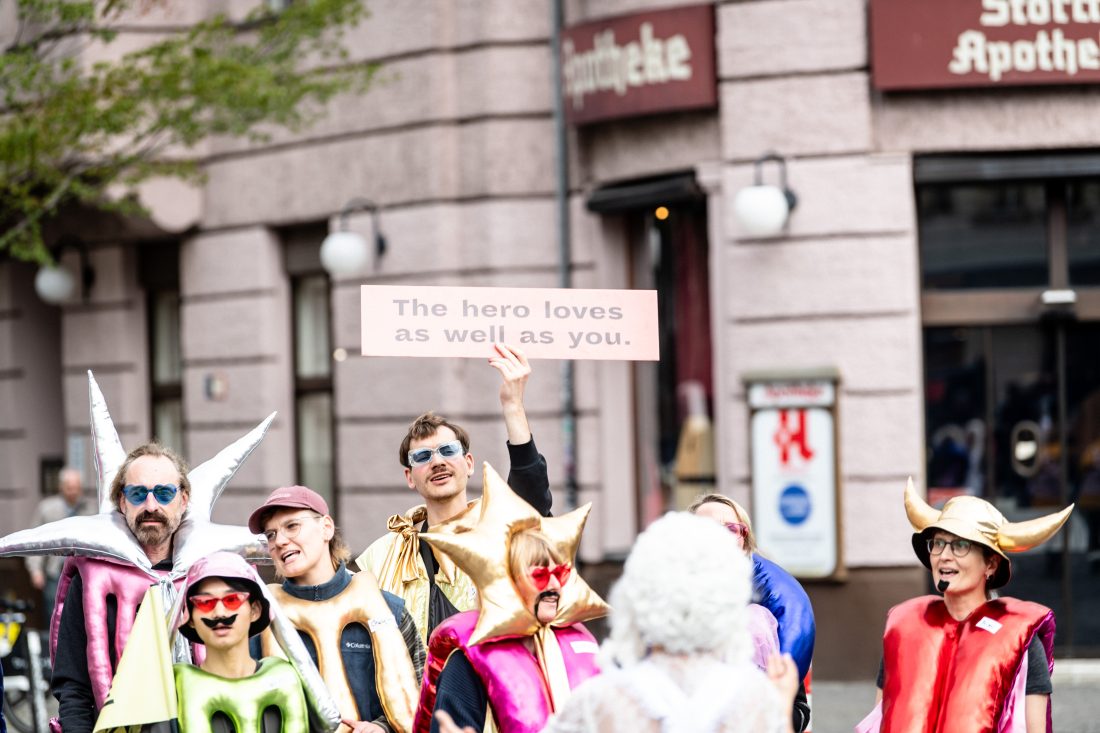
FEAR NO DANGER
Fear no danger to ensue,
The Hero Loves as well as you,
Ever gentle, ever smiling,
And the cares of life beguiling,
Cupid strew your path with flowers
Gather’d from Elysian bowers.
Fürchte keine Gefahr, die dir drohen könnte,
Der Held liebt dich ebenso wie du ihn,
Immer sanft, immer lächelnd,
Und die Sorgen des Lebens vergessend,
Amor, streue Blumen auf deinen Weg,
Gepflückt aus den Gärten des Elysiums.
Team
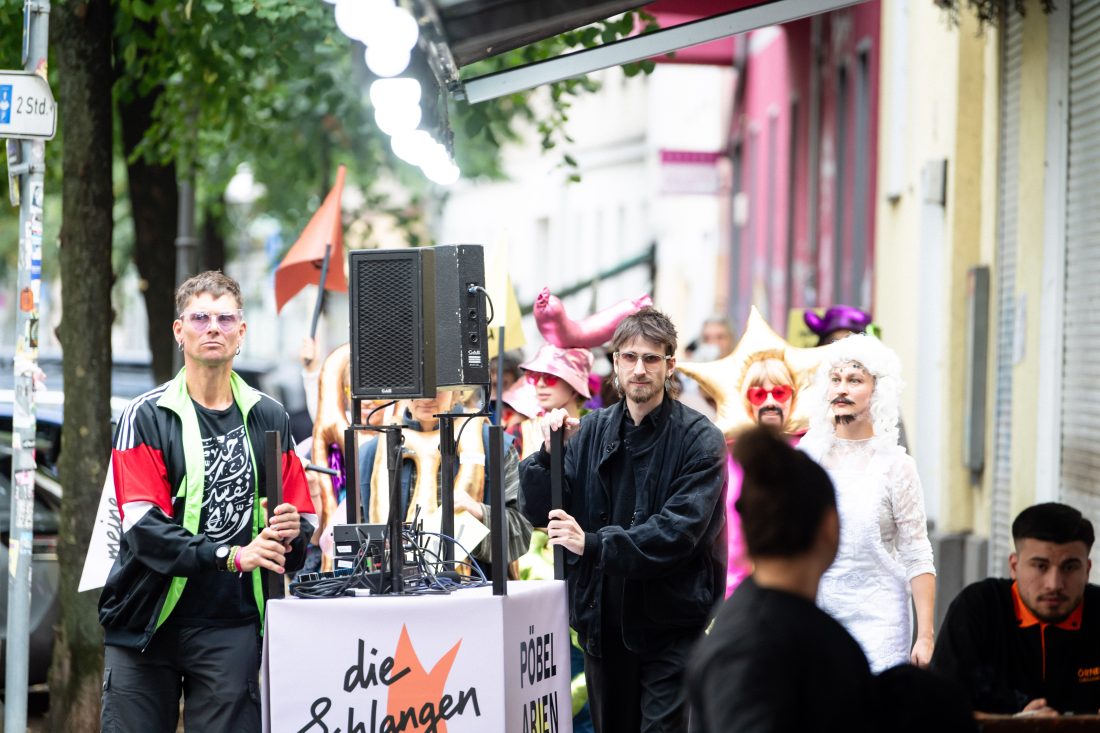
WITH die schlangenknaben (Carla Wierer, Jakob*, Viola Schmitzer), Joni Barnard
PRODUCTION MANAGEMENT Joni Barnard SET & COSTUME DESIGN Valentin Peter Eisele DRAMATURGY Pauline Jacob
TECHNICAL PRODUCTION MANAGEMENT Helmut Topp, Kim Titzmann SOUND Klim Losovsky LIGHT Ralf Arndt COSTUME DEPARTMENT Christina Kämper (team lead), Frank Schelhase HAIR AND MAKE-UP Anne-Claire Meyer EVENING MANAGEMENT Sophie Reavley, Regina Triebel EVENING SERVICE MANAGEMENT Vanda Hehr
Bios
DIe Schlangenknaben
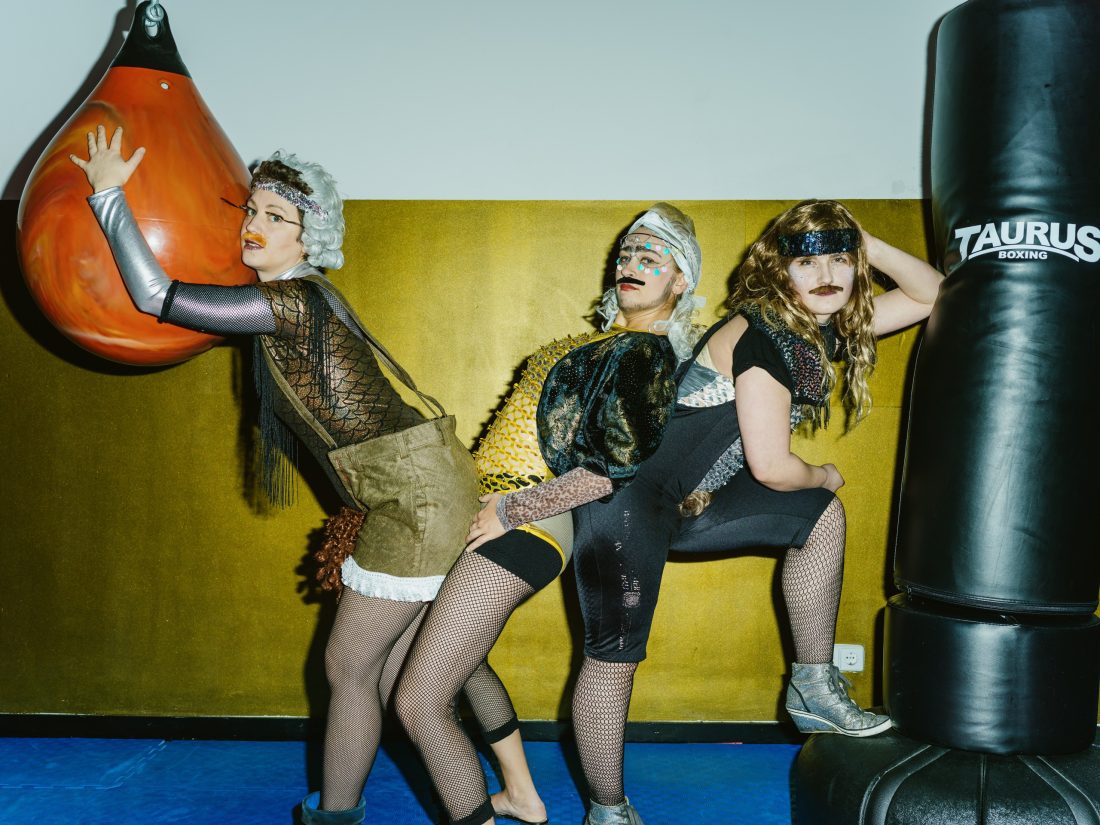
Queer-feminist concert performance.
A total work of art made of costume, music, and discourse: this is die schlangenknaben.
Electronic operatic music. Schumann, Purcell, and Swabian folk tunes with punchy, glittering beats. Boy and snake in one. Dirty high culture. Open to genre and gender, and never too precious to get its hands dirty.
Delicate bells, big balls, Mozart’s bosom buddies.
Uproar across the centuries. We bring the boys into the club, run across scorched earth, and lure the snakes out of the undergrowth. We cultivate a refined tone—and our pubic hair.
Carla Wierer
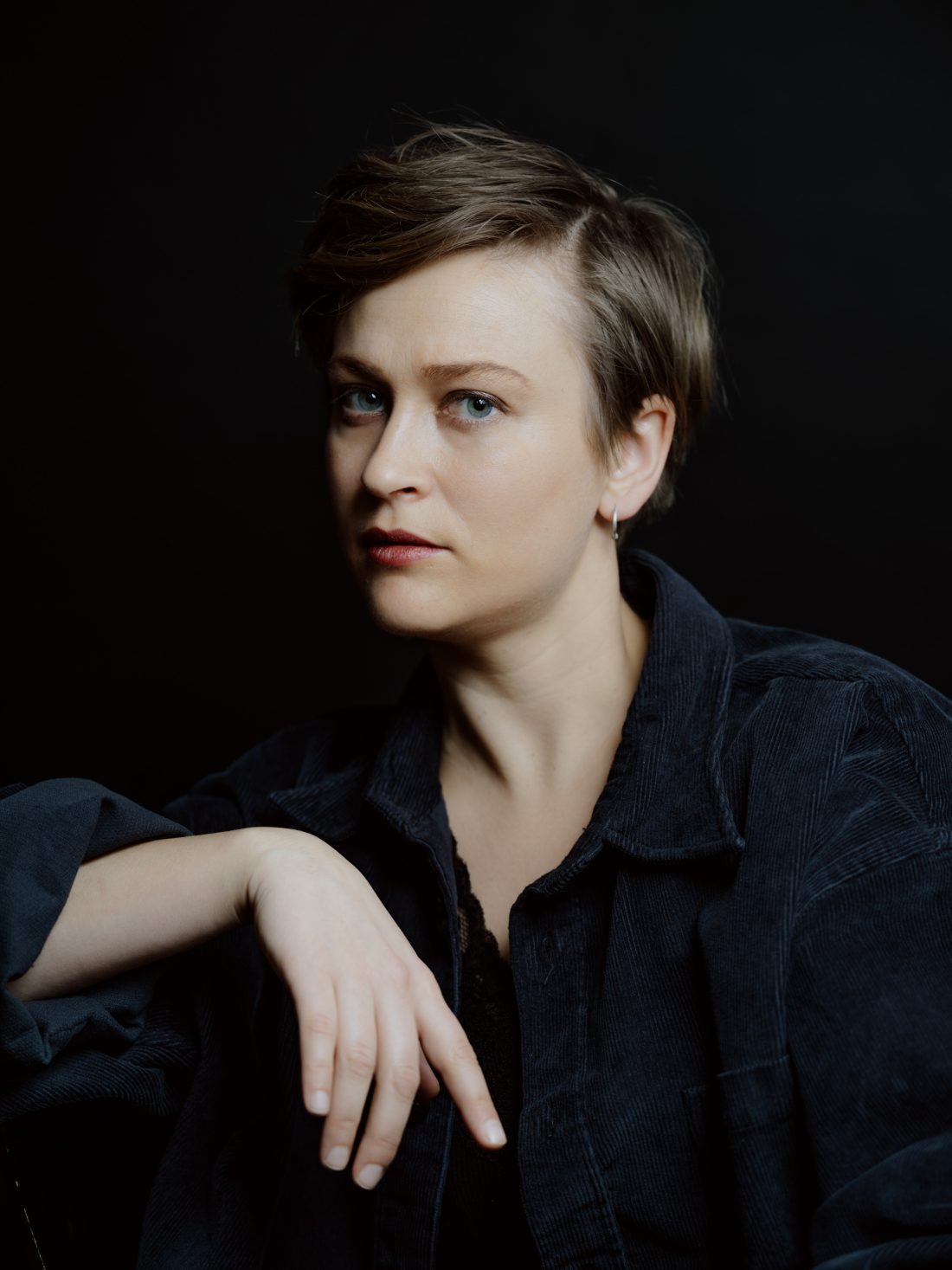
Carla Wierer is an actor, musician, and producer of theatre and performance projects.
In her work, she connects social issues with artistic experimentation, creating spaces for exchange, reflection, and shared thinking and experience. She explores historical continuities and their impact on contemporary social developments, linking local perspectives with global questions. Her projects are often developed through collective processes. Carla composes and produces music for dance and theatre productions and performs with the Post Apocalyptic Café Orchestra. An important part of her artistic practice is the music and performance collective Die Schlangenknaben. With her music project Carla Brunndorf, she released her debut album Trink aus, mein Schatz in 2025.
Viola Schmitzer
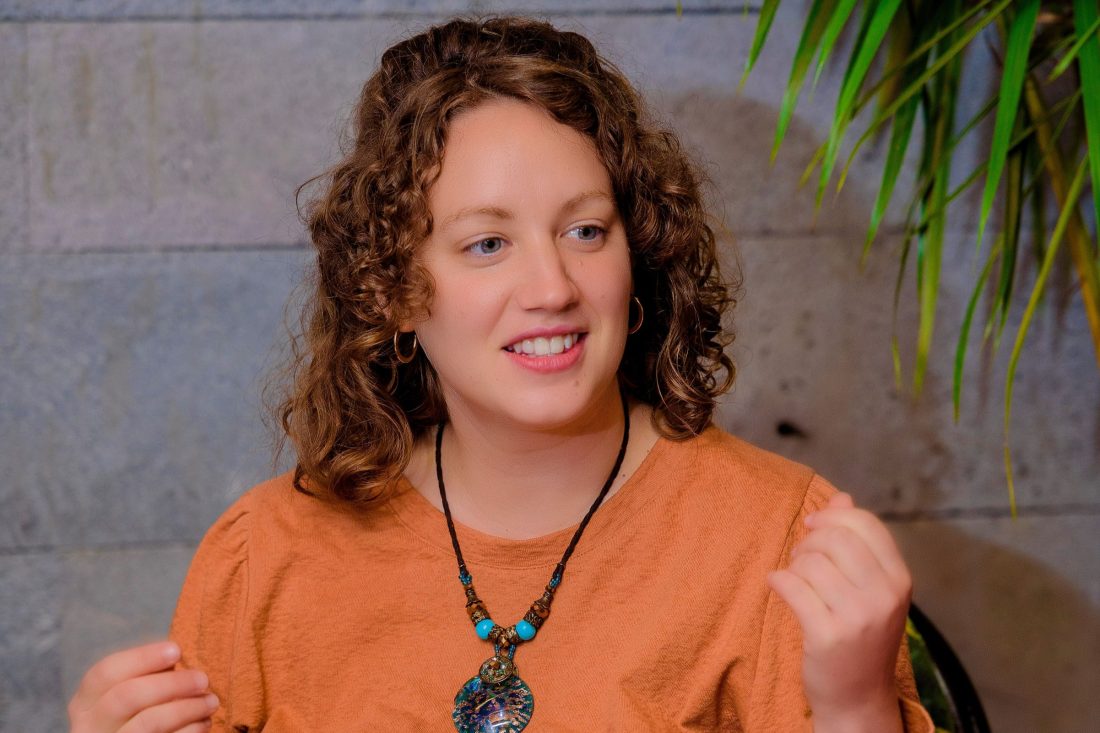
Viola Maria Schmitzer works as a performer, horn player, and project leader at the intersection of music theatre, body, and space.
Her artistic practice brings together sound, movement, and staging while questioning conventional performance settings. Influenced by her work with the Stegreif Orchester, she develops formats between concert and intervention that aim for direct encounters with the audience. In her outreach work, she initiates participatory projects for diverse target groups. Most recently, she realized Wunderwald at BluBoks, a music theatre project with 70 children that intertwines artistic and social spaces.
Jakob*
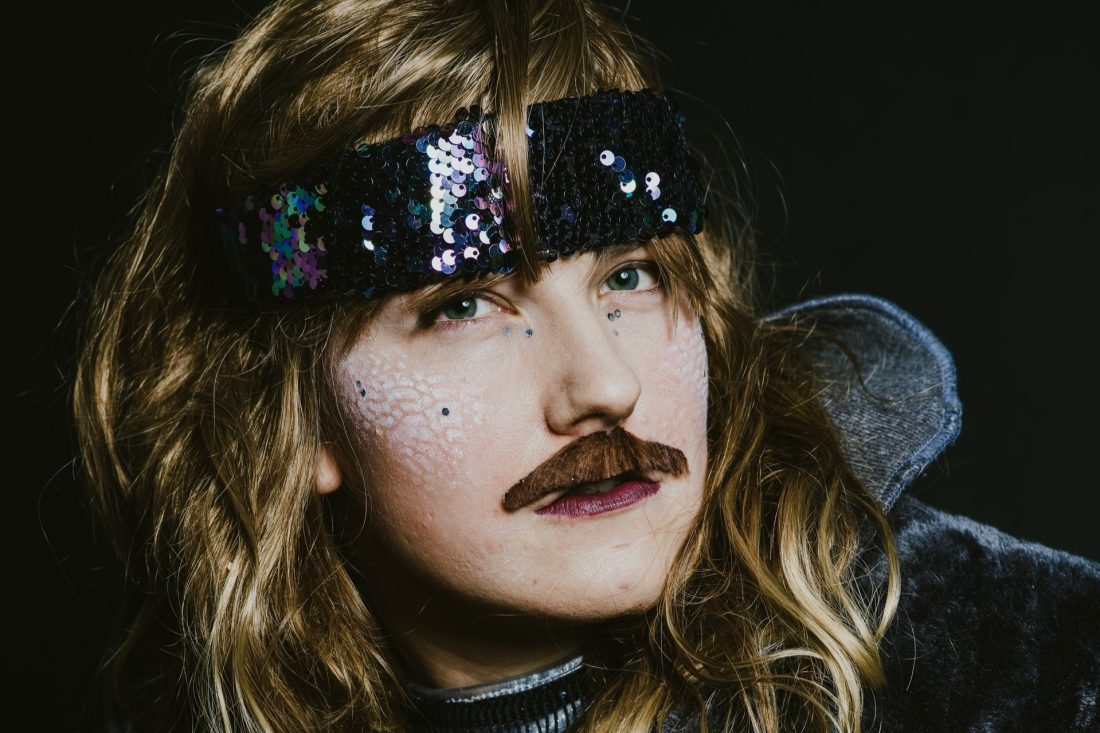
Jakob*, a Berlin-based performer, seeks out the uncontrollable, embraces failure, and asks who is actually invited to take part.
Together with the queer-feminist performance collective Die Schlangenknaben, Jakob* appropriates spaces and repertoire—dirty high culture, joyfully riding on male-dominated cultural history. In 2022, the album so haarig was released; with Flötenzauber – a delicate sabotage after Mozart, they have performed at venues and festivals including berlin is not., the Hygiene Museum Dresden, and the at.tension Festival.
With the company Jakob* & Schleiff, they create participatory works on sexuality and identity for young audiences, including at Theater im Delphi Berlin and at the B.A.L.L. of the Fonds Darstellende Künste.
Joni Barnard | Production Management
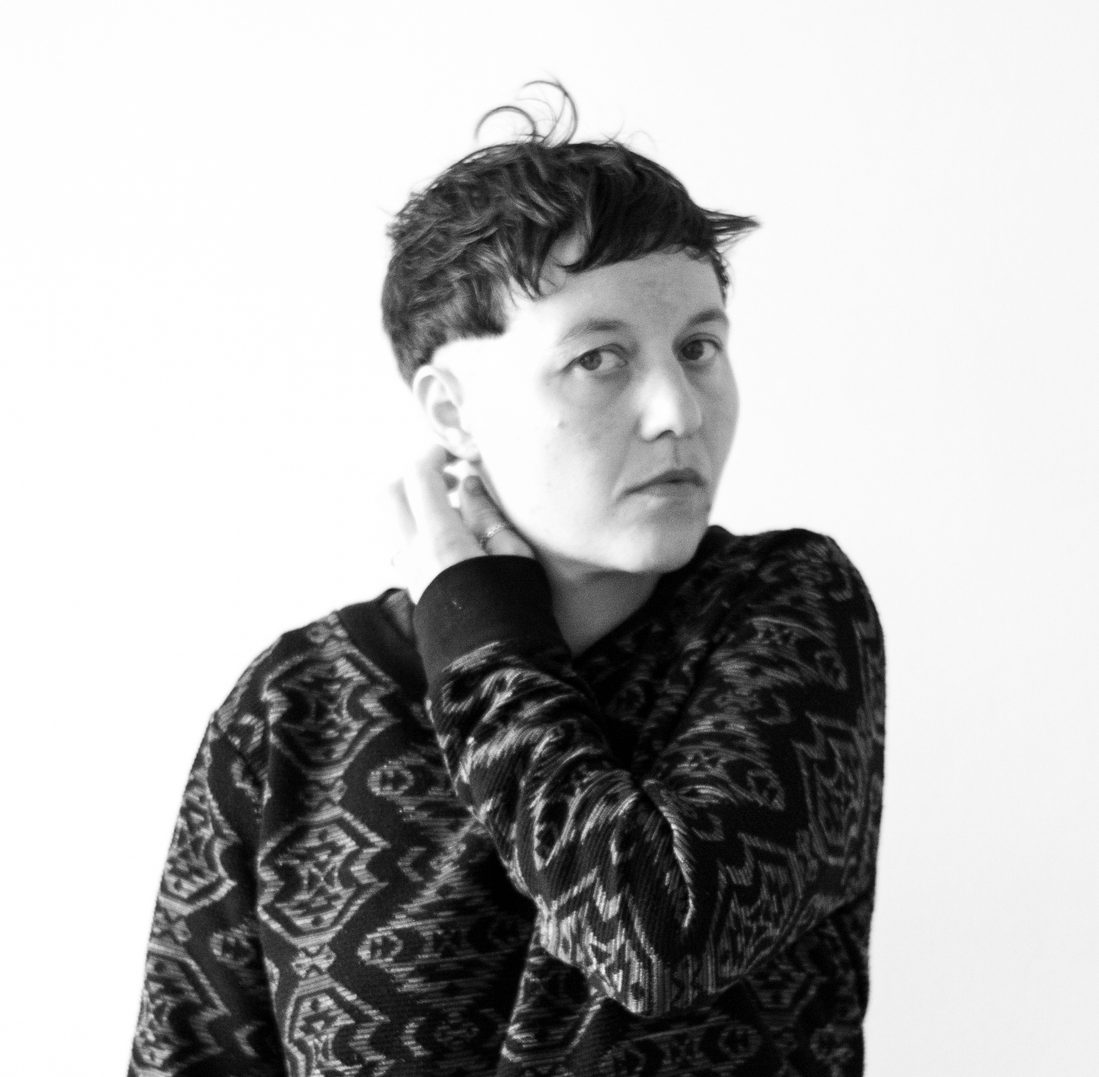
Joni Barnard is an interdisciplinary artist, producer, performer, and theatre-maker working at the intersection of dance, theatre, film, music, and bodily activism. Excited by queer and trickster approaches to life and work, they explore practices of consent, radical connection, and somatic vocal and movement research. Their work prioritizes collaboration, experimentation, and play, drawing from creative practices of the Global South that emphasize warmth, humour, co-regulation, and collective care. Joni has been working with the Schlangenknaben since 2020.
Valentin Peter Eisele | Set & Costume Design
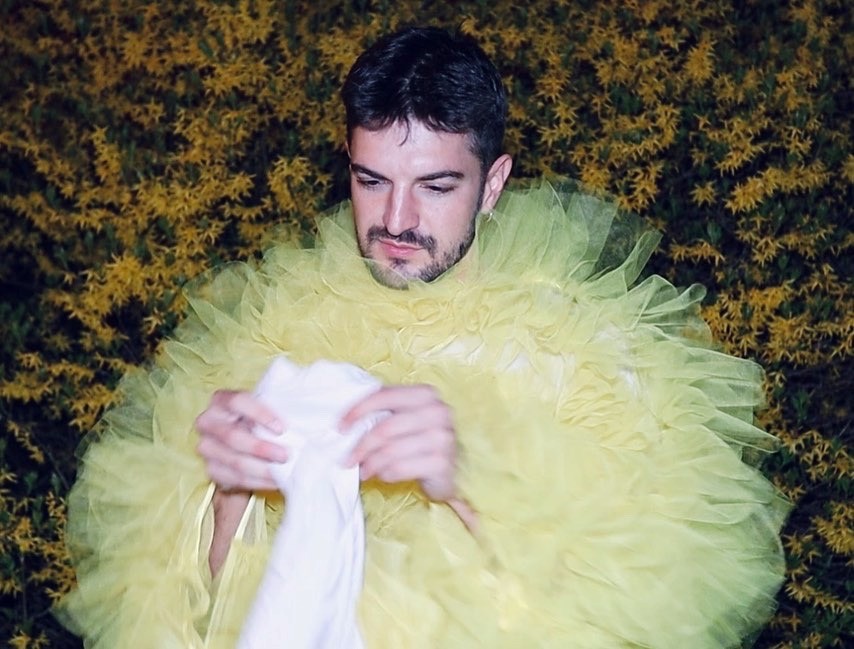
Valentin Peter Eisele has been responsible for the Schlangenknaben’s visual identity and design almost since the collective’s beginnings. He studied Information Design in Graz and Stage Design at The Lir, the National Academy of Dramatic Art in Dublin. Since 2016, he has worked as a freelance graphic designer and set and costume designer. His work has been presented at venues and institutions including Junges Ensemble Stuttgart, backsteinhaus produktion / Theater Rampe, Theater Oberhausen, The Ume Group NY, Theater Aufbau Kreuzberg, Gare du Nord Basel, and Irish Classical Theatre Buffalo. He has an ongoing collaboration in the field of visual communication with Theater Pfütze in Nuremberg and the cultural department of Berlin Cathedral.
Pauline Jacob | Dramaturgy
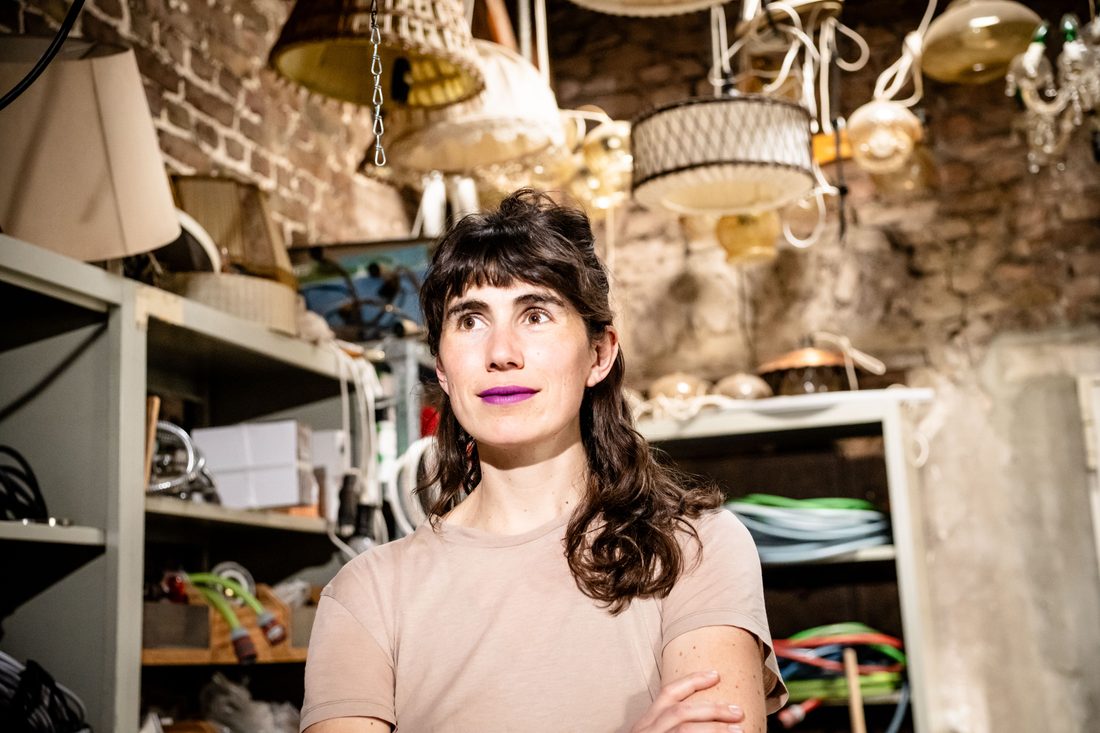
With her music theatre collective staatsoper24, Pauline Jacob and her colleague Lisa Florentine Schmalz achieve the seemingly impossible: they rethink opera holistically – from a feminist* and contemporary perspective. In their music theatre performances, musical radio plays and performative exhibitions, marginalized voices are empowered, genre boundaries blur, hormones run wild, and sometimes a dog in a fur coat sings. Pauline writes the concepts and texts/librettos and directs the radio plays. As a trained opera singer, she also performs in experimental music theatre productions by fellow artists. Increasingly, she is also drawn to interdisciplinary teaching at universities of the arts and universities of applied sciences.
Pauline and staatsoper24 have received various scholarships and awards. Their project partners include Staatsoper Stuttgart, Junge Deutsche Oper Berlin, JOiN Stuttgart, Deutschlandfunk Kultur, WDR, Kölner Philharmonie, Philharmonie Luxembourg, Schwetzinger SWR Festspiele, Lichthof Theater Hamburg, UdK Berlin, ZEIT Bucerius Stiftung and Claussen-Simon-Stiftung Hamburg.
Since the season 26/27, she has been working as a dramaturg at Neuköllner Oper.