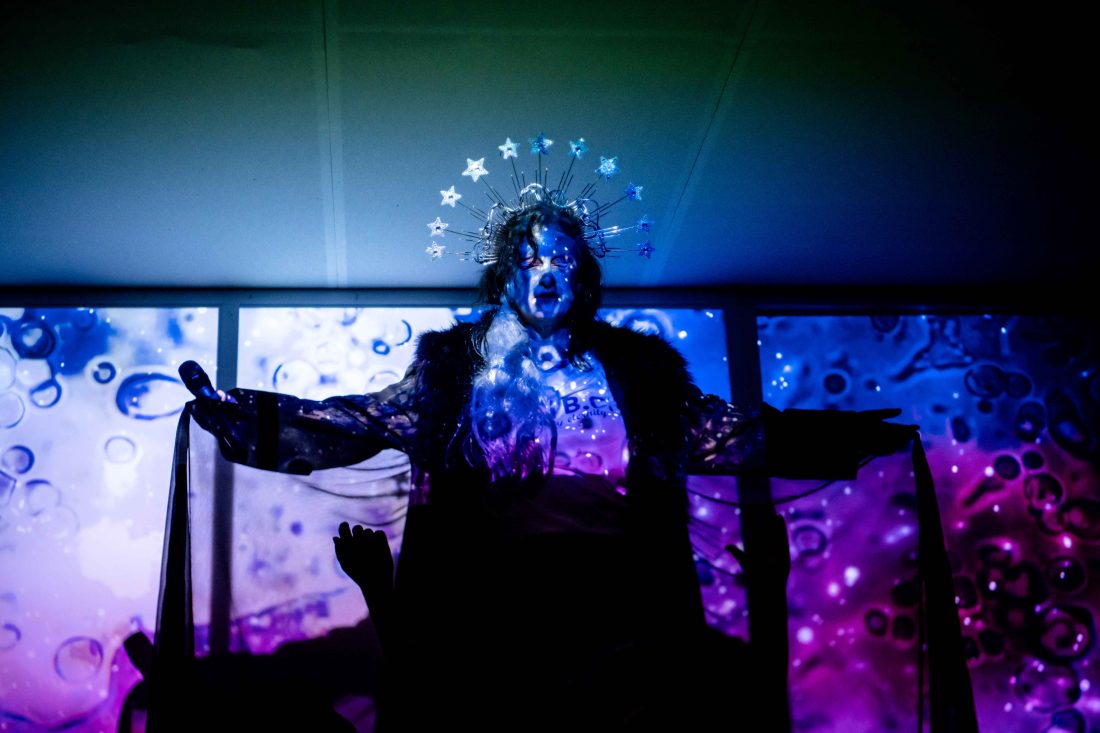
The idea of Europe: a continent, a center of power, from fortress to free trade zone to spark of joy – and back again. And the myth of Europe: an abducted king’s daughter. What has become of her after more than two thousand years held hostage by various ideologies, dictators, and figures of hope? How is she? And where is she, anyway?
Introduction
By Dennis Depta, dramaturg at Neuköllner Oper
ALL GOOD
“I can clearly remember the December night when Poland was admitted to the Schengen Area. Shortly before midnight, we drove to the border crossing with Slovakia. […] Among the several dozen people celebrating, there were no locals. On the Polish side, the village began a few hundred meters from the border crossing. The nearest Slovak village was three kilometers away. But apart from local officials, dignitaries, and border guards, there were only a few tourists and some people like us who had moved to the area from the city. None, however, of those who lived near the border in everyday life and for generations. They were asleep or watching television. The symbolism of that European night meant nothing to them. Only we, the ‘city people,’ rejoiced—naive as children—and drank cheap carbonated wine from plastic cups.”
— Andrzej Stasiuk, Europe: Behind the Curtains (DIE ZEIT, March 3, 2016)
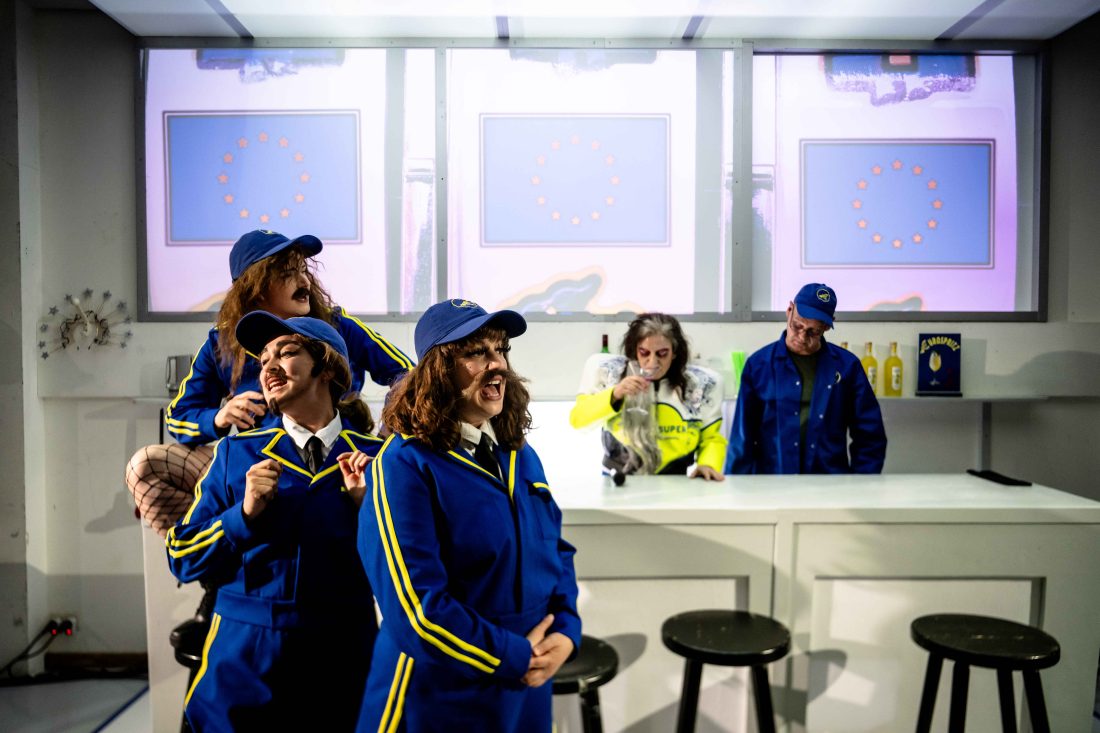
“ALL GOOD,” flashes from the gas pump in LAST EXIT EUROPA. Really? “The wounds of the new world order,” as Derrida writes in Specters of Marx, first become visible at the gas station. This drafty transit place on the edge of the freedom highway, near the closed barrier, is always also a central gauge of the explosive forces of international dependencies and wars. Where it is currently no longer worth continuing the journey (with fuel prices around two euros fifty), it is still a good place to linger for a while—in the stage design by Dominik Kremerskothen, in the production by Laura Laabs. Everyone is sitting at the rest stop, in the rest stop, around the rest stop. Are we really inside or outside?
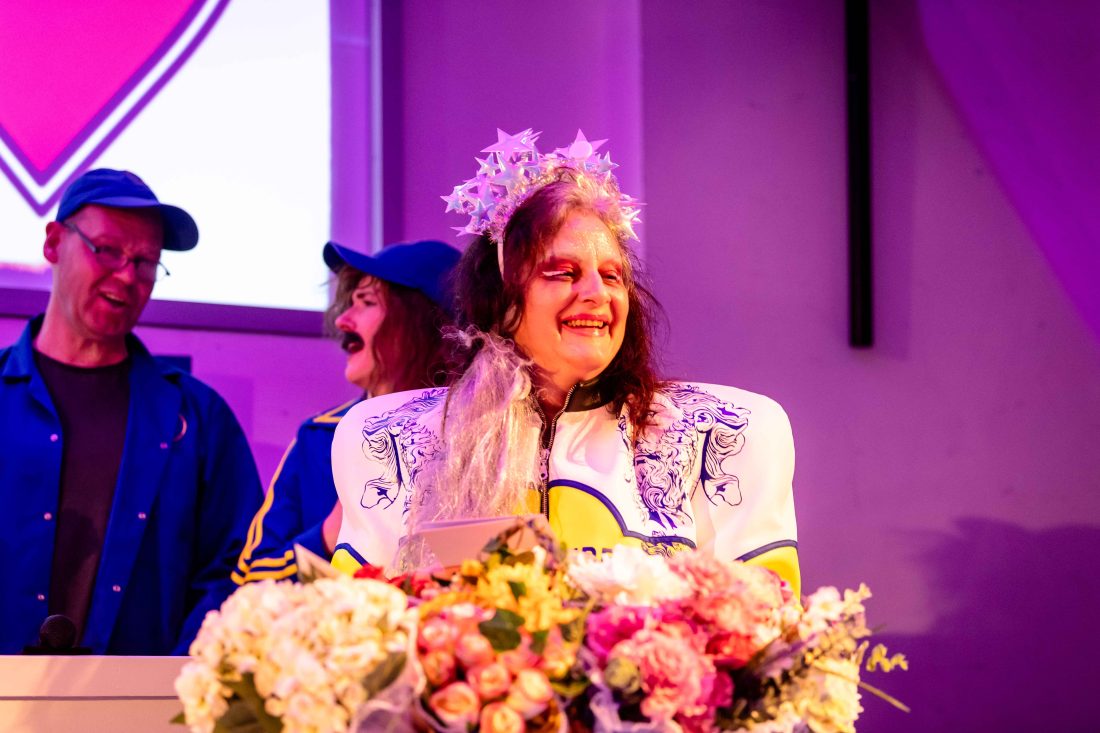
For 70 restless minutes, we pause exactly here. In the heart of the continent, where the abducted king’s daughter, the mythical figure Europa, keeps the establishment running together with her three-headed maid Hydra. The boss still strips herself. She wears her heart on her tongue and sings to us—the sleepless, the scattered, the remnants of the Occident—her songs of submission and empowerment, of swords and sheaths, of prostitution and revolution. She, Europa, no longer needs the stupid bull. It is her voice that gives her wings and lets her float across all borders—after more than two thousand years held hostage by various dictators and figures of hope.
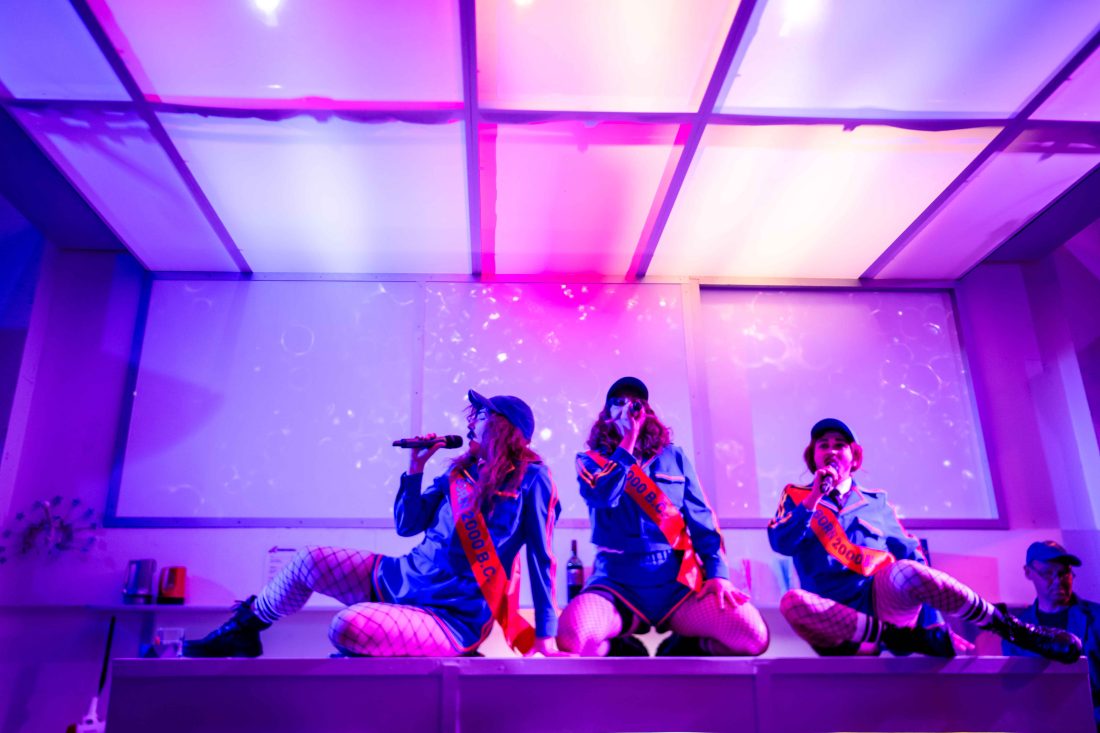
LAST EXIT EUROPA is the first stage work by film director and author Laura Laabs. For the premiere of her singspiel at the Neuköllner Oper, she teamed up with musician Leo Solter of 21 downbeat. The newly composed music, emerging from a machine and paired with live vocals, oscillates between dark pop, electro clash, and gaming sound musical. The songs bear titles such as EUROPORN, DOOR CLOSED, and I AM THE MIRACLE. On stage, singer, performer, and theater maker Cora Frost throws herself into the role of Europa and encounters the music and performance collective die schlangenknaben. The trio embodies Hydra, a multi-voiced serpent creature that follows the gas station boss at every step, constantly dispensing ChatGPT-like information and, as an upstart, showing a certain enthusiasm for Europe’s dismantling. “The continent lies in ruins! The ruins of Europe are: empty words in the wind. Community. Alliance. Freedom. Prosperity. Change. Growth. Strength. Progress. Love. Human,” proclaim the palace—sorry, rest-stop—revolutionaries. They sense their chance to finally take the helm.
Of course, much lies in ruins. What remains in 2026 of the cradle of Enlightenment, humanism, and democracy? Or: where has all of this led us? What blood sticks to our fingers? The continent permeates our lives, our everyday existence, even if some try to reject it. Europe is us. Others are not. Against them, we invented barbed wire. From fortress to free trade zone to spark of joy—and back again! Is there still something to be saved from the idea of a peacefully united Europe in a present where certainties are fading?
Of course, Europe is not defeated. It will always reinvent itself, re-emerge. It is always subject to negotiation. LAST EXIT EUROPA offers different perspectives on the continent, also by turning to its founding myth and reviving the mythical figure of Europa. As a person at a gas station, sharing her story—or stories—with us. Zeus abducted the king’s daughter to Crete, raped her there, and named the barren land after her. “The blood has been running from my legs since the first day,” it says in I AM THE WOUND. Europe’s torn state concerns us. It cannot go on like this for another 2,500 years.
Song titLes
Music: Leo Solter, text: Laura Laabs
1. Kosmos
2. Ich bin Europa (Song)
3. Ich bin die Hure
4. Europorn
5. Tür zu
6. Ich bin die Wunde
7. Ich bin das Wunder
Song Lyrics
ICH BIN EUROPA!
Ich war da.
Ich war da.
Ich war da.
Ich war da
seit dem ersten Tropfen Blut,
der an meine Ufer gespült wurde
bis zum letzten Fünkchen Hoffnung
das als Asche vom schwarzen Himmel regnet.
Ich war da.
Ich war da.
Vom großen Menschheitstraum
bis zu seinem armseligen Abriss.
Ich war da.
Ich war da.
Vom Lebensschrei jedes Neugeborenen
bis zum Todesstoß jedes Elenden.
Meine Adern sind Flüsse,
braun und schlackig,
mein Herz ein Vulkan
der vernichtend schwelt,
meine Synapsen sind die schnellen Straßen,
an deren Rändern sich das Rotwild quält
meine Häute sind Mauern,
meine Häute sind viele,
meine Krone von Sternen
und von Stacheldraht.
Ich war da.
Ich war da.
Mein Schoß ist der Nutzen.
Meine Kinder sind Sklaven.
Sie dienen nur dem einem Ziel:
Der Rettung der Menschheit.
Der Rettung der Menschheit.
Der Rettung der Menschheit.
Um den Preis ihrer Vernichtung.
Ich bin da.
Ich bin da.
Ich bin Europa.
Team
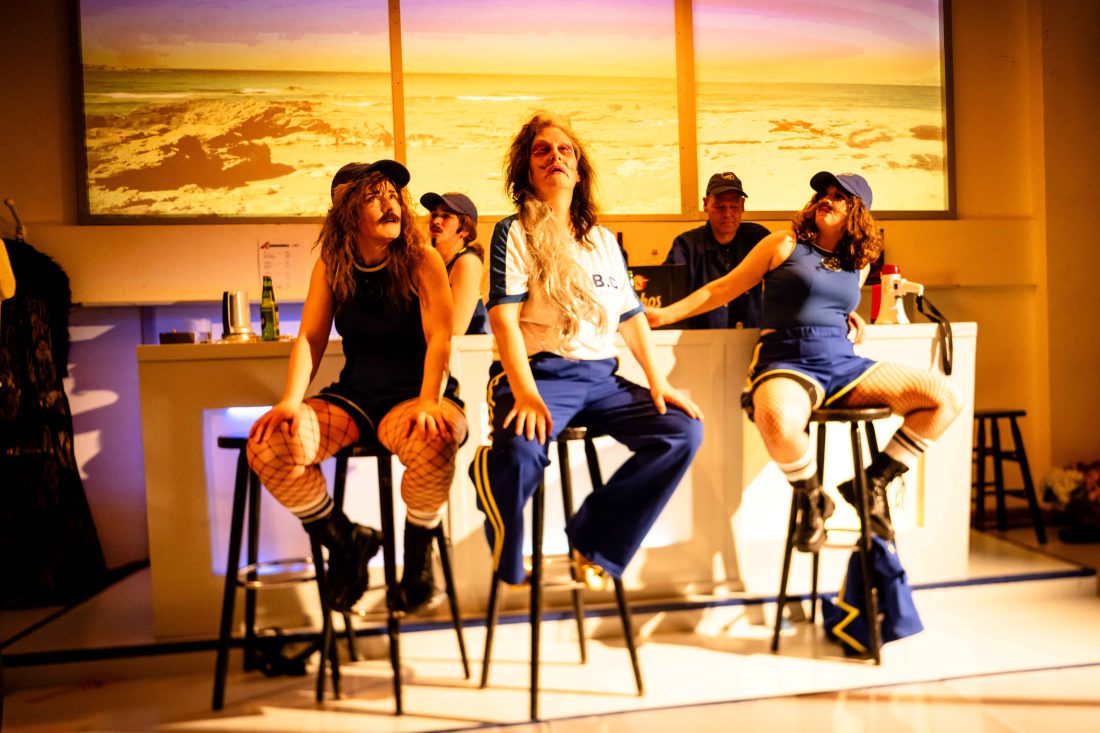
WITH Der Cora Frost and die schlangenknaben (Carla Wierer, Jakob*, Viola Schmitzer), as well as Marcus Holst, Vanda Hehr and Jonathan Ehlers at the bar
TEXT / DIRECTIONLaura Laabs COMPOSITION / MUSICAL DIRECTION Leo Solter DRAMATURGY Dennis Depta COSTUME DESIGN Sophie Peters STAGE DESIGN Dominik Kremerskothen ASSISTANT DIRECTOR / PRODUCTION ASSISTANCE Cara Freitag / Oskar Winniarski
TECHNICAL PRODUCTION MANAGEMENT Sylvain Faye, Gregor von Glinski SOUND Michael Tuttle, Klim Losovsky LIGHT Jens Tuch EVENING MANAGEMENT SOUND Michael Tuttle, Klim Losovsky EVENING MANAGEMENT LIGHT Ralf Arndt, Jens Tuch STAGE CONSTRUCTION Gregor von Glinski, Marc Schulze, Rui Wegener, Ralf Mauelshagen, Pet Bartl-Zuba, Anne Wundrak, Zora Hünermann VIDEO Torsten Litschko COSTUME DEPARTMENT Kathy Tomkins (Leitung), Christina Kämper , Julie Springer HAIR & MAKE-UP Anne-Claire Meyer STAGE DESIGN ASSISTANCE Elena Gorlatova EVENT MANAGEMENT Sophie Reavley, Regina Triebel SERVICE MANAGEMENT Vanda Hehr
Biographies
Der Cora Frost / Cora Peter Frost
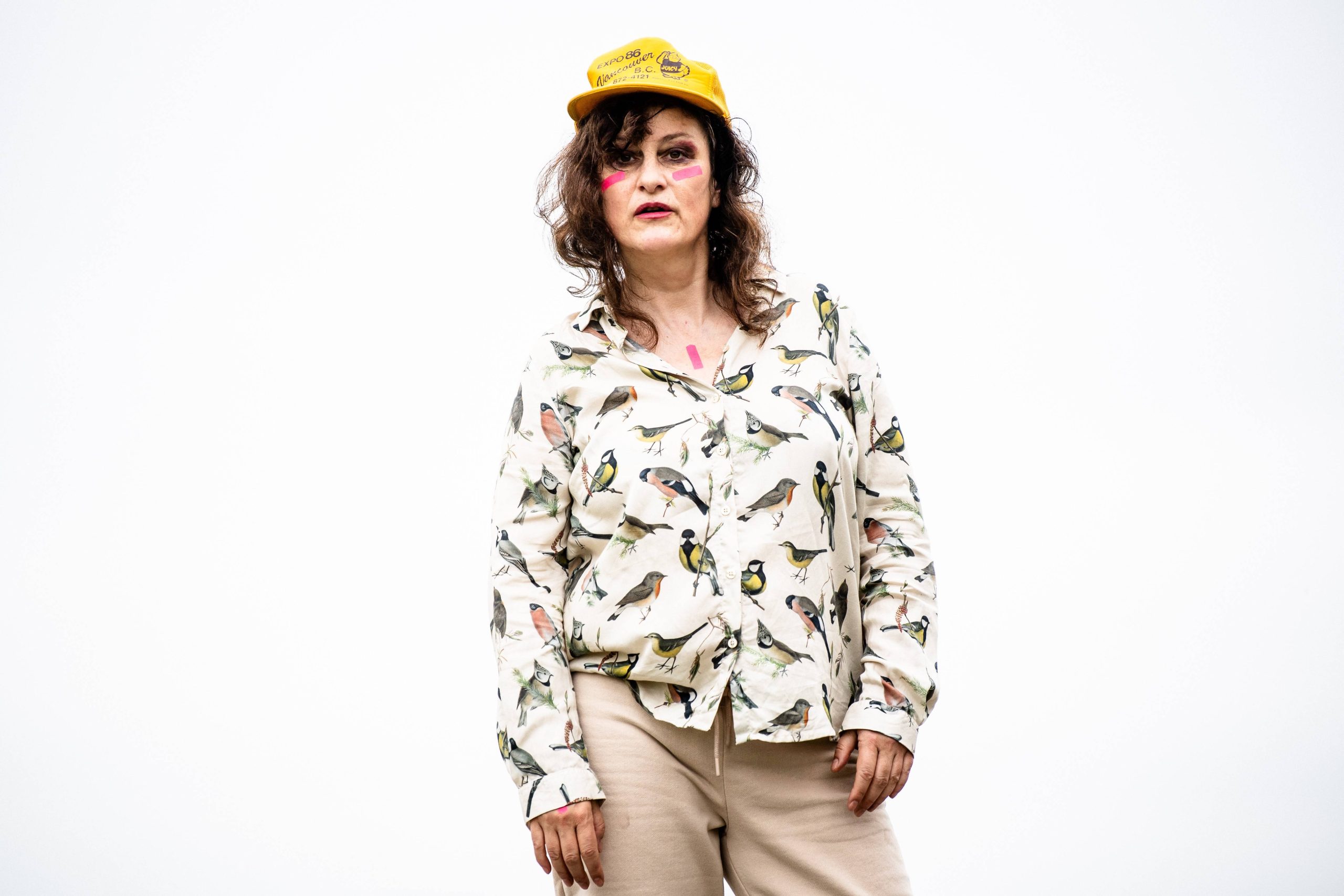
Der Cora Frost / Cora Peter Frost tours as a singer-songwriter and, alongside engagements as a director, singer, and actor—among others at Sophiensæle, Ballhaus Ost, Martin-Gropius-Bau, with Pina Bausch, Kresnik, and at Theater Thikwa—has founded various groups and bands. Since 2004, he has increasingly worked with the anarchist puppet theatre Helmi, the punk opera group Glanz & Krawall, and the international performance group La Fleur; he writes his own plays, songs, and performances, and works as a vocalist.
He has collaborated with film directors Rudolf Thome, Christian Frosch, and Uli Decker, for whom he also composed film music. His most recent works include staging his play Die Bucht der dicken Kinder at the Sophiensæle in Berlin, Männer in Garagen, a festival in garage courtyards in Pankow, and Riesenhaft, a production by Theater Hora, Puppentheater Helmi, and Schauspielhaus Zürich, which was invited to the Berliner Theatertreffen in 2024 (direction and performance); as well as Barbarilla at TD Berlin.
Music: as Peter Frost & Band with love me – sexmusic, Zucker & Butter Band, and an immersive Else Lasker-Schüler transformation at the bjv.
Süddeutsche Zeitung wrote: “Cora Frost shaped Munich in the 1980s through performances in clubs and bars. She/he was already queer at a time when the term was still largely unknown in Germany.” Cora Peter Frost is not interested in the confined art space; the street should always be brought onto the stage—the life itself. As a sign of this, Cora Peter initially often wore a bandage on the forehead in performances. Over time, the work has evolved more toward the shamanic and immersive.
DIe Schlangenknaben
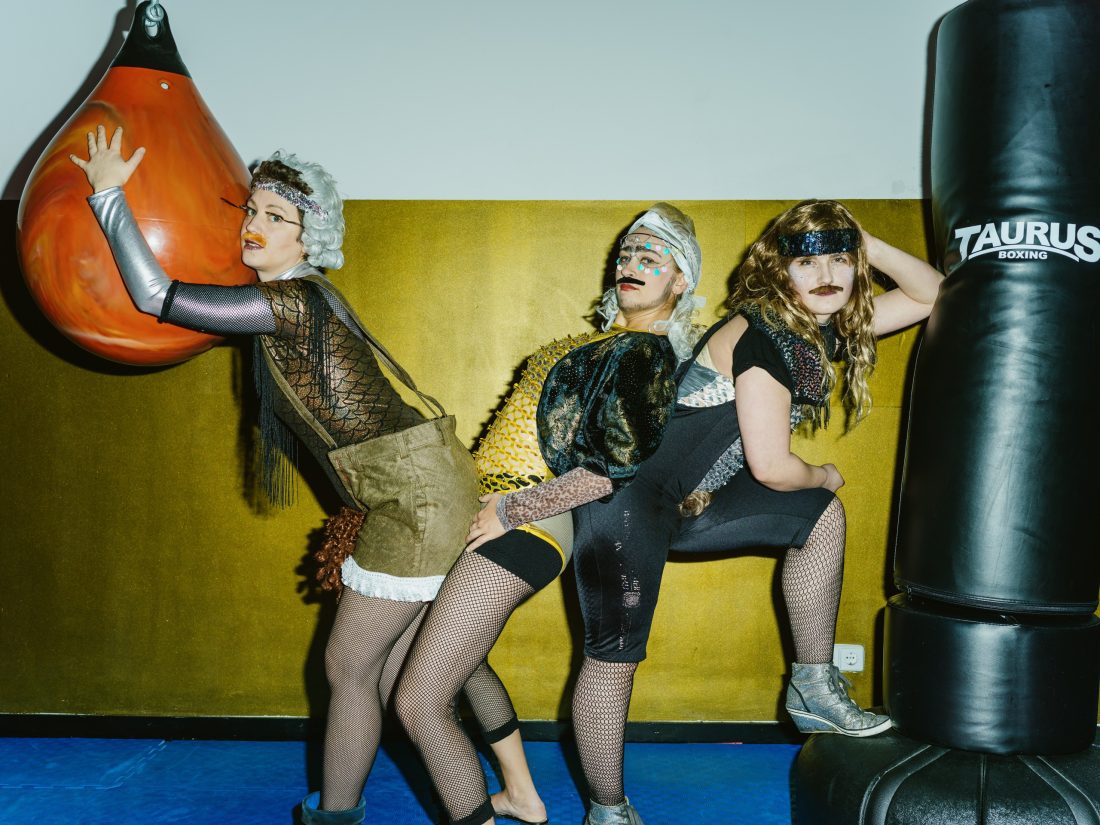
Queer-feminist concert performance.
A total work of art made of costume, music, and discourse:
this is Die Schlangenknaben.
Electronic operatic music. Schumann, Purcell, and Swabian folk tunes with punchy, glittering beats. Boy and snake in one. Dirty high culture. Open to genre and gender, and never too precious to get its hands dirty.
Delicate bells, big balls, Mozart’s bosom buddies.
Uproar across the centuries. We bring the boys into the club, run across scorched earth, and lure the snakes out of the undergrowth. We cultivate a refined tone—and our pubic hair.
Carla Wierer
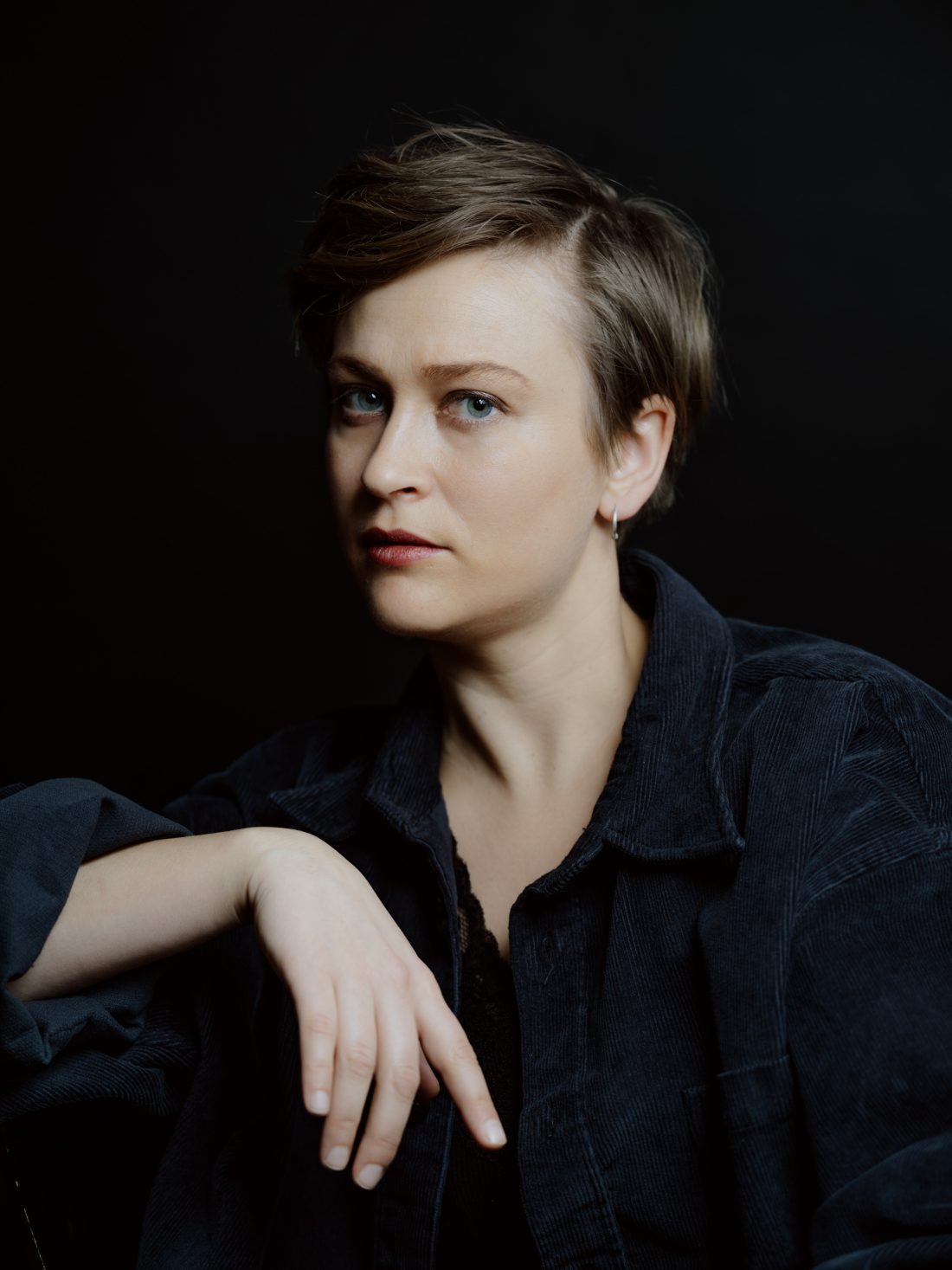
Carla Wierer is an actor, musician, and producer of theatre and performance projects.
In her work, she connects social issues with artistic experimentation, creating spaces for exchange, reflection, and shared thinking and experience. She explores historical continuities and their impact on contemporary social developments, linking local perspectives with global questions. Her projects are often developed through collective processes. Carla composes and produces music for dance and theatre productions and performs with the Post Apocalyptic Café Orchestra. An important part of her artistic practice is the music and performance collective Die Schlangenknaben. With her music project Carla Brunndorf, she released her debut album Trink aus, mein Schatz in 2025.
Viola Schmitzer
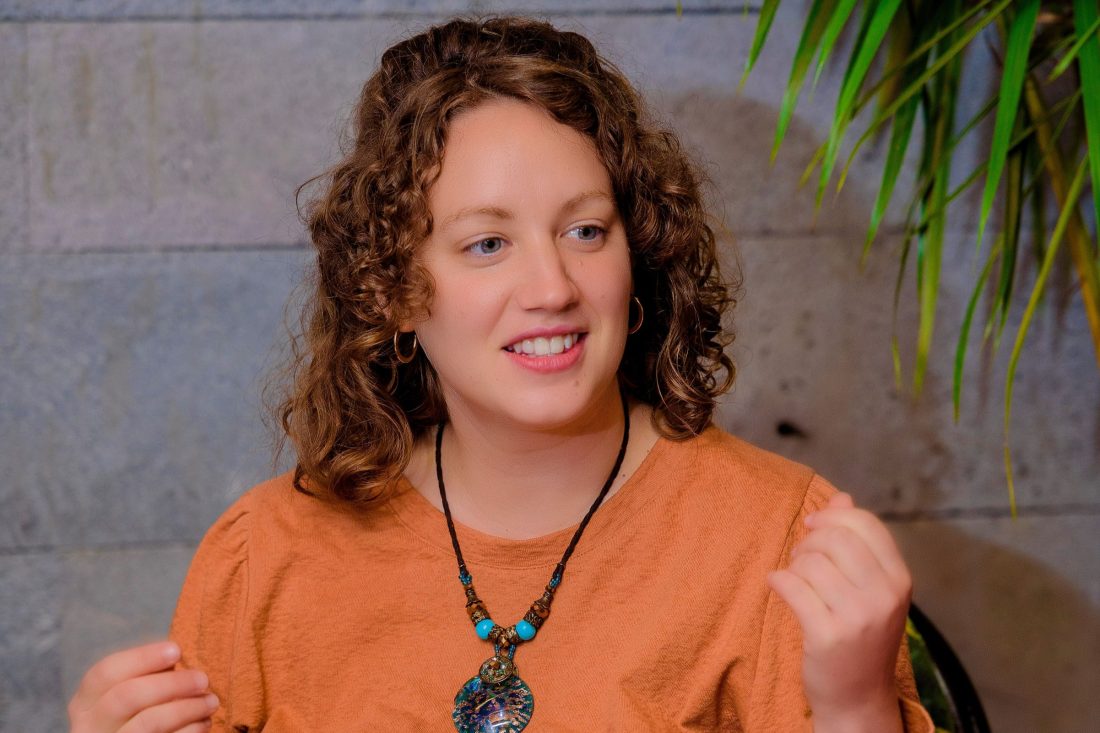
Viola Maria Schmitzer works as a performer, horn player, and project leader at the intersection of music theatre, body, and space.
Her artistic practice brings together sound, movement, and staging while questioning conventional performance settings. Influenced by her work with the Stegreif Orchester, she develops formats between concert and intervention that aim for direct encounters with the audience. In her outreach work, she initiates participatory projects for diverse target groups. Most recently, she realized Wunderwald at BluBoks, a music theatre project with 70 children that intertwines artistic and social spaces.
Jakob*
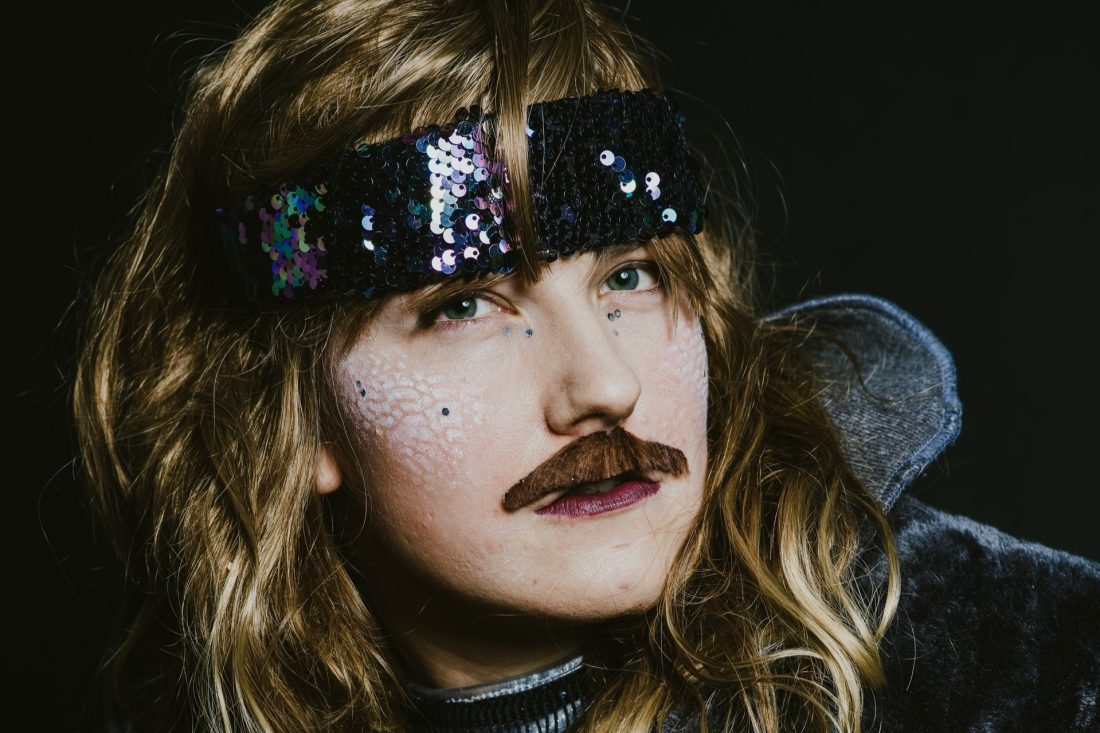
Jakob*, a Berlin-based performer, seeks out the uncontrollable, embraces failure, and asks who is actually invited to take part.
Together with the queer-feminist performance collective Die Schlangenknaben, Jakob* appropriates spaces and repertoire—dirty high culture, joyfully riding on male-dominated cultural history. In 2022, the album so haarig was released; with Flötenzauber – a delicate sabotage after Mozart, they have performed at venues and festivals including berlin is not., the Hygiene Museum Dresden, and the at.tension Festival.
With the company Jakob* & Schleiff, they create participatory works on sexuality and identity for young audiences, including at Theater im Delphi Berlin and at the B.A.L.L. of the Fonds Darstellende Künste.
Laura Laabs | Text, Direction
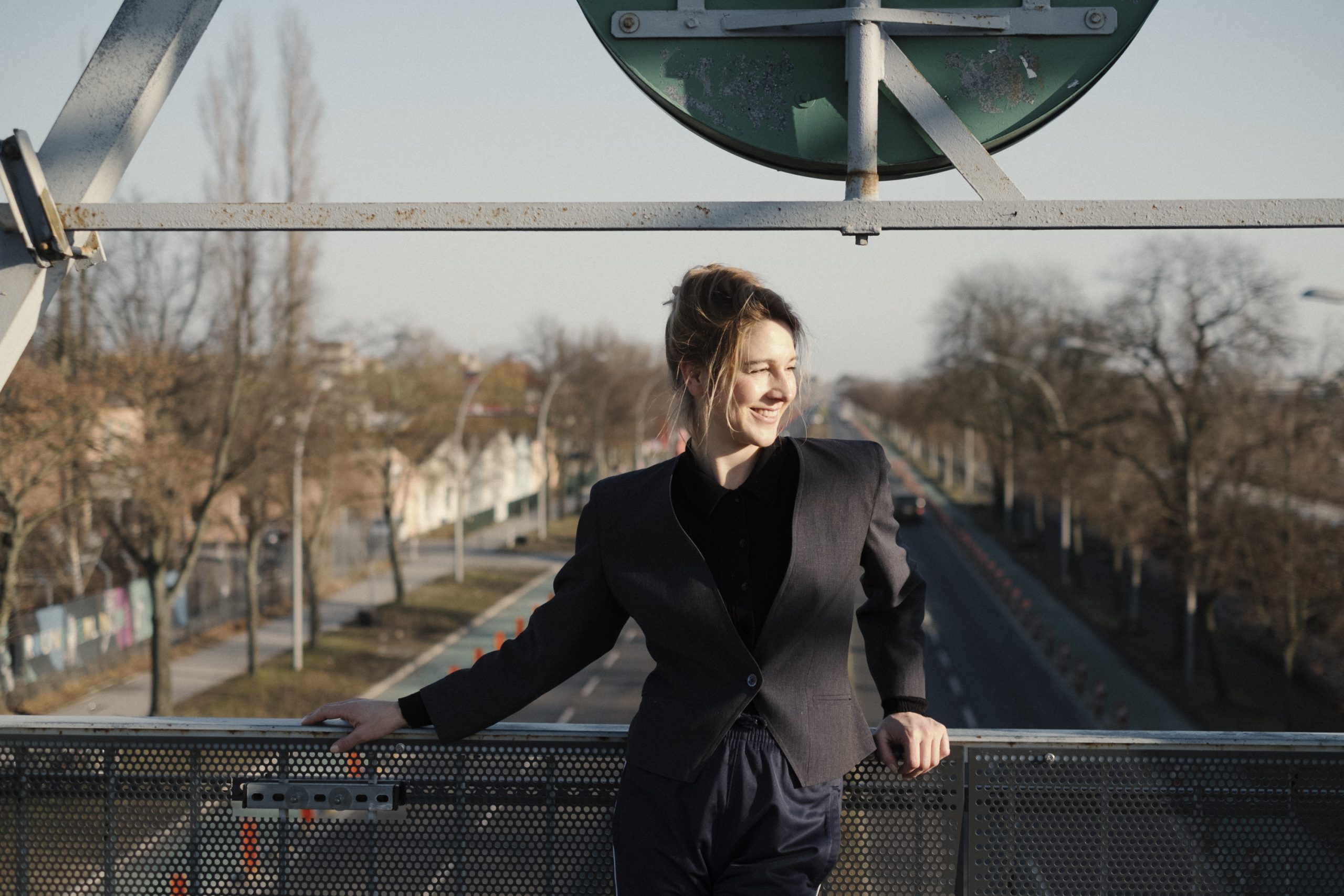
Laura Laabs is an independent director and writer. She was born in East Berlin in 1985, studied political science and film studies, and later directing at the Film University Babelsberg Konrad Wolf. After graduating, she continued there as a master’s student under Andreas Kleinert.
In her first film, Grandchildren of History, she portrayed her grandmother Sybille Gerstner. The film screened, among others, in the international competition at the Visions du Réel festival in Nyon, where it received the award for “Most Innovative Short Film.”
Her feature film Red Stars Over the Field premiered at numerous festivals in 2025 before its theatrical release. It received several awards, including the Max Ophüls Critics’ Prize and the German Film Critics’ Award.
Laabs has directed several short films and music videos. She also works as a radio play director and, among other projects, adapted the 13-part audio series Girl, Woman, etc., for which she was awarded the Robert Geisendörfer Prize in 2025.
She works as a writer on screenplays, project development, and her own prose texts. In June 2025, she read at the Ingeborg Bachmann Competition in Klagenfurt. Her debut novel Adlergestell was published in August 2025 by Tropen Verlag.
Laura Laabs is a co-founder of the feminist collective r.O.k.s. and has been selected for, among others, the mentoring program Into the Wild and the Villa Serpentara Fellowship 2026 of the Junge Akademie der Künste. Last Exit Europa is her first stage work.
Laabs lives in Berlin and Bad Kleinen.
Leo Solter | Composition, musical Direction
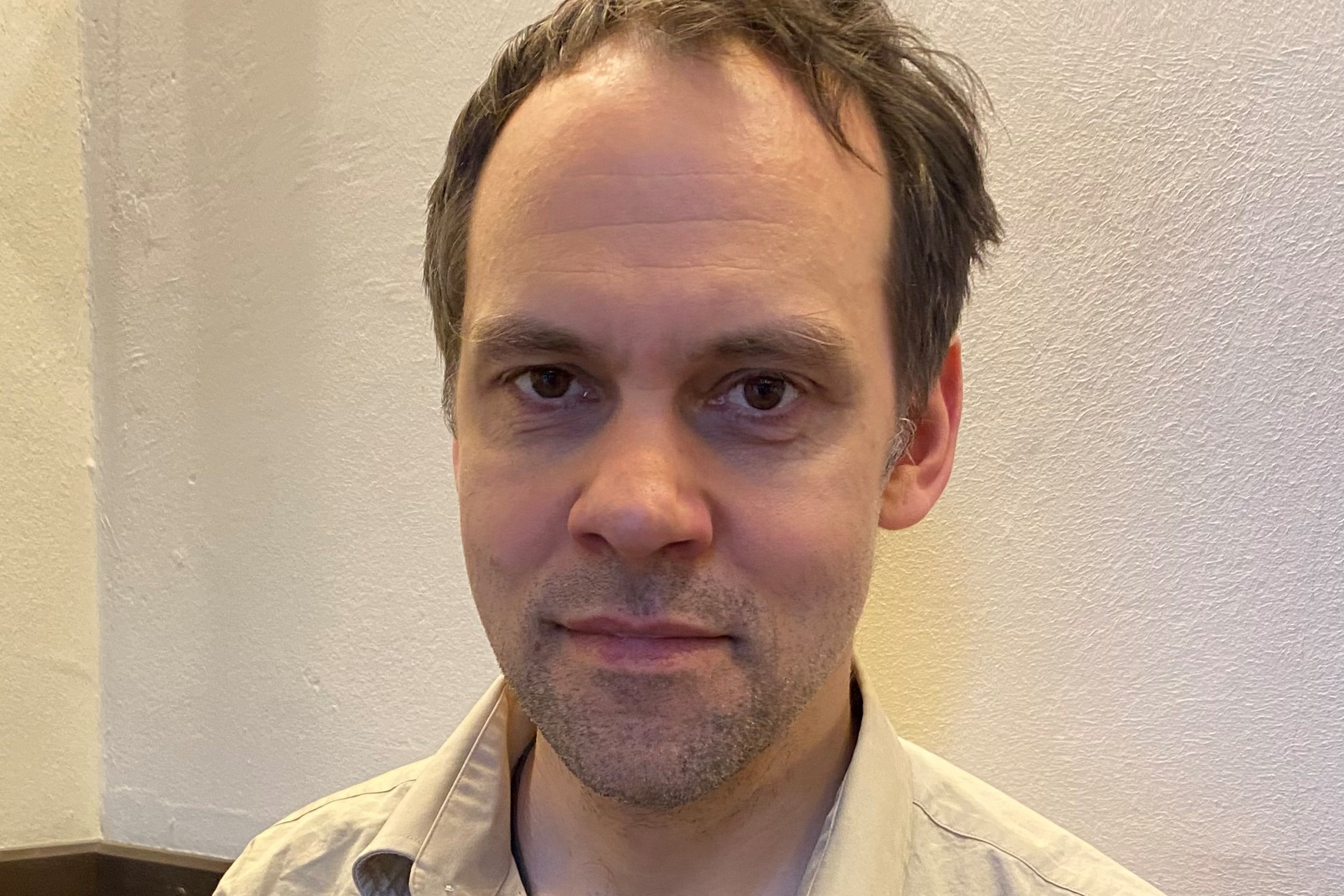
Composer and actor Leo Solter is a native Berliner. He released his first recordings—primarily in the field of electronic club music—at the age of 16. From the age of 19, he began composing stage music for various theatres, including Deutsches Theater Berlin, Meininger Staatstheater, Theater Ulm, and Mecklenburgisches Staatstheater Schwerin.
He has also composed music for the feature film Lange Nacht, the silent film Der Andere, as well as numerous short films.
He is a member and bandleader of 21 Downbeat, an inclusive band of the RambaZamba Theatre (RZt), for which he has also composed several stage scores. As part of the series Hi Freaks and commissioned productions by RZt for the Pop-Kultur Festival, he has collaborated with artists such as Nicola Rost (Laing), Andreas Spechtl, Jens Friebe, T.Raumschmiere, and Tanga Elektra.
Together with Berlin-based rapper and singer Romano, he composed and performed a contemporary interpretation of Wagner’s Tannhäuser for the festival Berlin is not at the Ring in 2019.
He is involved in various musical projects, including the duo Resident Kafka, the band Kein Zweiter, and the trio LeJuKa. Together with poet and singer Miss Tigra, he forms the project Tigra & Leo.
Leo Solter’s compositions are partly created using self-built electroacoustic sound generators, effect devices, and manuals.
Dominik Kremerskothen | Stage Design
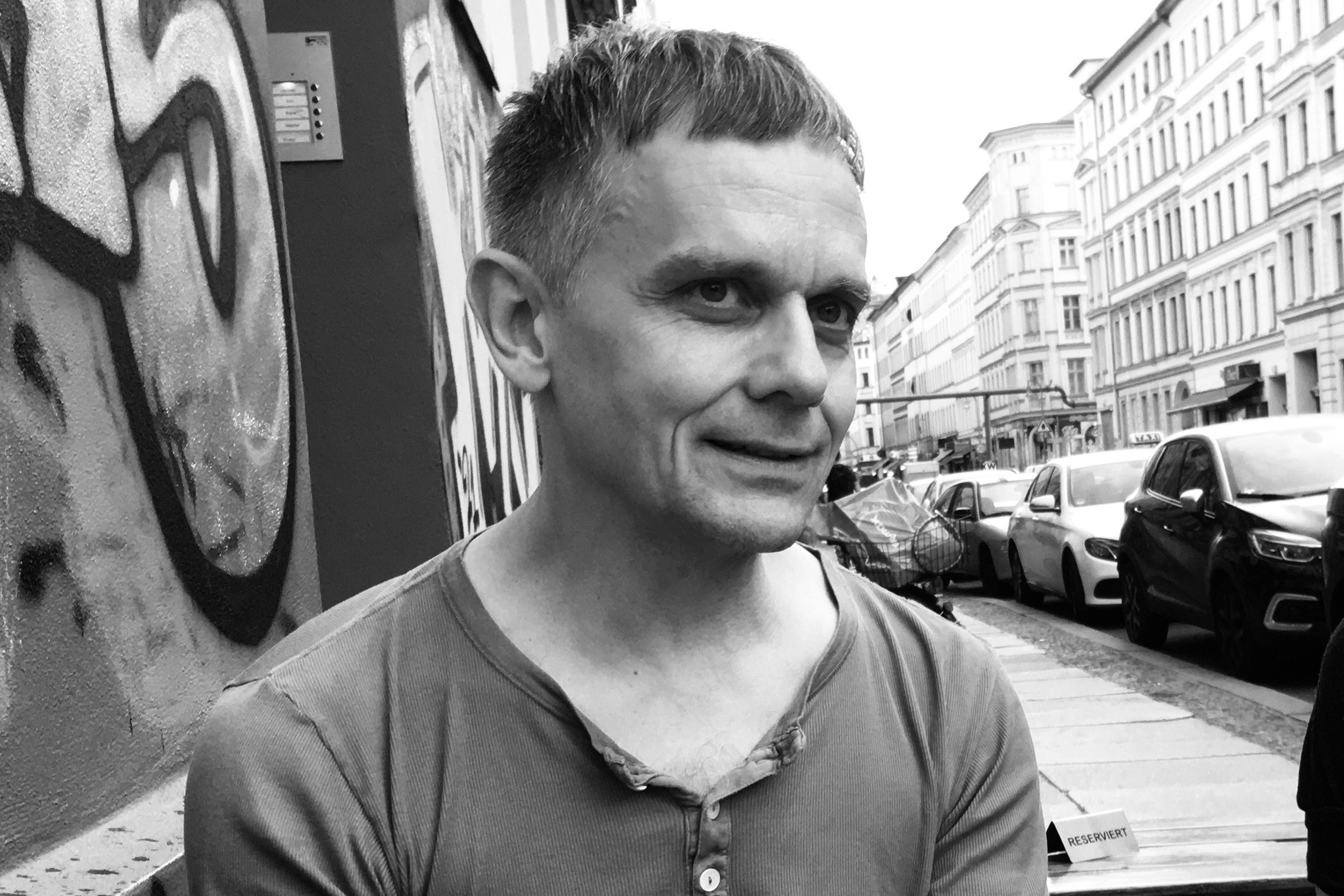
Although born in Hamburg, Dominik Kremerskothen very much enjoys living and working in Berlin. He studied architecture in London (AA) and Munich (TU). At the AA, he worked on the construction of The Most Beautiful House in the World; at the TU, he explored how to shape construction itself.
After graduating, he worked on various building projects in Germany and the UK, did some teaching, and was co-editor of the architectural publication sexymachinery in London. He loves anything that is well told and believes that ideas are rooted in emotions.
In 2005, Dominik discovered light and time—as building materials. From then on, he helped turn words into worlds, and since 2009 has worked primarily as a production designer.
Sophie peters | Costume Design
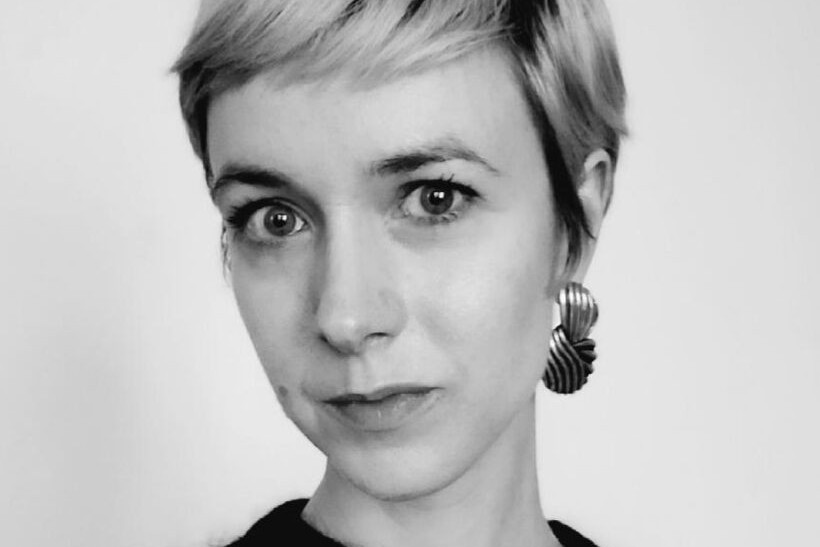
Sophie Peters is a Berlin-based costume designer. Following practical training, she studied costume design at the Berlin University of the Arts. Since 2018, she has been working as a freelance costume designer for theatre and film.
Initially focusing mainly on theatre, she has worked at venues including Theater Bonn, Neuköllner Oper, Staatstheater Meiningen, and Hessisches Staatstheater Wiesbaden. Since 2021, she has increasingly been working in film, including on the feature films The Ordinaries (dir. Sophie Linnenbaum), Red Stars Over the Field (dir. Laura Laabs), Punching the World (dir. Constanze Klaue), and Thanks for Nothing (dir. Stella Markert).
Carlos Vásques | Video
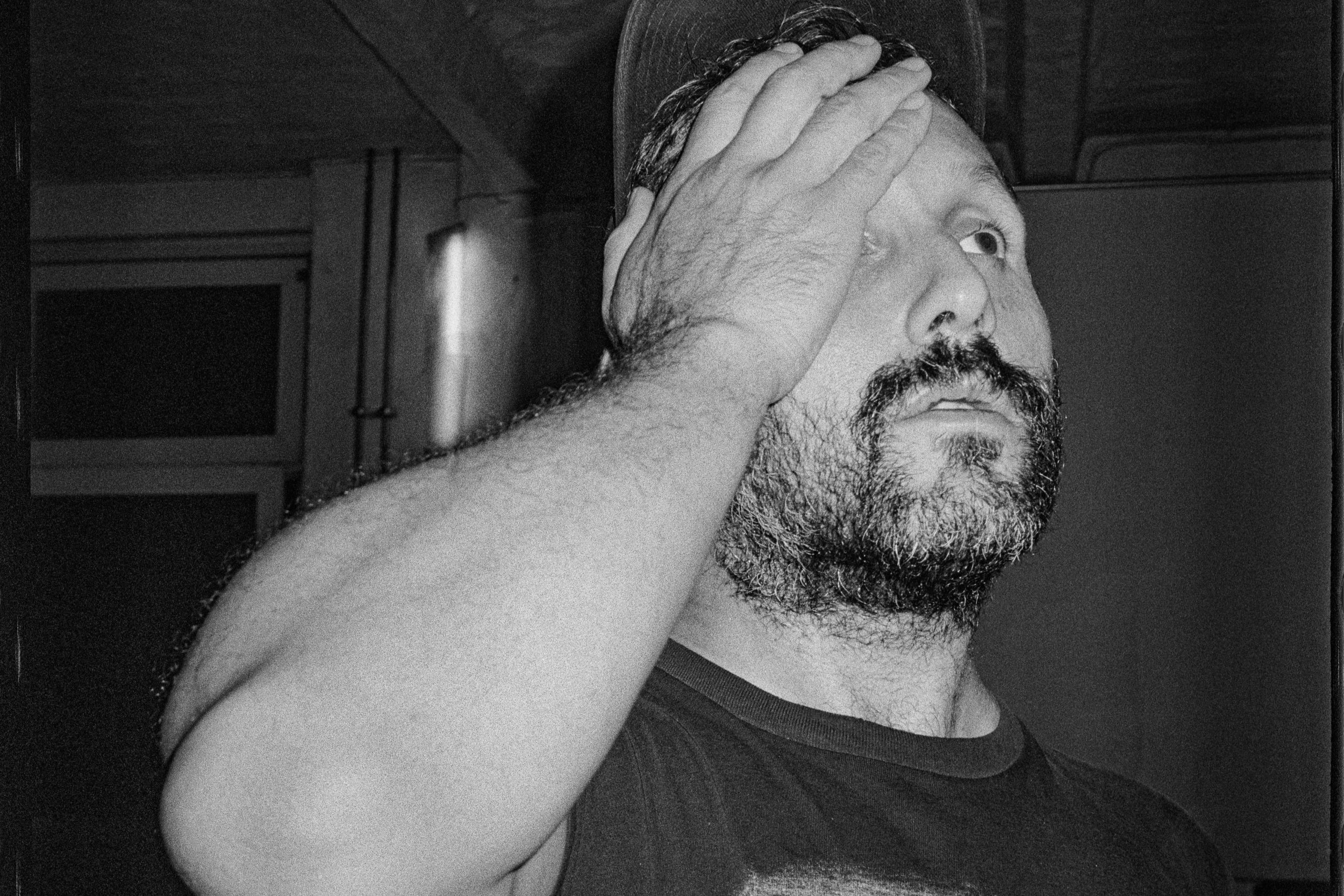
After living and working in Berlin for about fifteen years, I have worked as a cinematographer on various productions, ranging from classical fiction to experimental films. My interest lies in going beyond the mere creation of visually appealing images and experimenting with unconventional film techniques and analog forms.
I have collaborated with artists and directors such as Ann Oren, Pablo González, C.S. Prince, Laura Laabs, and León & Cosiña, among others.
These projects have been screened in cinemas or shown at major festivals such as the Berlinale, Sundance, Rotterdam, FICCI, Black Maria, and NY Underground, where they have received important awards and prizes.
Dennis Depta | DramaturgY
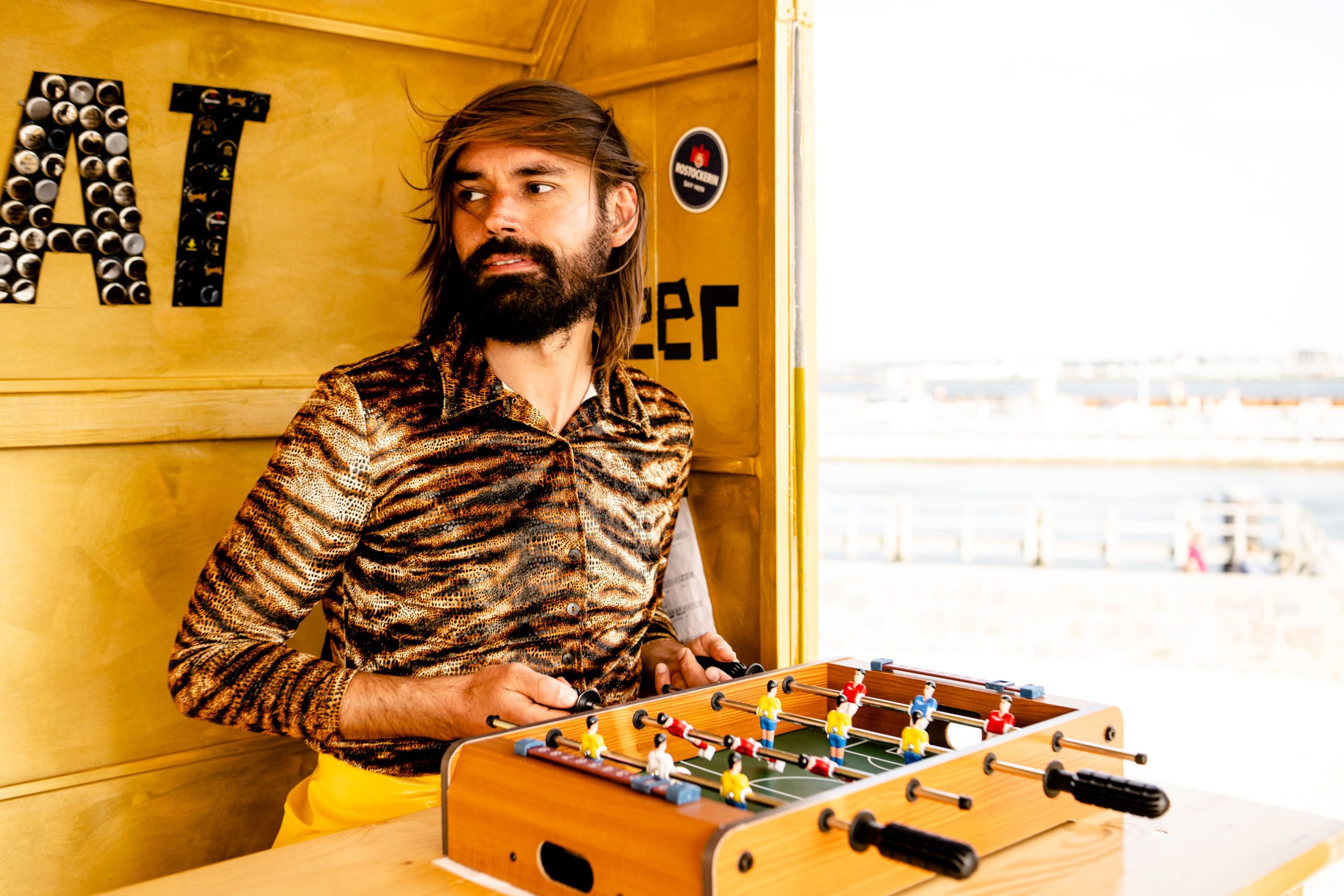
Dennis Depta, born in Cottbus in 1988, is a dramaturg, performer, and musician. Since 2014, he has been part of the Berlin-based (music) theatre group glanz&krawall, with which he has been boldly seeking confrontation with the rest of society—from the high culture of opera to the poetic lostness of a solo entertainer in a village disco. Together with director Marielle Sterra, he brings formats from popular culture such as wrestling, circus, punk concerts, and horse racing into the theatre, while also increasingly taking theatre into urban spaces such as clubs, beach baths, and psychiatric institutions.
Since 2019, Depta and Sterra have initiated the inclusive theatre and music festival series BERLIN is not…, for which music acts and performing arts groups alike adapt operas by Richard Wagner & Co. KG for a broad audience. Since the 2025/2026 season, Depta has been dramaturg at the Neuköllner Oper in Berlin. He is also guitarist in the bands SCHROTTI STAR ORCHESTER and KANAL. Depta believes that art comes from wanting, not from ability.
Cara Freitag | Assistant Irector and Production Assistant
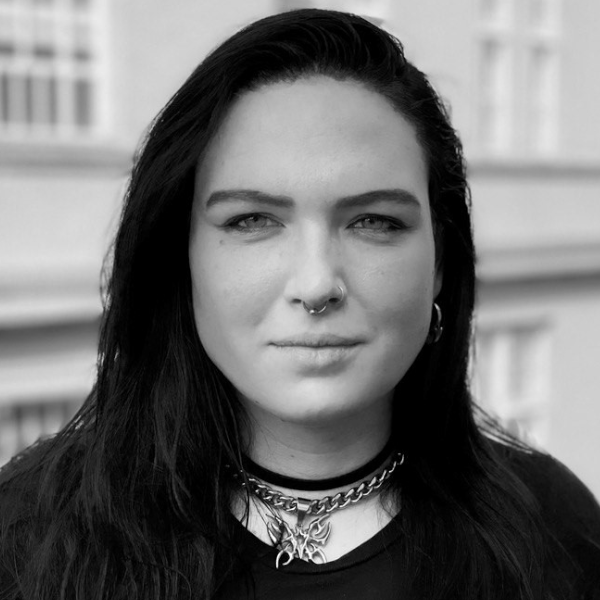
Cara Freitag, born in Mainz, completed internships and worked as an assistant at Oper Wuppertal after finishing high school in 2016. She then studied theatre studies and philosophy in Berlin, while also working in the independent scene in the areas of directing and stage design. This was followed by various guest assistant positions, including in Dresden, Wuppertal, and Lucerne.
At the Neuköllner Oper, she is now accompanying LAST EXIT EUROPA as assistant director and production manager for the sixth production.